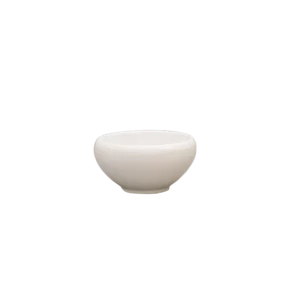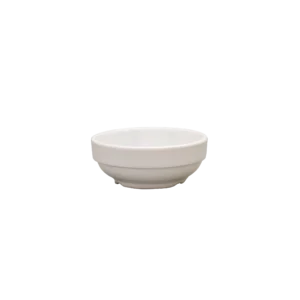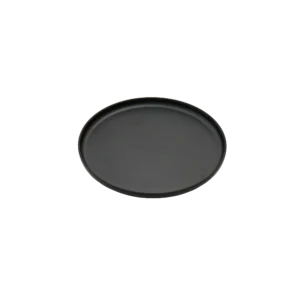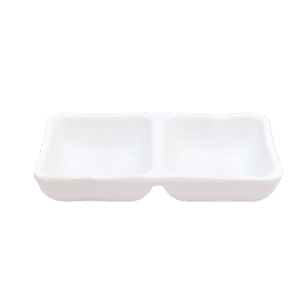

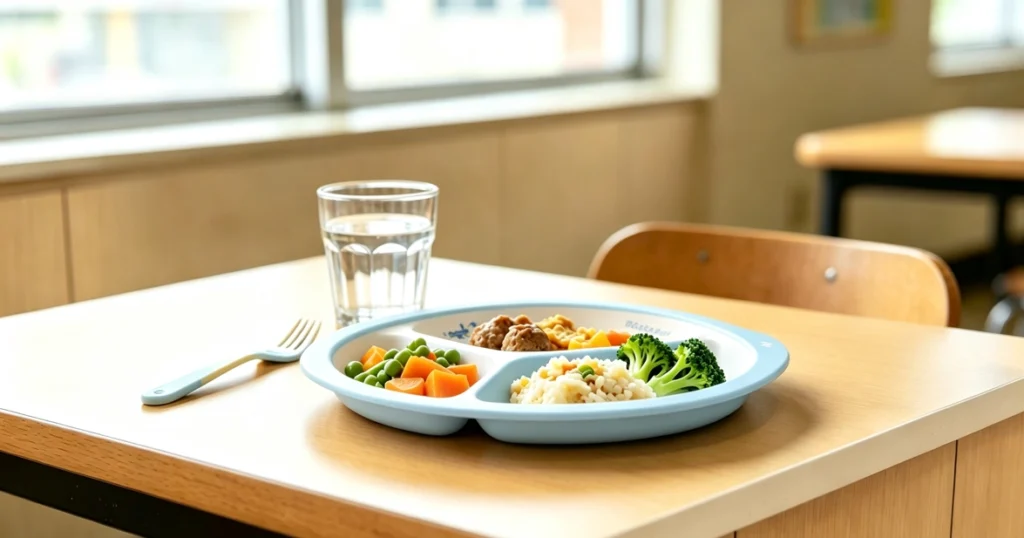
In a daycare, a plate hits the floor roughly thirty times before lunch ends. A teacher picks it up, rinses it, and puts it back in the rotation, because there are forty children and no time for a replacement cycle. That is the reality kids melamine plates are bought for, and it has little in common with the cheerful photos in a retail catalog. Here is what schools and daycares actually need to check: the safety standards that apply to children, the designs that survive being eaten off, and the cleaning routines that decide how long a plate lasts.
What Daycares Need That Homes Do Not
Scale changes everything. A parent buys six plates and replaces them when one breaks. A daycare buys two hundred and runs them through three or four sittings a day: breakfast, a morning snack, lunch, an afternoon snack. Each round ends in a wash cycle, so a plate in institutional service sees more dishwasher time in a month than a household plate sees in a year. Anything that degrades under heat and detergent shows up fast at that pace.
Responsibility is the second difference, and it is the one that keeps administrators awake. A school answers to parents and to inspectors, and a question about what children eat off has to be answered with paper, not with a shrug. That is why institutional buyers ask for certification documents before they ask for a price, and why a supplier who cannot produce a test report rarely gets a second call.
Put those two together and kids plates for daycare and school lunch plates end up needing the same three things:
- Survive the drop: they hold up after repeated falls to a hard floor.
- Survive the wash: they resist staining, crazing, and odor through daily cycles.
- Carry the paperwork: certification that holds up when a parent or inspector asks.
Kids melamine plates that clear all three tend to stay in service for years. Everything else, the colors, the characters, the clever shapes, sits downstream.
Safety Standards to Check Before You Buy
Material and Certification
Start with the resin. Pure A5 melamine cures into a dense, stable structure, while kids melamine plates cut with filler or recycled scrap cost less and fail sooner: they stain, they craze, they pick up odors that no wash cycle removes. Children’s melamine plates made from pure A5 also hold a smoother surface, and a smoother surface is easier to sanitize, which matters more in a daycare than in any other setting.
Certification is the part buyers skip and later regret. A plate intended for children should carry a food-contact position for the market it sells into, FDA in the United States, LFGB or EU 10/2011 in Europe, and the claim should be backed by a test you can actually read. Most of the alarming headlines about melamine trace back to a handful of misread studies, so it is worth ten minutes to understand where the melamine safety myths come from. For the paperwork itself, what food-contact rules apply to children’s tableware sets out which documents an importer should hold before a shipment lands.
Temperature Boundaries
Whether melamine plates are safe for kids comes down mostly to how they are heated. Told plainly, kids melamine plates are safe in normal service and unsafe in a microwave, and pretending otherwise helps nobody. Melamine is not a microwave material. FDA guidance is clear on this: keep melamine out of the microwave. It absorbs microwave energy, heats unevenly, and will craze or crack, and a crazed surface is exactly what you do not want in front of a toddler. Conventional ovens are out for the same reason. Commercial dishwashers are fine at their standard 70 to 80°C cycle, which is hot enough to sanitize without crossing the threshold where the resin starts to age quickly. Toddler-safe plates are therefore a matter of correct use as much as correct manufacture, and honest suppliers say both parts out loud.
How to Choose Non-Toxic Options
The practical version of choosing non-toxic kids plates is a four-part check. Confirm the resin grade is pure A5. Confirm the certification matches your market. Ask for a third-party migration test report and read the measured value rather than the word “pass.” Then confirm the specification states, in writing, that the plate is BPA free and not for microwave use. A supplier who hesitates on any one of those four has told you what you needed to know.
| Check | Why it matters | Passes when | Red flag |
|---|---|---|---|
| Resin grade | Filler blends crack sooner and stain faster | Supplier names pure A5 with a test report | Says “melamine blend” with no grade |
| Food-contact certification | Schools answer to parents and inspectors | FDA for the US, LFGB or EU 10/2011 for Europe | A stamp with no standard number |
| BPA free claim | It is the question every parent asks | Stated in writing with the test behind it | Claim with no documentation |
| Microwave and oven use | Melamine crazes under microwave heat | Spec clearly says not for microwave or oven | Vague “use with care” wording |
| Surface condition | Scratches hold bacteria and resist sanitizing | Smooth, no crazing, replaced once scored | Deep scratches left in service |
Drop Resistance in Daily Classroom Use
Drop resistant is one of those phrases that means whatever the seller wants it to mean, so here is a working definition. A plate dropped from table or highchair height, roughly 75 cm onto a hard floor, should come away unmarked, and it should do that repeatedly rather than once. That is the realistic failure mode in a daycare. Nobody is throwing plates across the room; they are sliding off trays and getting pushed off table edges dozens of times a day.
Two design choices decide whether a plate passes that test. Wall thickness in the 2.5 to 3.5 mm range gives the body enough stiffness to absorb the impact, and a reinforced rim, slightly thicker and rolled rather than squared, protects the point that actually strikes the floor first. Weight matters too, though not the way buyers assume. A heavier plate is not automatically tougher; excess weight usually means filler rather than more resin.
Against the alternatives, the comparison is not close for this setting:
| Materiale | What goes wrong in a daycare | Why kids melamine plates win |
|---|---|---|
| Ceramica | Chips on impact; a chipped plate is a cut risk and gets pulled immediately | No chipping; stays in service |
| Stainless steel | Dents, conducts heat, can burn a child with warm food | Cool to the touch, no dents |
| Single-use plastic | Solves breakage but adds waste and a permanent reorder cost | Reusable across years of service |
Kids melamine plates survive the drop, hold up to the wash cycle, and stay in service for years, which is why they remain the default in institutions despite being less fashionable than the alternatives.
Design That Actually Gets Kids to Eat
Why Divided Plates Work
A divided plate is not a gimmick, and understanding why it works makes the buying decision easier. Most kids melamine plates sold into daycares have sections for a reason that has nothing to do with how they look. Three things happen when food is separated:
- Portions stay visible. A child sees what is left instead of facing a mixed pile.
- Flavours stop mixing. This matters enormously to a three-year-old who rejects the whole meal because the beans touched the pasta.
- Walls aid self-feeding. They give a child learning to use a spoon something to push against, the difference between feeding themselves and giving up.
For the longer version, how divided sections shape toddler portions goes deeper on section depth and count. The short version from our own production data: two sections suit under-threes, three sections suit three to five year olds, and anything past four turns the plate into a cleaning problem without feeding any better.
Colour, Contrast and Restraint
What designs encourage kids to eat has a counterintuitive answer. Full-bleed cartoon prints look appealing on a shelf and pull attention away from the food, which is the opposite of the goal. Higher contrast at the rim helps younger children see where the plate ends and the food begins, and a calm interior with a coloured edge does more for actual eating than a busy illustrated surface. Bright rims also survive the wash cycle better than large printed areas, since a printed graphic is the first thing to fade.
One practical note from the institutional side: pick one rim colour per age group. Staff can then tell at a glance which plate belongs to which room, which sounds trivial until you are sorting two hundred plates after lunch.
| Age | Plate diameter | Layout | Design notes |
|---|---|---|---|
| 6 to 18 months | 18 to 20 cm | Deep rim or suction base | High walls help early scooping |
| 18 months to 3 years | 20 to 23 cm | 2 or 3 sections | Divided layout keeps flavours apart |
| 3 to 5 years | 23 to 25 cm | 3 sections or open | The standard daycare size |
| 6 years and up | 25 to 28 cm | Open or 2 sections | Closer to an adult plate |
Cleaning and Sanitizing at Scale
Dishwasher-safe kids plates are safe in a commercial machine at the standard 70 to 80°C cycle, and that temperature is what does the sanitizing. Avoid long holds in the high-heat dry zone, which ages the surface faster than the wash itself. Rinse or wash within a couple of hours where you can, because dried-on tomato and turmeric are far harder to remove than fresh, and a scrubbed plate is a scratched plate.
Retirement criteria are the part most institutions never write down, and they should. Pull a kids melamine plate from service when any of these show up:
- The surface is scored deeply enough to catch a fingernail.
- The gloss has gone flat and chalky.
- There is any crack, however small.
Scratches hold bacteria where detergent cannot reach, and a crack will widen under the next thermal cycle. Write that rule into the kitchen manual and the decision stops being argued about at 2pm.
A workable routine looks like this:
- Scrape and rinse immediately after each sitting, before food dries on.
- Run a full wash and sanitize cycle at close of day.
- Weekly visual pass: check for scored or crazed pieces and set a bin aside for retirement.
That weekly pass takes one member of staff about fifteen minutes for a two hundred plate inventory, and it is the single cheapest thing a daycare can do to keep its stock safe.
Buying for Schools: Sizes, MOQ, Budget
Choosing the best kids melamine plates comes down to four checks you can do in two minutes with a sample in hand:
- Feel the wall thickness. A plate that flexes in your hands will flex on the floor.
- Run a finger around the rim for flash, the thin ridge left where the mould halves meet.
- Stack a dozen and look for even gaps: uneven stacking means warping.
- Hold the plate to the light. A consistent translucent body with no cloudy patches points to a full cure.
Volume math is straightforward once you accept one premise. Order kids melamine plates at two and a half to three times the headcount, not at the headcount. Forty enrolled children means roughly 100 to 120 main plates, plus 40 to 60 smaller ones for snacks and fruit, because you need stock in service, stock in the wash, and stock in the cupboard when something breaks. Every institution that orders tight ends up placing a panicked second order within a month.
Melamine children’s plates usually start at 500 to 1,000 pieces per shape and colour, with lead times of 15 to 30 days after sample approval. Custom colours and a moulded or printed logo are normal at that volume, and a logo on the base rather than the eating surface lasts longer under daily washing. Whiteness and colour consistency between batches is worth specifying up front, so ask for two samples from separate production runs before you commit. To see what is available off the shelf, browse our kids melamine plate sizes and divided layouts and request a sample kit built for your age groups.
Questions Buyers Ask
Q: Is melamine safe for toddlers?
A: Yes, when it’s pure A5 and backed by the right food-contact certification (FDA, LFGB, or EU 10/2011) for your market. Keep it out of the microwave and conventional oven; a standard 70–80°C dishwasher cycle is safe. Always ask for the migration test report instead of trusting the “safe” label on the box.
Q: What designs encourage kids to eat?
A: Divided plates with two or three sections work best for under-fives: portions stay visible and flavours don’t mix. A higher-contrast rim helps young children locate the food, while a calm interior outperforms busy prints that pull attention off the meal. Standardize one rim colour per age group so staff can sort plates at a glance.
Q: How do I choose non-toxic kids plates?
A: Run four checks: pure A5 resin with no filler, certification matched to your market, a third-party migration test report with measured values (not just “pass”), and a written BPA-free / not-for-microwave spec. Hesitation on any one is a reason to keep looking.
Q: Do kids melamine plates break if dropped?
A: From table or highchair height (~75 cm) onto a hard floor, a quality plate stays unmarked and repeats that performance. It’s not unbreakable: a high drop, corner-first landing, or impact on a scratched spot can crack it. Retire any cracked plate immediately, since the crack traps bacteria.
Q: How many plates does a daycare need per child?
A: Plan for two and a half to three times enrolment. Forty children need about 100–120 main plates plus 40–60 snack plates, covering service, wash, and breakage buffer. Single central-wash sites usually sit at the higher end.
Before You Place the Order
Buy for the floor, not the shelf. Pick a plate that survives a drop, meets the food-contact standard in your market, and has a layout a four-year-old can manage without help. Standardize on two sizes so replacement stays simple for years, write down the retirement rule, and you will spend far less on replacements than the site that buys whatever looks cheerful in a catalog.
Ready to spec your order? Request a kids plate sample kit, the food-contact certificates, and wholesale pricing for your age groups.