

Компания «Dongyu Tableware Products Co., Ltd.».
Адрес: № 66, улица Луовань, район Хэтан, город Чжучжоу, провинция Хунань, Китай
Тел.: +86-0731-22883213, моб.: +136 4743 1730, E-mail:info@dongyutechnology
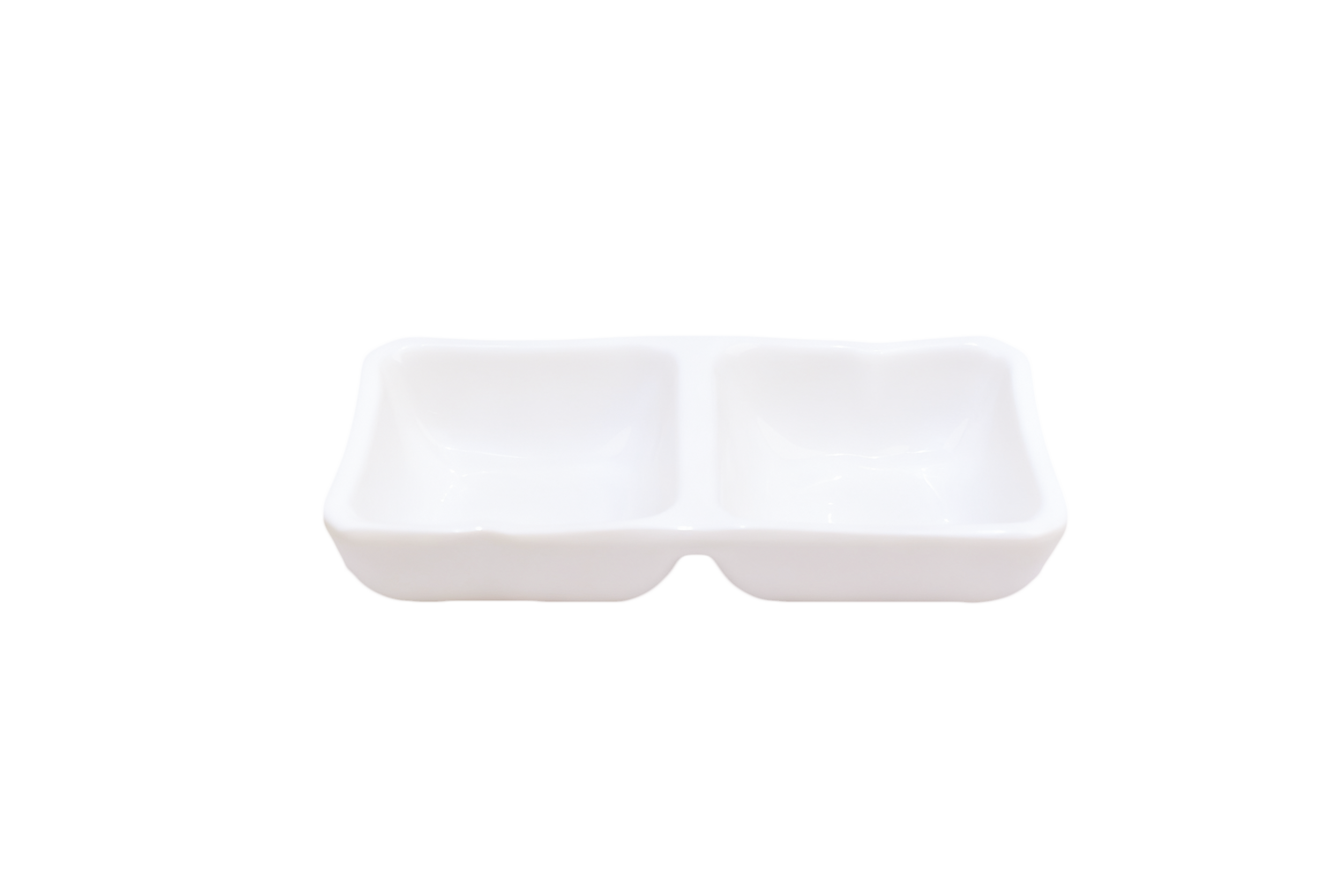
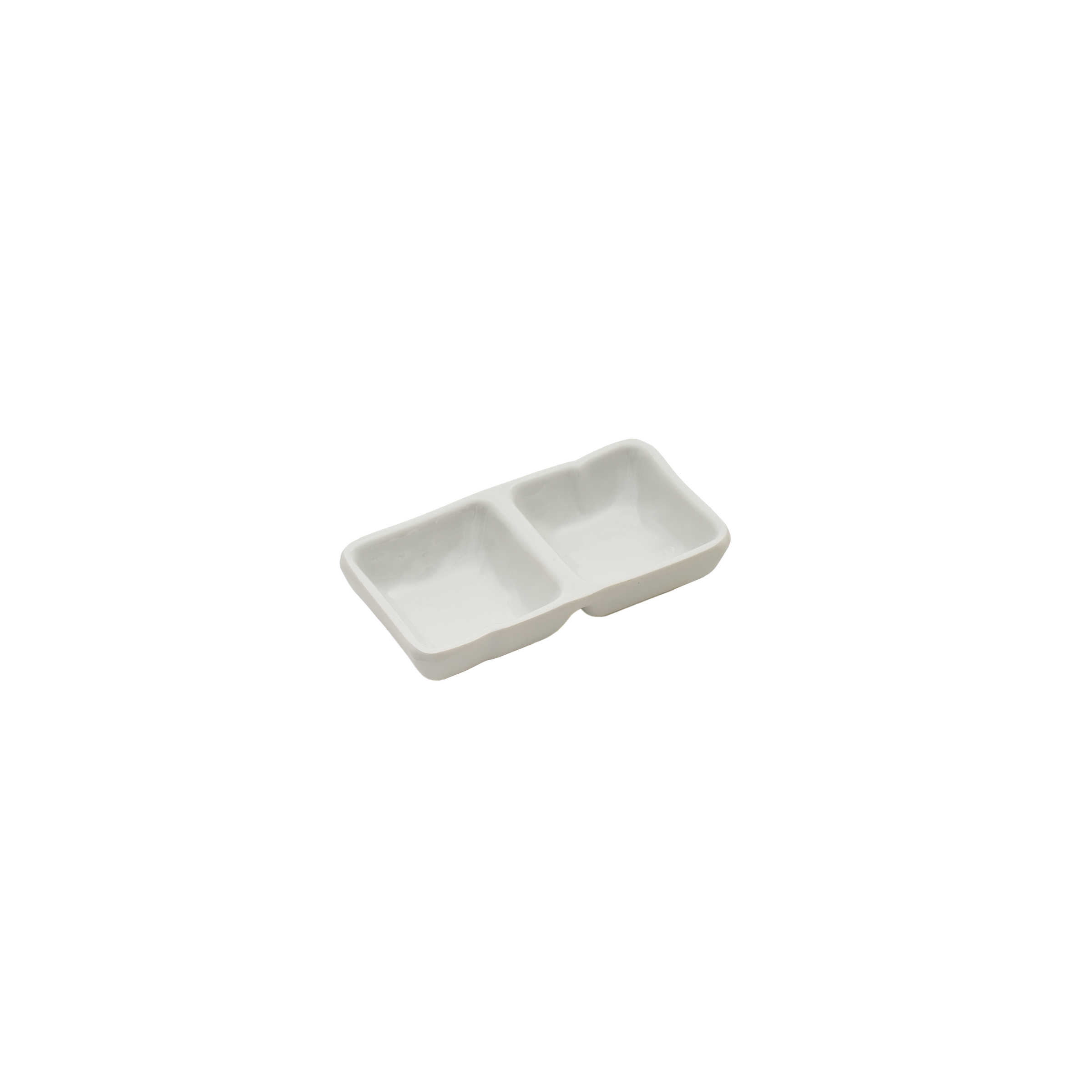
Two equal compartments serve soy sauce and chili oil side by side — guests reach for one dish instead of two separate bowls, which speeds up table turnover and reduces warewashing volume per cover.
Bright white melamine surface reads clean and neutral under buffet lighting — the smooth matte finish does not compete with colorful sauces or plated dishes, so your food stays the visual focus.
Shatter-resistant construction survives drops that would crack ceramic or porcelain — a single broken soy dish at a sushi station means lost service time plus replacement cost; this melamine version absorbs the same knock without either.
Center divider wall sits high enough to keep thick pastes separated — sriracha, wasabi paste, garlic chili oil and ponzu each stay in their own lane even when the dish is carried full across a dining room. Additionally, the molded-in divider will never loosen or detach the way glued ceramic partitions can over time.
A sushi counter, hot pot table or dim sum cart hands guests multiple flavors at once — soy, chili oil, vinegar, sesame dip.
When those arrive in one divided dish instead of two loose ramekins, the server carries fewer pieces, the table stays less cluttered and the busser collects one item instead of two at end-of-meal.
Consequently, the labor savings compound across a hundred-cover night. Each second shaved from plate-down and clear stacks up, and over a month the difference shows in lower labor cost per cover and faster table turns during peak hours.
The two compartments on this 5-inch dish hold roughly equal volumes, so the split works best for pairings where both sides see similar use — soy plus chili oil at a Japanese table, or ketchup plus mustard at a Western brunch station.
If you need an asymmetric split (large well plus small dip cup), our mold shop can adjust the divider position at the custom tooling stage.
Soy sauce and wasabi (or grated ginger) live together on every sushi plate. A divided dish puts both within arm’s reach without requiring the guest to juggle two separate bowls.
Specifically, the bright white body also frames dark soy and green wasabi clearly, which matters when diners judge freshness by visual cues before the first bite.
Diners mix their own dipping blends — sesame base, scallion oil, fermented bean paste. Two compartments let them keep the base separate from the add-ins until they are ready to combine, which prevents unwanted flavor creep across the meal.
Buffet operators set out divided dishes along appetizer rows so guests can grab a pre-portioned duo (honey mustard plus barbecue, ranch plus buffalo) in one pass. Moreover, the compact 5-inch footprint fits standard buffet tray layouts without crowding adjacent items.
Rental houses stock shatterproof sauce dishes because a single dropped load of ceramic ramekins can ruin an event budget. Therefore, this melamine model survives transit, outdoor tents and post-event dishwashing at scale.
A ceramic soy sauce dish chips when a buser knocks it against a plate rack. The sharp edge then cuts fingers, scratches other tableware and eventually gets pulled from rotation — that is one unit written off, reordered and replaced, often within weeks of arrival.
By contrast, this melamine dish absorbs the same impact without chipping. Over a year of daily service at a 60-seat Asian restaurant, ceramic sauce dish loss typically runs 15–30% of stock; melamine runs near zero.
Meanwhile, the weight difference also helps — a full crate of these weighs noticeably less than the equivalent ceramic shipment, which lowers freight cost per unit and reduces strain on receiving staff.
Temperature tolerance spans −30°C to +120°C, so the dish holds refrigerated dipping sauces straight from the walk-in and rinses clean in commercial dishwashers running cycles up to 120°C. Do not use this dish in microwave or oven equipment — melamine is designed for cold and ambient service only.
Because we mold this dish in-house, you can lock in color, logo placement and pack format from a single source:
Color matching: Pantone reference accepted for orders above 3,000 pieces per colorway. Common choices include black exterior with red interior (Japanese-style contrast), brand-matched solid tones, or speckled finishes that mimic stoneware texture.
Logo options: pad print on the flat bottom, laser-engraved on the rim, or molded-in relief for premium programs. Minimum order varies by method — contact us with your artwork for a quote.
Pack configurations: bulk polybag, individual box with hang hole, or custom-printed master carton for retail-ready distribution.
Tell us your target quantity range, color preference and branding reference. Our team replies within 24 hours with factory pricing, sample availability and a production schedule for your dual compartment melamine sauce dish program.
| Piece | Size | Role |
|---|---|---|
| Single dish × 2 compartments | 5 in (approx. 13.4×7.1×3.0cm) | Soy sauce, chili oil, condiment pairs, dipping duos for sushi, hot pot, buffet, event rental |
Material: Food-grade A5 melamine, BPA-free, passes FDA and LFGB testing
Finish: Smooth matte bright white (non-porous, stain-resistant)
Temperature range: −30°C to 120°C (serving only, not for microwave or oven)
Dishwasher safety: Commercial dishwasher safe up to 120°C; top-rack recommended for residential units
Shape: Rectangular with slightly wavy organic edge profile
Can each compartment hold sauces at different temperatures?
Yes — the center divider is molded as part of the same monocoque body, so heat transfer between sides is minimal.
You can pull one side chilled (refrigerated ponzu or sweet-and-sour dip) and the other at room temperature (soy or peanut sauce) without noticeable warming of the cold side over the course of a normal meal service.
Is the divider wall tall enough to prevent overflow?
The divider stands approximately 0.9–1 inch (22–25 mm) from the base, which keeps standard-viscosity sauces (soy, chili oil, vinegar-based dips) fully separated even when each compartment is filled to a practical serving level.
However, very thin liquids (water-like broths or diluted dressings) filled to the brim may crest the divider if the dish is tilted sharply — for those cases, recommend filling to three-quarters depth rather than to the rim.
What is the actual capacity of each compartment?
Each side holds roughly 1.5 to 2 fluid ounces (45–60 ml) at a comfortable fill level below the rim. That volume matches a typical single-serving soy pour at a Japanese restaurant or a standard condiment portion at a Western appetizer station.
If you need larger wells for heavy-dip items (thick barbecue sauce, cheese fondue), ask us about scaling up to a 6-inch or 7-inch body using the same dual-compartment tooling approach.
Does the wavy edge affect stacking?
The slight organic wave along the rim is shallow enough that dishes nest securely when stacked dry. We designed the profile so the interior walls of one dish clear the rim of the dish below it.
This lets kitchen staff stack 15–20 pieces in a standard bus tub without toppling. Additionally, wet or greasy surfaces reduce friction and make any stacked dish less stable — always stack after washing and drying.
Can I order mixed colors in one batch?
Yes — we can split a single production run across two or three colorways (for example, 500 pieces black-exterior/red-interior plus 500 pieces all-white).
The minimum per colorway within a mixed batch is typically 300 pieces. Color-changeover time between cavities is short because this is a single-cavity mold with in-mast color injection, so you do not pay a large setup penalty for splitting the run.
How does breakage cost compare to ceramic soy sauce dishes?
At typical restaurant supply pricing, a ceramic soy dish costs $1.50–$3.00 USD wholesale and lasts an average of 4–6 months before chip or crack forces replacement.
This melamine dish costs less upfront and, based on our buyers’ reported data, averages 18–24 months of continuous service before cosmetic wear (surface scratching) becomes the retirement driver rather than breakage.
Furthermore, over a three-year horizon, the total cost-of-ownership gap usually favors melamine by 40–60% when you factor in replacement frequency, labor to reorder and freight on repeat shipments.
Request a Quote for PF5003K Dual Compartment Melamine Sauce Dish
Send us your target market, quantity range, color preference and any branding or packaging requirements. Our team replies within 24 hours with factory pricing, sample options and a production schedule for your dual compartment melamine sauce dish program.