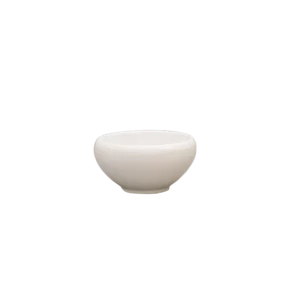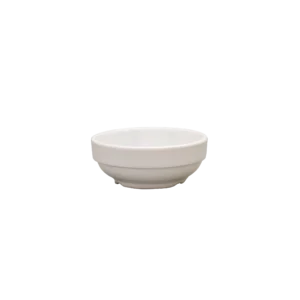

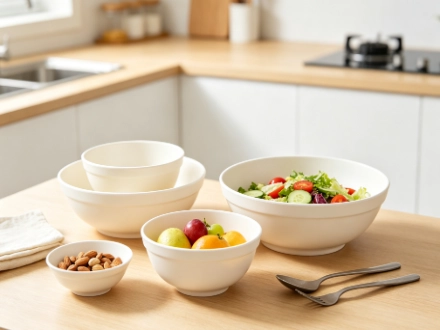
The label rarely says which one fits the job you actually have. I’ve watched buyers grab the wrong diameter more times than I can count: a 12-inch serving bowl for a toddler’s cereal, or a 5-inch prep cup trying to hold a family salad. This article matches melamine bowl sizes to real uses, then sets the one heat rule that keeps them safe for years. Start with what you’ll do with the bowl, not what’s marked down this week. Most buyers don’t realize melamine bowls split into clear size bands tied to use, and that’s what we’ll work through.
Start With What You’ll Use Them For
Most bowl-buying mistakes happen before size enters the picture. People pick a diameter, then learn it’s wrong for the task. Flip the order. Name the job first, because the same material behaves completely differently across a home, a daycare, and a 400-cover dining room.
Everyday, Kids, and Outdoor
For a home kitchen, a daycare, or a picnic, the bowl has to survive a drop and a backpack. Leicht bowls matter here because kids and older adults lift them without strain, and a bowl that falls on a patio shouldn’t end in shards. Melamine fits because it’s break resistant at a price ceramic can’t touch for daily abuse. These are your everyday bowls, the ones you reach for without thinking, and they’re the reason melamine took over cafeterias in the first place.
Outdoor use is where the gap shows. A ceramic bowl on a camp table is a cleanup incident waiting to happen. A melamine one gets kicked, rinsed in a stream, and put back in the bin. The light weight also means a kid can carry a full bowl to the table without tipping it on the way. For seniors living alone, the same lightness removes a small daily risk: a heavy bowl slipping from a weak grip.
Cost is the part nobody puts in the brochure. When a bowl breaks, you don’t just lose the bowl, you lose the food in it and the ten minutes of cleanup. Multiply that across a week of family meals and the cheap ceramic set stops looking cheap.
Food Service and Buffets
A restaurant or hotel runs bowls through a different stress test. They get stacked, dropped on steel counters, and pushed through commercial dishwashers at 60 to 82°C dozens of times a day. For high-volume kitchens, melamine bowls beat ceramic on both breakage and weight. Restaurant bowls need to nest tightly so a busser can carry a tower of them, and they need to keep their finish after thousands of cycles. Most operators who switch a full dining room from ceramic to A5 melamine see breakage replacement drop by more than half in the first year. Volume buyers should care less about how a single bowl looks and more about how the set behaves after a year of service.
Stack height is the quiet variable nobody mentions on the box. A bowl that nests 40 percent tighter than its competitor frees a full shelf per hundred units, and on a busy line that’s real square footage. I’ve watched a kitchen reclaim an entire cart just by switching bowl profiles, which nobody predicts from a catalog photo.
Melamine is a hard, food-safe resin, not ceramic or standard plastic. If you want the full picture on the material and how it differs from other tableware, we explain what melamine tableware is in a separate article.
Melamine Bowl Sizes and What They’re For
Size is where the real decision lives. Melamine bowl sizes in inches run from about 4 to 12 across the top, which maps to roughly 0.5 quarts up to 6 quarts. The number on the box matters less than the use the bowl is built for. A 4-inch bowl and a 12-inch bowl are both melamine bowls, and they solve completely different problems. Good melamine bowls are sized around the task, not the other way around.
Small Bowls (4–6 in / 0.5–1 qt)
Small melamine bowls cover cereal, yogurt, dips, and portion control. A 4-inch bowl holds a single serving of granola; a 6-inch one works for a side of slaw or a child’s pasta. These are the melamine cereal bowls that earn their place at breakfast because they don’t chip when a toddler knocks them off the high chair. On a prep line, the same size portions out sauces and garnishes without the cross-contamination risk you get from a cracked ceramic glaze. I reach for them more than any other size when I’m setting up a station.
Portion control is the other quiet use. A 4-inch bowl makes a 30-gram serving of nuts look reasonable instead of sad, which is why diet programs and care homes lean on them. The same bowl works as a condiment cup or a ramekin substitute that won’t shatter if it hits the floor.
Medium Bowls (7–9 in / 1.5–3 qt)
This is the workhorse. At 7 to 9 inches you’ve got soup, salad, pasta, and rice covered. A 7-inch bowl holds a standard soup course; a 9-inch one is the salad most homes actually eat from. Melamine soup bowls handle hot service well once the food has cooled a few minutes below boiling, which I cover in the heat section below. For operators, the math changes at scale: rim shape and stack height decide how many bowls fit in a limited shelf, and that’s a different spec than a home buyer needs.
We’ve written specifically about melamine soup bowls for service in hotels, since volume and rim design behave differently once you’re ordering by the case rather than the set.
Grain bowls pushed this size into daily rotation. An 8-inch melamine bowl holds rice, greens, and a protein without crowding, and it won’t crack when a line cook stacks a dozen of them between courses. That’s the gap between a bowl that’s pretty on the shelf and one that survives a Friday rush.
Large Bowls (10–12 in / 4–6 qt)
Large bowls are for serving, mixing, and buffet lines. A 10-inch bowl holds a shared salad; a 12-inch one tosses a batch of greens or moves a family portion of pasta. Melamine serving bowls shine here because a 12-inch glass version is heavy and a ceramic one is a breakage risk at a crowded table. For prep, the same bowl kneads dough or holds a marinade without the dead weight of steel. The lightness is the feature most people undervalue until they’ve mixed a double batch of cookie dough in a heavy bowl.
Meal prep is the home version of the same logic. A 12-inch bowl holds a week of salad base or a double batch of oats, and because it’s light you’ll actually pull it down instead of reaching for a smaller one out of habit. Weight decides usage more than people admit, which is why the heavy bowl stays at the back of the cabinet.
For serving, melamine bowls in the 10 to 12 inch range simply outlast the fragile options, and that’s before you factor in the weight a server carries on every trip.
Quick size map
| Use | Recommended size | Bowl type | Who it fits |
|---|---|---|---|
| Cereal, yogurt, dips | 4–6 in (0.5–1 qt) | small melamine bowls | Homes, daycare, prep lines |
| Soup, rice, pasta | 7–9 in (1.5–3 qt) | medium / melamine soup bowls | Daily meals, hotels |
| Salad, sides | 8–10 in (2–4 qt) | wide shallow bowls | Families, buffets |
| Serving, buffet | 10–12 in (4–6 qt) | deep melamine serving bowls | Restaurants, parties |
| Mixing, dough, marinade | 10–12 in (4–6 qt) | stable mixing bowls | Prep, baking |
Matching Bowl Shape to the Job
Diameter isn’t the whole story. The cross-section decides whether the bowl actually works once food goes in it.
Cereal, Soup, Salad, Serving, Mixing
A cereal bowl sits deep so milk doesn’t slosh on the way to the table. Soup bowls often get a wider rim or a small lip to make lifting safer with hot liquid in hand. Salad bowls run shallow and wide so you can toss without flinging leaves across the counter. Serving bowls go deeper to hold more per trip from the kitchen. Mixing bowls need a stable, rounded base so they don’t spin when you whisk. Match the shape to the motion and the bowl disappears into the task instead of fighting you. I’ve seen a beautiful 9-inch bowl fail as a salad bowl purely because it was too deep to toss in. Noodle and ramen bowls sit in their own category: a taller wall keeps broth hot and stops the slurp from spilling, which is why they look different from a flat pasta bowl even at the same diameter.
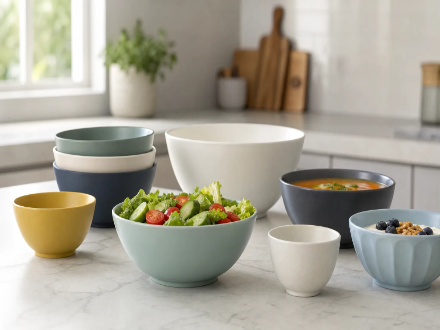
Heat Safety: the Rule That Protects Your Bowls
Here’s the part most listings get wrong, and it’s the one that shortens a bowl’s life or worse. Melamine has a hard limit with heat, and ignoring it is the fastest way to ruin a good set.
How Hot Is Too Hot
Food-grade A5 melamine is safe for warm and room-temperature food, and it holds hot dishes up to about 70°C (160°F). Past that, the resin softens and the risk of material migrating into food rises. So are melamine bowls safe for hot soup? Yes, if the soup has rested a few minutes off the stove. Don’t pour boiling stock straight in, and keep the bowl out of the microwave entirely. What are melamine bowls used for, in practice? Cold and warm prep, serving, and storage. The microwave and the rolling boil are the two jobs they should never do, and pretending otherwise is how people end up with a warped bowl and a bad story about the material. The honest framing is that melamine bowls handle warm food well and only fail at the extremes.
The reason traces back to how the material is made. A5 melamine is a thermoset, which means the resin is cured into a fixed network under heat and pressure. That cross-linking is what makes it hard and stable at room temperature, but it also means the material has no melting point to fall back on. Push it past its limit and it softens rather than flowing, which is why heat damage shows up as warping and a cloudy surface instead of a clean melt. Knowing that changes how you treat the bowl: it’s a great server of warm food, not a vessel for cooking it.
Dishwasher and Daily Cleaning
Can melamine bowls go in dishwasher? Yes, on the top rack with a standard cycle. They also survive commercial machines at 60 to 82°C, which is exactly why cafeterias and cruise lines spec them. Skip the most extreme dry-heat setting if your home machine has one, because sustained high heat at the drying stage is the one thing that stresses the surface over time. A soft sponge beats steel wool for keeping the finish clean, and it avoids the fine scratches that make a bowl look old before its time. Tomato and turmeric stains lift with a baking-soda soak, since the surface is non-porous and doesn’t trap color the way soft plastic does.
What Makes a Bowl Last: A5 Grade and Thickness
Two things separate a bowl that lasts three years from one that crazes in three months: the resin grade and the wall thickness. Both are invisible on a product photo, which is why cheap sets look identical to good ones until they’ve been used.
Why A5 Food-Grade Matters
A5 is the pure, food-contact melamine grade governed by FDA 21 CFR 177.1460 in the United States, EU 10/2011, and Germany’s LFGB. Those rules cap how much formaldehyde can migrate out of the material under test conditions, so the bowl stays safe through its normal life. Cheap melamine bowls made from recycled or B-grade resin skip those controls and can leach more once heat enters the picture. How long do melamine bowls last? A certified A5 set used within its heat limits typically runs several years in a home and holds up through thousands of commercial wash cycles before the finish dulls. I’d rather buy one A5 set than replace a bargain set every season.
The migration test is the detail most listings skip. Regulators heat the bowl with a food simulant and measure how much formaldehyde leaches out at the legal limit; A5 passes because the cross-linked resin releases almost none. B-grade and recycled blends don’t get that check, and heat is exactly where the gap shows up. That’s the difference between a bowl you trust with a child’s soup and one you quietly stop using.
We go deeper on A5 grade melamine bowls and why thickness and certification decide real-world lifespan in a dedicated breakdown.
Thickness and Rim Design
Wall thickness drives durability more than most buyers realize. The most durable bowls share one trait: thick walls and a rolled rim that takes the hit. Thin promotional bowls under 2.5 mm chip at the rim on the first drop onto tile. Quality lines run 2.8 to 3.5 mm with a reinforced, rolled rim that absorbs impact instead of cracking. Durable melamine bowls are usually the thicker ones; break resistant bowls earn that label from the rim, not the body. Run a finger along the edge before you buy. A sharp, thin lip signals a bowl that won’t survive the dish pit, and the dish pit is exactly where most bowls meet their end.
Weight tells the same story. A properly thick melamine bowl has a reassuring heft that thin promo ware lacks, even though both feel light next to glass. Pick the heavier one in the same size and you’ve usually picked the one that lasts.
Common Mistakes When Buying Melamine Bowls
A few patterns show up again and again, and they’re all avoidable.
- Buying glass for kids or camp. It breaks. That’s physics, not a defect. Pick break resistant melamine bowls instead.
- Assuming the bowl is microwave-safe. It isn’t. Heat the food in glass or ceramic, then move it to melamine.
- Shopping on price alone. The cheap set is usually thin-wall B-grade resin that crazes and stains within months, so it costs more by year two.
- Ignoring certification. If the listing doesn’t name A5 or a food-contact standard, assume it isn’t rated for one.
- Sizing by looks. A 12-inch showpiece fails as a cereal bowl, and a 5-inch cup fails as a salad bowl. Match size to use, not to the photo.
FAQ
1. Are melamine bowls safe for hot food? Safe up to about 70°C (160°F). Warm and room-temperature food is fine, and let boiling dishes cool a few minutes first. Never microwave the bowl.
2. Can melamine bowls go in the microwave? No. Standard A5 melamine softens under microwave energy and speeds material migration. Heat the food in glass or ceramic, then transfer to melamine for serving or mixing.
3. What sizes do melamine bowls come in? Commonly 4 to 6 inches for cereal and dips, 7 to 9 inches for soup and salad, and 10 to 12 inches for serving and mixing. The size table above maps each use to its range.
4. Are melamine bowls dishwasher safe? Yes. Food-grade A5 is dishwasher safe on the top rack and survives commercial high-heat cycles. Avoid the most extreme dry-heat setting on home machines.
Before You Buy
The right melamine bowls follow the job, not the sale tag. Small ones earn their place at breakfast and on the prep line. Medium ones cover soup and salad. Large ones carry serving and mixing. Hold the heat line at 70°C, keep them out of the microwave, and buy A5 with a thick rim. Do that and the set pays you back in survived drops and quiet prep for years, which is the only metric that matters once the unboxing photos are forgotten.
Browse our melamine bowls to find the size and set that fits your kitchen, whether you’re stocking one home or a full service line.