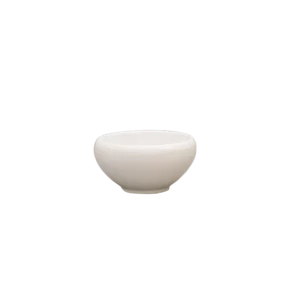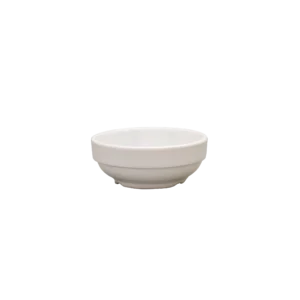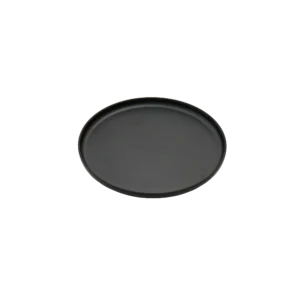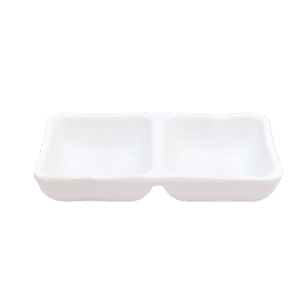

Two stacks of plates on a supplier’s shelf can look identical and still quote 30 to 50 percent apart. The difference sits in the resin. One stack is 100% pure A5 melamine. The other is a blended A1 or A3 compound built largely from urea-formaldehyde.
Wholesalers, private-label brands, and restaurant chains feel this gap most. You place a repeat bulk order, a bad batch ships, and it reaches thousands of customers with your name on every piece.
Order the wrong grade and two things happen at once. Your replacement rate climbs, and your FDA or LFGB compliance falls into question the moment a buyer smells chemicals coming off a bowl.
This guide gives procurement teams three field tests you can run on the dock, at goods-in, or during a supplier visit, before you release final payment. No lab appointment required.
A5 vs. A1/A3: What the Resin Contains
Melamine dinnerware isn’t one material. The grade letter points to the molding compound, and that compound decides how the plate handles heat and whether it stays food-safe after a year of commercial dishwashing.
What each grade actually contains
Pure A5 is 100% melamine-formaldehyde resin. A3 blends urea into the formula. A1 is mostly urea-formaldehyde with just enough melamine to pass a quick visual check. As urea content rises, price drops and risk climbs.
| Funktion | A5 (100% Pure Melamine) | A3 (Urea-Melamine Blend) | A1 (Urea-Formaldehyde) |
|---|---|---|---|
| Core Material | Melamine Formaldehyde | Urea + Melamine | Urea-Formaldehyde |
| Heat Resistance | Up to 120°C (Dishwasher Safe) | Degrades above 80°C | Severe Thermal Degradation |
| Lifespan (TCO) | 3–5 Years (Commercial Use) | 6–12 Months | Under 6 Months |
| Visual Stability | Retains Gloss & Color | Clouds & Yellows Quickly | Chalky Surface |
Why factories blend down
Urea resin costs less. A factory under price pressure can quietly shift the blend toward A1 and still ship a plate that photographs well in a catalog. The shortcuts only show up under heat, detergent, and time, which is exactly where commercial use lives.
Count the cost in years, not per piece
A5 plates survive three to five years of daily dishwasher cycles. A1 grades chalk, yellow, and crack inside six months. That means you reorder two or three times as often and eat the freight, labor, and stockout risk each time.
Urea-formaldehyde carries a cost that never appears on a quote: food-safety exposure. As the resin breaks down under heat and detergent, it gives off a sharp chemical smell and forms a chalky surface where bacteria settle. Most “melamine” recalls trace back to an A1 or A3 batch.
Stop haggling over price per piece. Negotiate on resin grade instead. Once the grade is fixed in the contract, the price spread between real A5 suppliers narrows to freight and finish, and recall risk drops out of the conversation.
Put the grade in the contract
When you read a supplier’s spec sheet, “100% melamine” without a grade letter means nothing. Put the A5 designation in writing. Buyers who write the A5 melamine tableware grade requirement into their purchase agreement shift the burden of proof to the manufacturer. If the resin tests below spec, you get a contractual basis to reject the lot, which beats finding the problem after it reaches your customers.
3 Dock Tests for 100% Pure Melamine
You don’t need a spectrometer to tell genuine A5 from a urea blend. Three checks take under fifteen minutes, and you probably have what you need already:
- A pot of rolling boiling water
- Your ears (or a phone to record the tap)
- A kitchen scale
Run them on the supplier’s pre-shipment samples or on the first carton off the container, whichever shows up first.
1. The acoustic test (tap and listen)
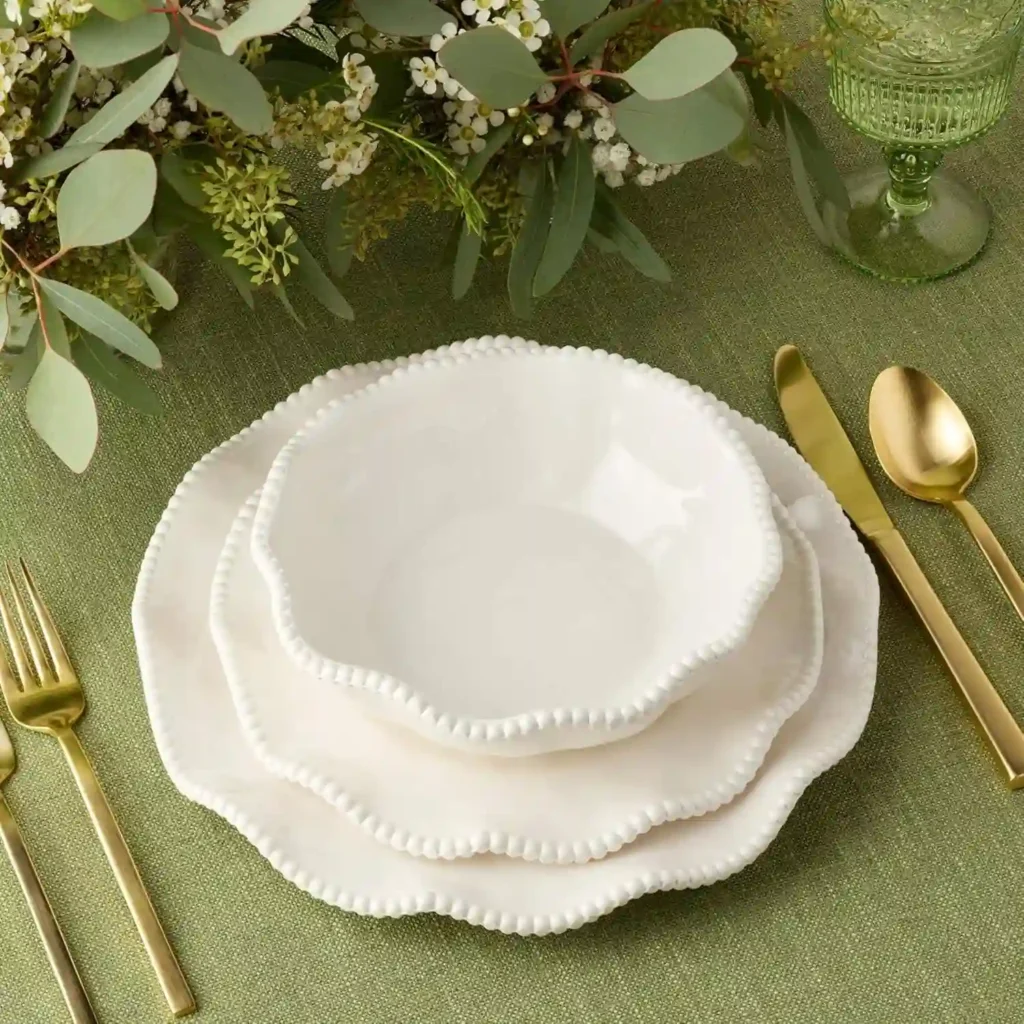
Tap the rim with a knuckle or a metal spoon. Pure A5 rings with a clean, ceramic-like tone, short and bright. A1 and A3 sound dull and flat, closer to cheap plastic, because the urea filler dampens vibration.
Run this as a comparison. Keep one known-good A5 sample on hand and tap the suspect piece next to it. The contrast is obvious even if you’ve never handled melamine.
Record the sound on your phone when you compare across shipments. The pitch stays consistent for a given mold and grade.
2. The visual and density check
Hold the piece up to a light. Genuine 100% pure A5 melamine shows even, uniform translucency at the thin edges, with no black specks or cloudy patches. Inferior blends look muddy or streaked, and the surface can feel subtly chalky instead of smooth.
Watch the rim. Thin edges show filler first because there’s less material to mask the blend. Weight tells the same story: A5 has higher resin density, so a same-size A5 plate feels noticeably heavier than an A1 equivalent. Buyers learn to trust that loaded feel fast.
Density is also why top color matching holds across a production run. High-purity compound carries pigment evenly, while filler-heavy blends drift shade to shade. If your current supplier’s reorders never quite match the first sample, the resin is the culprit, not the printer.
3. The boiling water stress test
This is the one that settles it. Submerge a sample in rolling boiling water for ten minutes, then pull it out and look. Go to twenty minutes if you want margin for high-heat use.
A5 comes through unchanged: same gloss, same color, no smell. A1 and A3 turn chalky white within minutes, lose their surface sheen, and often release a chemical odor as the urea resin breaks down.
This hits high-volume beverage solutions like hot coffee mugs hardest, because the heat never stops. A mug that survives one boiling test but degrades after a week of 90°C drinks is still an A1/A3 blend, so repeat the test on a piece that has already seen a dishwasher cycle if you can. Cold-use items like salad bowls carry less risk, but the same test still separates true A5 from a blend that chalks within a single season.
Field tip: photograph each test result next to a timestamp and the purchase order number. If a dispute reaches the rejection stage, that photo set is your evidence.
Verify the resin in front of you instead of trusting the product photo in the quote. The tests above give you that verification in minutes, and they show you how to pick A5 melamine tableware wholesale suppliers who won’t surprise you later.
Red Flags in Quotes and Supplier Audits
The resin tests catch a bad shipment. The audit questions catch a bad supplier before you order. Most costly mistakes happen one step earlier, at the RFQ stage, when a price looks too good to question. Three signals should slow any quote down.
A quote 20% or more under market
Raw A5 molding compound has a known global price. When a supplier lands 30 to 50 percent below competitors, they’ve substituted cheaper urea resin for pure A5. Ask what grade of compound they actually buy, by the ton, and match it against the published resin index for that month.
A useful cross-check: request the same spec from two or three suppliers on the same day. When one comes in dramatically low, the compound grade explains the gap, not factory efficiency.
No batch-specific migration report
Food-contact compliance depends on what leaches out of the finished product, not a generic certificate. A reliable manufacturer shares documentation from raw material tests before mass production, tied to the exact batch you’re buying. A years-old company certificate leaves a gap you shouldn’t ignore.
A credible report names the testing lab, the standard applied, and the production date. If any of those three are missing, the document loses its value.
Vague “food-grade” promises
“Food safe” is a claim, not a standard. Hold out for the specific regulation: FDA 21 CFR 177.1550 for the US market, or EU 10/2011 for Europe. Anything less won’t clear a compliant retailer’s incoming checks.
If a supplier can’t name the standard their certificate meets, assume it meets none your retailer will accept.
The three questions worth asking
A short supplier questionnaire saves more money than any negotiation tactic. Send it before you quote:
- What compound grade do you use?
- Which test standard does your report cite?
- What lab issued the report (and does that lab actually exist)?
Spend fifteen minutes on the auditor’s website and you’ll filter out most suppliers you don’t want to hear from twice. The rest earn a live video call to the production floor.
Dongyu’s A5 Standard
Putting A5 in the spec is easy. Holding that standard through every batch is the hard part, and it starts before any mold closes.
We source the compound, not the cheapest filler
We buy high-purity melamine molding compound from the pellet up and reject recycled or A3-adulterated feedstock outright. No price point brings a filler blend into our line, because once it does, every promise about compliance and lifespan becomes a gamble.
Paper that clears your compliance team
Our production runs under an ISO 9001 quality system, and every batch ships with SGS migration data referencing the food-contact standards your market requires. That paper trail exists so your compliance team can clear the shipment without a second request.
Sealing the surface against heat and detergent
Durability isn’t only about the resin. It relies on precision compression molding that seals the surface against moisture, so detergent and heat stay out of the material instead of working their way in. A sealed surface keeps a plate glossy and bacteria-free through thousands of wash cycles.
Two questions to put to any supplier
Ask any supplier the same two questions: what compound grade, and what molding process. Compare the answers line by line. The suppliers who answer without hesitation are usually the ones worth a trial order.
Identifying genuine A5 melamine tableware protects more than end consumers. It protects your margin and your brand’s name on every plate that leaves your warehouse. The cost of getting it wrong shows up long after the container is unloaded. Sort the resin out first, and the rest of your supply chain stops being a gamble.
Stop guessing and start sourcing with confidence.
Don’t let inferior resins eat into your profit margins and compromise your brand’s reputation.
Request Your Free A5 Material Sample & SGS Report Today
Häufig gestellte Fragen
Is all melamine dinnerware A5 grade?
No. The market is full of A1 and A3 grades, which are urea-formaldehyde blends. They cost less up front but fail under heavy commercial use and can flunk food-safety tests over time. Only A5 is 100% pure melamine formaldehyde.
Can A3 melamine pass FDA food safety tests?
A3 might pass the first migration test when it’s brand new. Run it through commercial dishwashers and heat, and the surface degrades, opening micro-cracks where bacteria hide and chemicals can leach out. The pass is temporary. The failure shows up in your customer’s kitchen. Large retailers now spot-check incoming melamine, and one failed migration test can pull an entire SKU from shelves without notice.
How does urea-formaldehyde affect commercial dishwashers?
Urea-based resins (A1/A3) can’t take the heat and harsh detergent of commercial dishwashers. They lose gloss, cloud over, and go brittle, pushing replacement rates several times higher than A5. Over a year of service, that gap erases any up-front savings several times over.
What is the price difference between A5 and A1 melamine wholesale?
A1/A3 resins run 30 to 50 percent cheaper than pure A5 resin. Once you add replacement frequency, freight on reorders, and the brand damage from a safety recall, A5 costs less for any operation running repeated wash cycles.
Does genuine A5 melamine discolor over time?
Good A5 resists staining and UV discoloration. If a “melamine” plate yellows or stains from tomato sauce or coffee, that’s a strong sign of inferior A1/A3 resin or poor surface glazing. A5 keeps its color because the pigment locks into a stable, sealed resin body.
How can I verify a supplier’s material certificate?
Don’t accept generic “food-safe” badges. Require a recent SGS, Intertek, or TÜV report that names FDA 21 CFR 177.1550 or EU 10/2011 for melamine-ware, and confirm the report matches the exact batch you ordered. Cross-check the lab’s name on its public registry before you rely on the document.