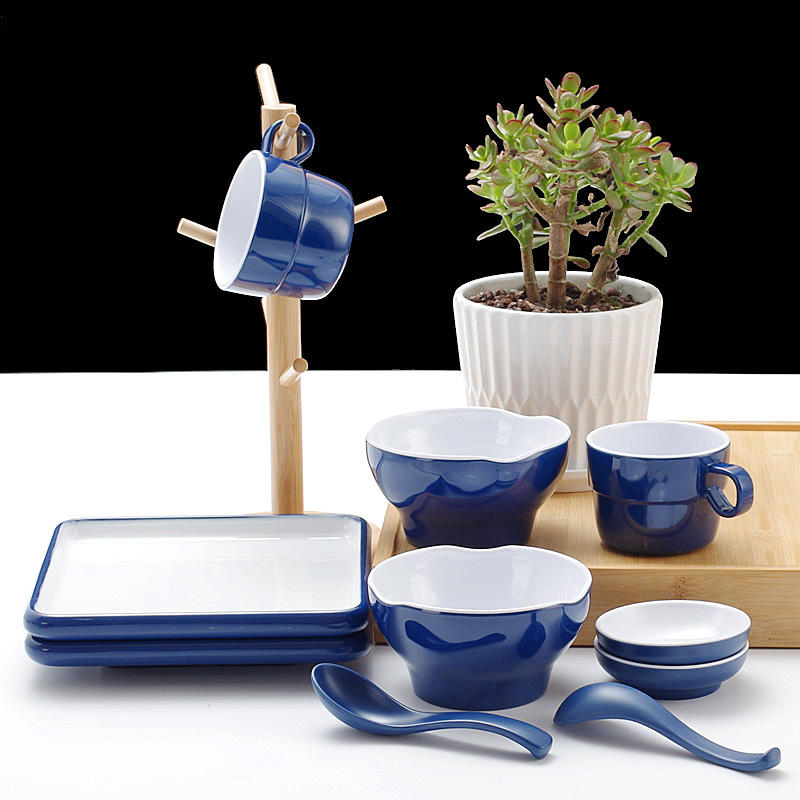
Every broken glass or chipped ceramic mug in a busy kitchen is a direct hit to your profit margin. Let’s face it: traditional glassware and porcelain in commercial kitchens see a yearly breakage rate of 20% to 30%. That’s a lot of money thrown in the trash. To stop spending on constant replacements and protect your guests from stray shards, upgrading to heavy-duty melamine cups is an easy choice. Buying wholesale melamine cups directly from a factory like Dongyu Technology removes shatter risks entirely and cuts your drinkware procurement budgets by more than 60%.
How A5 melamine actually works
When commercial foodservice operators, restaurant owners, and hospitality procurement managers talk about melamine cups, the word “plastic” usually triggers a collective sigh. People assume it means cheap. But the daily abuse of a commercial kitchen requires something far tougher than standard retail plastic or low-end imitations. The difference comes down to the raw chemistry: 100% A5 pure melamine-formaldehyde resin versus cheap A1 or A3 material blends.
To understand why premium wholesale melamine cups don’t break, you have to look at how they’re made. A5 melamine relies on pure melamine-formaldehyde resin. During production at Dongyu Technology, this compound undergoes a thermosetting reaction under intense heat—usually between 150°C and 170°C—combined with 200 to 400 tons of hydraulic pressure.
This extreme pressure causes a permanent chemical shift, creating a incredibly tight, three-dimensional cross-linked network at the molecular level. Once these bonds cure, heat can’t melt or reshape them. That’s what gives the cups their heavy, rock-hard feel and high impact resistance.
Cheap A1 and A3 options are a different story. They’re heavily mixed with urea-formaldehyde resin, which is a low-grade filler that simply can’t handle a restaurant environment. Urea makes the cups vulnerable to sudden temperature shifts, harsh detergents, and basic mechanical drops.
Within a few months, these cheap cups develop fine surface cracks called crazing. This ruins the cup’s gloss and turns it foggy, but the real issue is safety: those tiny microscopic cracks become breeding grounds for bacteria, which completely compromises food safety.
Here is how different drinkware materials stack up under heavy daily use:
| Operational Metric | 100% A5 Pure Melamine Cups (Dongyu) | Low-Cost A1/A3 Mixed Cups | Commercial Glass / Porcelain |
|---|---|---|---|
| Annual Breakage Rate | Less than 1% (Shatterproof) | 5% – 10% (Becomes brittle) | 20% – 30% (High risk) |
| Chemical Migration Risk | Zero (Fully compliant with FDA/EU 10/2011) | High (Leaches formaldehyde/urea) | Zero (Inert material) |
| Commercial Dishwasher Life | 3 – 5 Years (Maintains high gloss) | 3 – 6 Months (Crazing & fogging) | Variable (Chips easily on rims) |
| Certifications Provided | SGS, FDA, NSF/ANSI Standard | None / Fake certifications | Standard Food-Contact Safe |
Dongyu Technology prevents these issues with strict quality control. The rim and base always take the worst beating during clearing, stacking, and automated washing.
Before anything leaves the factory, every production batch of our 100% A5 pure melamine cups undergoes stress testing. We drop them from 3 meters onto reinforced concrete and test their edges for chipping. By making sure the molded resin has a uniform density throughout the cup, Dongyu Technology gets rid of the usual structural weak spots. This engineering gives the cups an operational lifespan of 3 to 5 years, dropping your replacement costs to almost zero.
Handling the “chemical migration” question
International B2B buyers and distributors in the US and EU cannot compromise on food contact compliance. The worst nightmare for an importer is having a massive bulk shipment held up or rejected at customs because of chemical non-compliance. When sourcing wholesale melamine cups, buyers always ask about chemical migration—specifically whether formaldehyde or melamine monomers leak into hot coffee or tea.
Global food safety authorities have studied this for years. High-quality A5 melamine drinkware is entirely safe for commercial foodservice when manufactured correctly.
The US Food and Drug Administration (FDA) notes in its safety assessments that while minuscule amounts of chemicals can migrate when coming into contact with highly acidic foods at high temperatures, the levels are safe.
Our laboratory extraction tests show that cups molded from 100% A5 resin are incredibly stable. While EU Regulation No 10/2011 sets a strict migration limit of 15 mg/kg for formaldehyde and 2.5 mg/kg for melamine, Dongyu Technology’s production batches consistently test below 0.1 mg/kg when serving coffee and tea at 70°C. That means our cups operate at safety margins 25 times stricter than European customs requirements.
Operational restriction: Never put melamine cups in microwave ovens, conventional ovens, or over an open flame.
While A5 melamine handles hot liquids up to 120°C perfectly, concentrated microwave radiation breaks down the resin’s covalent bonds. Over time, microwaving ruins the polymer structure, causing surface scorching, brittleness, and a higher risk of chemical migration. We explicitly mark our drinkware with “Do Not Microwave” because it keeps users safe and ensures long-term performance.
Dongyu Technology eliminates customs risks by providing verifiable, third-party laboratory credentials with every run. Regular extraction testing via SGS ensures chemical migration levels stay well below US FDA and EU No 10/2011 limits for fast customs clearance.
Our drinkware also carries NSF/ANSI commercial sanitation certification. To pass NSF inspection, the cups must have a perfectly non-porous surface that resists bacteria, oils, and stains during heavy washing cycles. For institutional procurement managers supplying schools, hospitals, or major fast-food chains, this documentation removes liability.
Washing cycles and insulation efficiency
Front-of-house service and back-of-house cleanup speed dictate your daily profits. Melamine works well in both areas because it does not conduct heat easily and handles sudden temperature changes beautifully.
Melamine acts as a natural heat barrier. If you pour 85°C drip coffee or hot tea into a standard ceramic or single-walled glass mug, the outside gets hot instantly, making it painful to hold.
With Dongyu’s A5 melamine drinkware, the exterior stays cool to the touch even when the drink inside is steaming. This prevents accidental spills by service staff, protects children or elderly residents from burns, and keeps the beverage hot for longer, which means better taste retention.
Back-of-house washing is a brutal environment. Commercial flight-type dishwashers run continuously, using a wash cycle between 65°C and 71°C, followed by a sanitizing rinse between 82°C and 90°C. Cheap plastic cups warp, crack, and turn cloudy under these conditions within a few weeks. Dongyu’s cups handle cycles from -20°C up to 120°C without warping or losing their gloss.
Because melamine holds onto residual heat, the cups exit the machine warm. Combined with standard rinsing agents, this built-in heat makes surface water evaporate almost instantly. They dry fast without trapping moisture droplets, which eliminates drying rack bottlenecks and gets clean cups back into service immediately during busy seating rushes.
OEM/ODM Precision: Advanced Decal Technology for Brand Synergy
For major restaurant franchises, hospitality groups, and corporate brand buyers, drinkware is a high-visibility marketing touchpoint. A customized cup acts as a silent brand ambassador on every table and in every guest photo shared on social media. However, commercial procurement managers know that standard aftermarket branding methods—such as traditional pad printing or surface silk-screening—fail catastrophically in a professional kitchen environment.
On standard plastic or glass drinkware, surface-printed logos typically begin to scratch, fade, or peel off after fewer than 50 cycles in a high-temperature commercial dishwasher. The combination of abrasive alkaline detergents, friction from stacking, and 82°C sanitizing rinses strips the ink away, leaving the establishment with unsightly, half-erased logos that severely damage the brand’s image.
To solve this persistent operational pain point, Dongyu Technology utilizes high-precision OEM/ODM manufacturing capability driven by advanced In-mold Decal Technology.
Technical Insight: The In-Mold Decal Production Process
Unlike low-cost suppliers who print graphics after the product is made, Dongyu Technology integrates custom graphics directly into the physical structure of the cup during the primary molding phase. The process relies on advanced thermosetting principles:
- Base Compression: The pure 100% A5 melamine raw material powder is placed into the steel mold and subjected to initial high-pressure compression to form the cup’s core shape.
- Decal Application: The mold is opened slightly, and a specialized, high-grade melamine foil sheet—pre-printed with the client’s custom brand artwork or pattern using food-safe, heat-resistant inks—is precisely aligned over the warm surface of the cup.
- The Glazing Shield: A crucial layer of pure, transparent Glazing Powder (crystalline melamine resin) is evenly applied over the top of the artwork foil.
- Integrated Thermoset Curing: The hydraulic press closes again, applying 200 to 400 tons of pressure at temperatures between 150°C and 170°C.
Under these conditions, the base cup, the printed artwork foil, and the protective glazing layer undergo a simultaneous chemical reaction. The layers literally fuse into a single, indivisible cross-linked polymer matrix.
True Scratch and Detergent Resistance
This advanced engineering completely encapsulates the custom branding beneath a glass-like, rock-hard protective shield. Because the logo is chemically sealed inside the outer layer of the material rather than sitting on top of it, the cup achieves industrial-grade protection:
- Scratch-Resistant: The hard melamine glazing layer successfully resists mechanical abrasion caused by heavy stacking, rough handling by kitchen staff, or contact with metal flatware.
- Detergent-Resistant: The protective layer shields the ink from direct contact with highly alkaline commercial warewashing chemicals and chemical drying agents, ensuring the design remains sharp and vibrant.
Through this flexible manufacturing process, Dongyu Technology provides massive design versatility for B2B buyers. Whether a client requires high-volume, standard single-color wholesale melamine cups with a sharp corporate logo for a quick-service franchise, or highly complex, multi-colored textured finishes that mimic natural stoneware or artisan porcelain for a boutique hotel, our factory delivers perfect visual fidelity. The result is a premium, custom-branded cup designed to stay visually immaculate through thousands of commercial wash cycles, offering permanent brand synergy without the risk of degradation.
Driving ROI and Sustainability Profiles
In international B2B procurement, environmental claims mean very little unless they are backed by verifiable operational cost reductions. For restaurant franchise owners, institutional purchasing officers, and hospitality finance directors, switching to premium melamine cups is fundamentally a strategic move to optimize Return on Investment (ROI). By looking closely at the lifetime replacement economics and regional sustainability mandates, it becomes clear that investing in high-grade A5 reusable drinkware drastically reduces both operational expenditures and environmental waste.
A Real-World B2B ROI Breakdown
To understand the financial impact of drinkware procurement, let us analyze a standard mid-sized, 150-seat casual dining restaurant operating at average capacity.
If this establishment utilizes traditional, fragile glass tumblers or low-cost, thin-walled plastic cups, they face a staggering annual replacement rate. Industrial restaurant metrics show that standard commercial glassware experiences a yearly breakage and chipping rate of 20% to 30%. In a 150-seat venue, maintaining an active inventory of drinkware requires constantly replacing broken stock, which quickly adds up to thousands of dollars annually in recurring purchase orders, rush shipping fees, and labor costs spent on manual inventory tracking.
Now, consider the financial trajectory when making a one-time capital investment in 100% pure A5 melamine cups from Dongyu Technology:
- Extended Lifespan: Due to its industrial-grade shatterproof properties, a premium A5 melamine cup boasts a reliable commercial service lifespan of 3 to 5 years, dropping the annual breakage rate to less than 1%.
- Minimized Replacement Cycles: Instead of reordering entire crates of glassware every quarter, procurement managers only need to top off stock due to occasional accidental loss.
- 60% Reduction in Total Cost of Ownership (TCO): Over a 3-year operating window, when factoring in the initial purchase price against the accumulated cost of constantly replacing broken glass or degraded single-use plastics, businesses consistently slash their comprehensive drinkware procurement spend by more than 60%.
Why Source Melamine Cups from Dongyu Technology
When global procurement managers, catering distributors, and high-volume brand buyers evaluate overseas manufacturing partners, generic promises like “fast shipping” or “excellent customer service” are not enough. In a highly regulated market where product failure leads to customs detention or operational downtime, sourcing decisions must be driven entirely by verifiable industrial metrics and production capabilities.
Dongyu Technology builds international B2B partnerships upon a foundation of hard manufacturing data, certified quality systems, and flexible industrial capacity.
1. Verified Raw Materials: Eliminating Adulteration at the Source
The performance of commercial-grade melamine cups depends heavily on the chemical purity of the raw compound before it ever enters the molding press. Low-cost manufacturers frequently lower costs by blending genuine melamine with cheap urea-formaldehyde resins (A1 or A3 material grades) or introducing reground post-industrial plastic waste into the production batch.
Dongyu Technology enforces an absolute zero-tolerance policy against material adulteration:
- 100% Native A5 Raw Materials: We exclusively purchase 100% pure, unadulterated A5 melamine-formaldehyde resin molding compounds from audited chemical suppliers.
- In-House Material Analysis: Our manufacturing facility operates a dedicated material inspection lab. Every incoming batch of raw powder undergoes strict verification testing—including Fourier-Transform Infrared (FTIR) spectroscopy and thermal flow testing—to confirm chemical purity, volatile content, and the absolute absence of urea contaminants before the material is cleared for the production line.
2. Traceable QA Process: Adhering to the ISO 9001:2015 Framework
Consistency is the most vital metric for a B2B supply chain. A buyer placing an order for 50,000 units requires the 50,000th cup to feature the exact same structural density, weight, and finish as the first pre-production sample.
Dongyu Technology achieves this precision by managing all operations within a fully certified ISO 9001:2015 Quality Management System. Every single production run is completely documented and traceable:
- Precision Parameter Controls: Our automated hydraulic presses log the exact curing profile—maintaining strict processing temperatures between 150°C and 170°C and a sustained pressure of 200 to 400 tons—ensuring the cross-linked polymer matrix cures uniformly without hidden structural voids.
- End-to-End Batch Traceability: From the initial automated powder weighing and hot-press timing to multi-stage automated edge deflashing, manual buffing, and final optical inspection, every step is tied to a specific batch number. This precise tracking allows us to provide international buyers with comprehensive Certificate of Conformance (CoC) documentation for every shipment.
3. Flexible B2B Capabilities: Bridging Custom Prototyping and High-Volume Scale
Managing global supply chains requires a manufacturing partner that can quickly adapt to changing order volumes and design adjustments without sacrificing production speed. Dongyu Technology operates as an agile OEM/ODM partner capable of supporting businesses at every stage of growth:
- Prototyping & Flexible MOQ: We lower the barrier to entry for brand testing by offering flexible Minimum Order Quantities (MOQ) for custom color matching and brand sample development. Our in-house mold engineering department can rapidly translate a client’s 3D CAD blueprints into physical, custom-decaled wholesale melamine cups for corporate approval.
- High-Volume Production Output: Backed by rows of heavy-duty automatic compression molding lines and an optimized production workflow, our factory maintains the massive monthly throughput capacity required to fulfill container-load orders for global restaurant chains, large-scale hospitality distributors, and institutional buyers without delay.
By combining rigid chemical purity, disciplined quality management, and robust industrial scalability, Dongyu Technology does not just supply dinnerware—we secure your supply chain, protect your brand identity, and insulate your business from liability.
Conclusion
Ready to eliminate recurring drinkware breakage expenses and upgrade to certified, food-safe A5 melamine tableware? Contact our international B2B sales team today to request a factory-direct wholesale quotation, order custom prototyping samples, or review our complete SGS, FDA, and NSF certification portfolios.