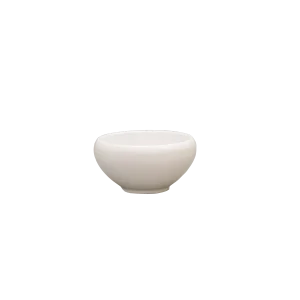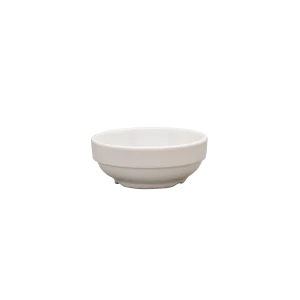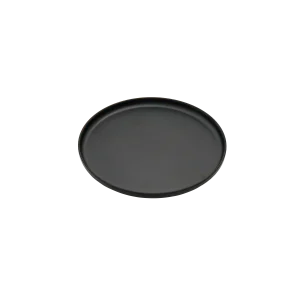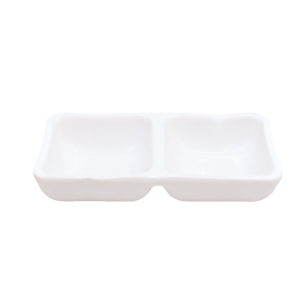
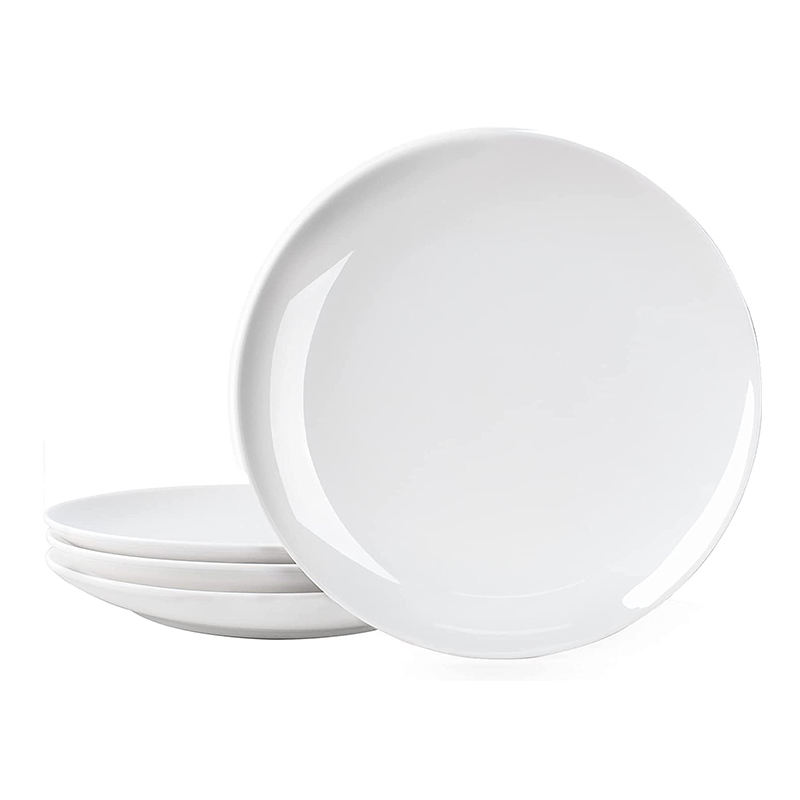
Most of the money lost on a wholesale melamine order disappears long before the container is built. It hides in the pro forma: a resin grade left vague, a migration report dated three years back, a lead time with no sampling node. The plate in the photograph looks correct either way. What separates a smooth reorder from a warehouse of rejects is the paper behind that photo.
The fix is a checklist you run before the deposit leaves your account. The table below is the short version. Each section that follows fills in what to ask for and what to put in writing.
| Pre-order check | What it protects |
|---|---|
| Match the plate to the use case | Right size, thickness, and grade for the job |
| Choose the channel by commitment | Lowest total cost without losing control |
| Demand batch-specific food-grade proof | Clears the border and survives a retailer audit |
| Sample and test the real piece | No surprises between the photo and the container |
| Set every term in writing | Leverage stays with you until the goods are proven |
Pick Commercial Melamine Plates by Venue
Write the use case down before you request wholesale melamine quotes. A plate built for a hotel buffet is not the same piece as one built for a kids menu or a poolside service. The use case decides the size, the wall thickness, the finish, and the grade you should be asking for, so settle it before the supplier starts pricing.
- A buffet or cafeteria needs impact resistance and fast stacking, usually in 9 to 12 inch diameters.
- A patio or pool service needs drop survival and fade resistance under sun and cleaning chemicals.
- A kids menu needs smaller diameters, brighter finishes, and the same food-grade base as the adult line.
- A plated restaurant needs the look, and commercial melamine plates cover that range.
Volume changes the conversation as much as the use case. A first order of 500 sets is a different negotiation from a standing monthly run of 20,000 pieces, and suppliers price, tool, and sample against the number you give them. Pin your reorder cadence too. A one-time event buy behaves nothing like a standing weekly order, and suppliers set tooling and print costs against how often you come back. Tell them the cadence, not just the first quantity, because the second order is where the real unit cost shows up.
A finish that reads as stoneware in a photo may look cheap under kitchen light, and a diameter that fits a buffet may drown a kids tray. Name the venue, the portion, and the wash method in the brief. The more specific the brief, the less the sample will surprise you. Set a per-piece budget range before quoting, because it steers the supplier toward stock colors or a custom mold that fits your margin.
Where to Buy Wholesale Melamine Dinnerware
Three channels carry most of the volume for melamine plates wholesale, and each trades price against control. Knowing where to buy melamine plates is only half the job; the channel you pick decides your risk and your ceiling on customization. Pick by how much you need and how much you want to control.
| Channel | Order size | Customization | Best for |
|---|---|---|---|
| Factory direct | Higher, set per line | Strong: molds and print | Volume buyers, private label |
| Trading company | Flexible, mixed lines | Moderate, sources around | Mixed ranges, faster start |
| B2B marketplace | Low to mid, listed stock | Weak, sold as shown | Spot buys, style tests |
Factory direct gives the lowest unit cost and the most control over color, logo, and mold, but it asks for a real minimum and a real lead time. A trading company sits between you and several factories, which speeds a mixed order but adds a margin and a layer you cannot always audit. A marketplace is fast for a small test run but rarely the right home for a private-label program.
The channel you pick also sets your exposure on a bad batch. Factory direct means you own the spec and the reject, but you also own the relationship and the margin. A trader can swap a failing line without renegotiating your contract, at a cost. Marketplace stock is fastest to test and slowest to scale. None of the three is wrong. They are different balances of price, control, and recovery time.
Wholesale melamine dinnerware rewards buyers who commit to a channel early. For a buyer testing a style before committing, a marketplace or trader is the lower-risk start. Once volume clears the minimum, the factory route wins on total cost. Match the channel to the commitment, not to the headline price. If you later move the same design to factory direct, keep the approved sample as the reference so the factory matches what already passed your test. Browse our bulk melamine dinnerware once your volumes are clear.
Food Grade Melamine Plates: Request the Proof
Food grade is the floor for melamine plates wholesale, not a feature. Pure food grade melamine dinnerware starts with a declared resin grade, so ask for that grade by name before you discuss color or mold. Pure melamine that meets food-contact rules is the only base you should accept, and you should see the proof in writing before production starts. Our notes on commercial melamine sourcing explain how to tell pure resin from a urea blend, and our FDA melamine import rules cover what the papers should say for the US and EU.
Request these from the supplier:
- A material declaration that names the resin grade, not just the word “melamine.”
- A third-party migration report, such as SGS or an equivalent lab, tied to your batch.
- The specific standard the report cites: FDA 21 CFR for the US or EU 10/2011 for Europe.
- ISO 9001 or a written quality system, so the line is auditable rather than casual.
Tip: Ask for the batch-specific report, not the company certificate. A generic certificate from three years ago does not cover the plates on your container.
Do not accept a generic “food safe” badge as the answer. A claim is not a standard. The report that names the test, the lab, and the batch is what clears your goods at the border and protects you if a retailer asks. Chase these files before the deposit leaves your account, because going after them once the container sails is slow and expensive. Food-contact compliance is about what leaches out of the finished piece under heat and detergent, and that varies by run. A report tied to your production date and your market is the only one a careful retailer will accept.
A retailer audit rarely asks whether the plate is pretty. It asks for the resin grade, the migration result, and the lab name. Build the file before you need it, because the weeks after a shipment is the worst time to discover the supplier never issued one.
Sample and Test Custom Melamine Plates
Sampling is where a melamine plates wholesale order proves itself, because the photo and the container are rarely the same piece. Never skip the sample, and never judge it by eye alone. A sample is your only look at the real product before a container locks the relationship.
Run these checks on the sample before you approve bulk:
- Wall thickness at the rim and base, measured, not guessed. Thin spots chip and warp first.
- Edge finish: drag a fingernail along it. A clean, sealed edge resists stains and bacteria.
- Print adhesion: scratch the logo with a coin. Weak print flakes in the dishwasher within weeks.
- Dishwasher test: run the sample through your own machine ten times. Watch for clouding, scorch, or warping.
- Color match: hold the sample next to the approved swatch under your lighting, not the supplier’s.
For custom melamine plates, the sample is also the contract. If the printed logo, the speckle, or the Pantone is off on the sample, it will be off on the container, so reject and re-sample before you release the balance. A week spent on sampling saves a season of returns.
The cost of sampling is a rounding error against the cost of a rejected container. Treat the sample as the first production unit, not a courtesy. When the sample passes, write the approval date on the file and attach the photos, because that dated record is what you hold the balance payment against. Photograph the sample against a ruler and a color card so the approval is objective, not a memory of how it looked that day.
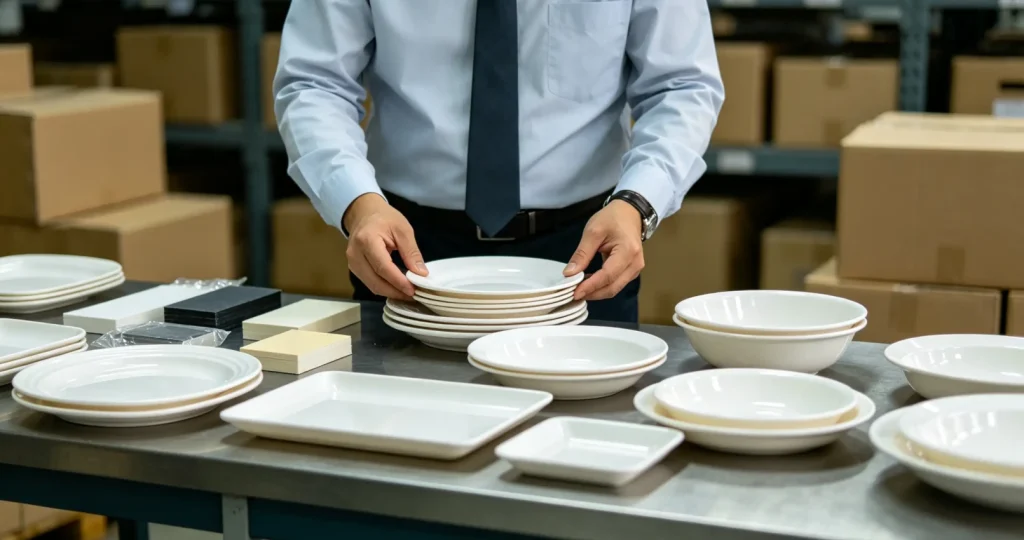
Lock Bulk Melamine Dinnerware Order Terms
For melamine plates wholesale, order terms are where cheap quotes hide their real cost. Get the numbers in writing, matched to your design and color, not as a verbal “around that much.”
- Minimum order is usually lower for stock colors and higher for custom mold or print. Ask for the number against your exact design.
- Lead time splits into sampling and production. Sampling runs days to weeks; production runs weeks, longer near holiday cutoffs.
- Payment terms commonly run deposit plus balance against documents. Write the trigger for each release.
- Incoterms decide who carries freight and risk. Know whether your price is EXW, FOB, or CIF before you compare two suppliers.
EXW means you collect from the factory gate and own everything after. FOB means the supplier loads the container at the port, and your freight starts there. CIF adds insurance and ocean freight into the supplier’s price. The same plate can look cheaper under CIF and cost more once you strip the freight out, so compare like for like.
Note: A pro forma with a single “50% deposit, 50% before shipment” line gives the supplier every excuse to slip the schedule. Name the sample approval, the inspection pass, and the report as separate release points.
Holiday cutoffs in China shift lead times by weeks, so confirm the production window against your sell-through dates, not just the supplier’s calendar. The trap is a quote that looks low because the minimum is high or the term is vague. A supplier who will not put the minimum and the lead time in the pro forma is telling you something. Make the order math explicit: a deposit against sample approval, a balance against a clean pre-shipment inspection, and a holdback against the migration report keeps leverage on your side until the goods are proven. Vague terms move the risk to you the moment the deposit clears, which is exactly when you lose the ability to walk away.
Vetting Restaurant Melamine Plate Suppliers
Most costly mistakes on a melamine plates wholesale order show up at the quote stage, not at the dock. Slow down on any of these signals before you send a deposit.
- The grade is vague. “100% melamine” with no A5 or resin detail is a claim, not a spec.
- No batch-specific report. A years-old company certificate does not cover your production run.
- Samples refused. A supplier who will not send a pre-shipment sample controls the information.
- Lead time hand-waved. “Around a month” with no node for sampling and production is a delay waiting to happen.
- Reorder story thin. Ask restaurant melamine plate suppliers for a reference account that reordered. No names means no track record.
- Price drops after you ask hard questions. A supplier who suddenly discounts once you request the grade and the report is often conceding the point. Treat the discount as the signal, not the win.
A useful habit is to send the same spec to two or three suppliers on the same day. When one lands far under the others, the gap is almost always the resin or the term, not factory magic. That spread is your fastest filter, and it costs one email. One importer we know caught a urea blend this way: the low quote dropped by a third the moment he asked for the A5 grade and the batch report, which told him everything he needed before money moved.
FAQs
Where Can You Buy Melamine Plates Wholesale?
Three routes work. Factory direct gives the lowest unit cost and the most control over mold and print. A trading company aggregates lines and starts faster, at a margin. A B2B marketplace is fine for a small test run but weak for private label. At volume, the factory route wins on total cost once your order clears the minimum.
What to Check Before a Bulk Melamine Order?
Pin the use case and size first. Then demand food-grade proof in writing, sample and test the real piece, confirm the minimum and lead time in the pro forma, and check the supplier’s reorder record. Those five steps cover most failures. Skipping the sample or the certificate is how a cheap quote becomes a container you cannot clear.
How Low Is the Minimum Order for Melamine?
It varies by supplier and by design. Stock colors and existing molds often sit at a lower minimum than a custom shape or print, because custom work adds tooling. Ask each supplier for the number against your exact design and color, in writing, rather than a verbal range. The minimum that fits your program matters more than the lowest headline number.
How Can You Trust a Melamine Plate Supplier?
Ask for shipment references that reordered, not just first-time buyers. Request the resin grade, the batch-specific migration report, and the audit or quality certificate, then verify the lab name. Run a small sample through your own dishwasher before committing volume. A supplier who answers these without hesitation and ships a matching sample is usually worth a trial order.
How Long Does a Wholesale Melamine Order Take?
It depends on sampling and production. Stock colors with no custom work move fastest. Custom mold or print adds sampling, then production, then freight. Write the sampling node and the production node into the contract. Do not plan a launch around a verbal lead time, because the calendar that matters is the one in the pro forma.
Your Wholesale Melamine Order: Final Checks
Wholesale pitfalls are mostly avoidable before you order: set the use case, demand food-grade files, sample the real piece, and confirm the minimum and lead time in writing. For bulk melamine dinnerware sets sized to your volumes, or a sample on your own design, talk through your order with our team.