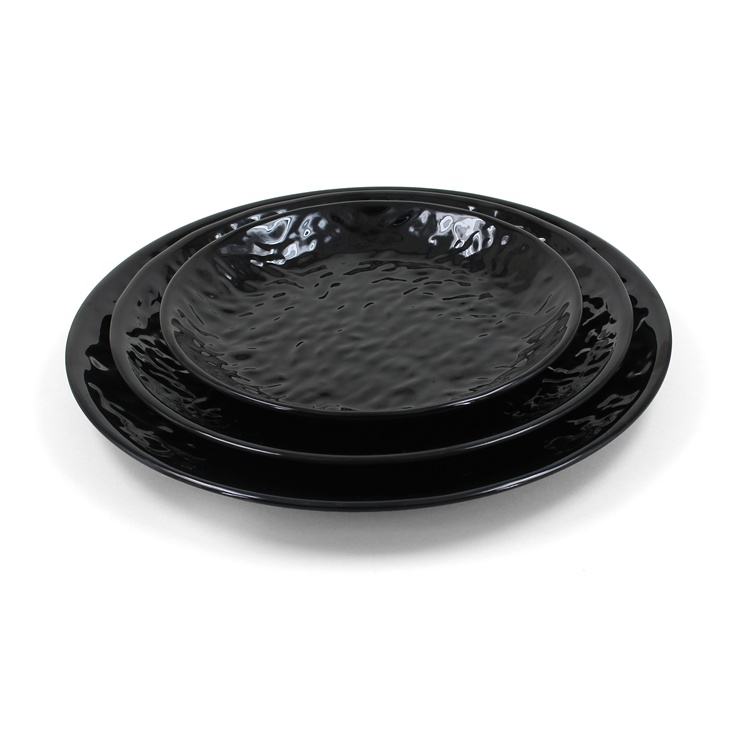
In the high-stakes environment of the commercial foodservice industry, dinnerware is far more than a canvas for culinary presentation—it represents a continuous operational cost. Every day, restaurant owners, procurement managers, and hotel supply distributors face a relentless logistical headache: the high breakage rate of traditional ceramic and porcelain dishes.
To mitigate these ongoing expenses, global buyers are increasingly turning to melamine restaurant plates as the ultimate shatterproof, lightweight alternative. In a bustling commercial kitchen, transitioning to high-quality commercial melamine dinnerware is no longer just an aesthetic choice, but a strategic financial decision.
Transforming Raw Powder into a High-Density Thermosetting Structure
The life cycle of a premium melamine plate does not begin in the press mold; it starts in the raw material warehouse. A major reality in the B2B procurement landscape is the prevalence of adulterated melamine. Low-grade manufacturers often blend pure melamine with cheap urea-formaldehyde (UF) resin to lower production costs. While UF-blended plates look identical to pure melamine at first glance, they suffer from poor thermal stability, low impact resistance, and a tendency to release chemicals when exposed to hot acidic foods.
Dongyu eliminates this risk at the source. The factory strictly utilizes 100% pure A5-grade Melamine Formaldehyde Resin Powder. A5 melamine is completely food-safe, non-toxic, odorless, and chemically inert, meeting strict international compliance standards including the US Food and Drug Administration (FDA) regulations, European Union (EU) Regulation No. 10/2011, and SGS certifications.
To prepare this raw powder for the immense forces of compression moulding, Dongyu implements a critical raw material pre-treatment phase:
- Precision Automatic Weighing: Every specific plate design—such as a 10.6-inch deep coupe plate or a 12-inch oval platter—requires an exact, pre-determined grammage of A5 powder. Automated scales ensure consistency, as even a 2-gram deficit can cause structural weak points or thin edges in the final product.
- High-Frequency Molecular Preheating: The precisely measured resin powder is transferred into a high-frequency preheating machine. Utilizing localized electromagnetic waves, the machine rapidly and uniformly heats the powder to 80°C – 90°C within seconds.
This preheating phase serves a critical operational purpose: it forces the loose powder to clump into a hot, homogeneous semi-solid cake while simultaneously evaporating residual moisture and volatile micro-gases trapped within the raw resin. Eliminating these gases before the molding phase prevents the formation of microscopic internal air pockets. In commercial operations, those tiny hidden pockets are what cause lower-grade plates to expand and crack when subjected to the thermal shock of commercial dishwashers.
How Dongyu’s Precision Compression Moulding Process Ensures Durability
Once the raw A5 material is preheated and compacted, it moves immediately to the core of Dongyu’s production floor. The factory floor features rows of automated, high-precision Taiwan Hydraulic Molding Machines ranging from 150 tons to over 300 tons of clamping pressure.
The compression moulding process at Dongyu is broken down into a tight, multi-stage matrix where time, temperature, and hydraulic tonnage are calibrated precisely to ensure a flawless chemical reaction.
Step 1: The Primary High-Pressure Thermoforming (The First Press)
The heated resin cake is manually placed into the cavity of a high-grade, CNC-machined, chrome-plated steel mold. The Taiwan hydraulic press closes smoothly but forcefully, applying 150 to 300 tons of locking pressure directly to the material. The internal mold temperature is strictly regulated between 150°C and 170°C.
Under this intense heat and pressure, the semi-solid resin cake melts completely, flowing into every micro-groove of the steel mold cavity. This environment triggers an irreversible cross-linking chemical reaction. The individual melamine and formaldehyde monomers bond tightly into a dense, three-dimensional thermosetting polymer network. The press holds this position for a strict cure cycle of 40 to 60 seconds. This phase establishes the fundamental structural integrity of the plate, providing its signature impact resistance and low thermal conductivity.
Step 2: Custom Branding & Decal Fusion for Branded Melamine Restaurant Plates
For commercial foodservice brands, custom branding and logo longevity are core marketing requirements. Dongyu handles this through an integrated raw decal fusion process rather than cheap surface printing that easily fades.
After the initial 40-60 second cure, the hydraulic press automatically opens. A specialized technician or a precision mechanical arm places a customized Melamine Decal Paper directly onto the hot, semi-cured surface of the melamine restaurant plate. The press closes for a secondary compression cycle lasting 15 to 20 seconds. Under high heat, the resin within the decal paper liquifies and chemically fuses with the underlying base. The design does not sit on top of the plate; it becomes an inseparable layer of the plate’s physical structure, ensuring your restaurant’s logo remains vibrant after thousands of commercial dishwashing cycles.
Step 3: Overglazing Protection & Mirror-Polishing (The Third Press)
To provide a defensive barrier against the daily wear and tear of restaurant use, the plate undergoes a third and final pressing cycle known as the glazing phase.
The press opens once more, and a uniform layer of premium Glazing Powder (also known as clear melamine crystal powder) is dusted across the entire top surface of the plate. The hydraulic press locks down for the third time. The glazing powder melts instantly at 160°C, forming a completely transparent, glass-like protective shield across the surface of the dinnerware.
This third press serves two major commercial functions:
- Anti-Scratch Barrier: It cures into an ultra-hard surface that shields the plate against the abrasive scrapes of stainless steel knives and forks.
- Stain and Chemical Resistance: The glazing layer seals off any micro-pores on the plate surface. This prevents dark sauces, curries, chili oils, and chemical sanitizers from penetrating the material, keeping the plate vibrant, stain-free, and easy to sanitize.
Post-Processing Rooted in Dongyu’s Tooling Expertise
When the hydraulic press opens after the final glazing cycle, the molded melamine plate is fully formed and chemically cured, but it is not yet ready for a restaurant table. As the intense 300-ton press forces liquid resin to fill the mold cavity, a tiny fraction of excess material slips through the mold’s parting lines, creating a thin, sharp perimeter residue known as flashing.
This is where Dongyu’s unique industrial background gives it a major competitive advantage. Beyond producing tableware, Dongyu Technology possesses deep corporate expertise in the manufacturing of hardware grinding tools, engineering molds, and industrial machinery. The factory applies this specialized knowledge directly to its post-processing lines:
- Multi-Stage Edge Grinding: Plates are routed to automated deflashing lines and specialized operators equipped with custom-engineered grinding wheels of varying grits. The sharp flashing is cleanly sheared off, followed by a sequence of coarse-to-fine edge grinding.
- High-Buffing Polishing: The ground edges are processed on high-speed cloth buffing wheels. This step polishes the perimeter to a smooth, rounded finish. This precise finish ensures that kitchen staff and servers can handle large stacks of plates comfortably during busy shifts without encountering sharp edges.
The Quality Control (QC) Audit Matrix
Before any batch of melamine restaurant plates is cleared for international export, it must pass a strict quality control protocol based on AQL 2.5 to 4.0 commercial inspection standards. Samples from every production run are subjected to destructive and non-destructive testing inside Dongyu’s internal laboratory:
| Test Category | Operational Protocol | Commercial Performance Metric |
|---|---|---|
| Thermal Shock Test | Repeated cycling between a -20°C freezer and a 120°C high-pressure steam autoclave. | Zero cracking, warping, or surface micro-fissures allowed. Ensures dishwasher safety. |
| Impact Resistance Test | A heavy steel ball is dropped from a set height directly onto the center and rim of the plate. | Plate must absorb the kinetic energy without shattering or chipping. |
| Stain Penetration Test | Plate is submerged in a concentrated hot iodine and soy sauce solution for up to 4 hours. | Surface must wash completely clean with standard detergent, leaving zero discoloration. |
Why Ordering from Dongyu Optimizes Your Restaurant’s ROI
For hospitality purchasing agents, chain restaurant executives, and hotel supply distributors, evaluating dinnerware is ultimately a financial calculation. While a ceramic plate and a premium melamine plate might carry similar initial purchasing costs, their long-term impact on a business’s income statement is completely different.
Calculating the Total Cost of Ownership (TCO)
Consider a mid-sized casual dining restaurant chain operating 10 locations, with each location requiring a base inventory of 1,500 dinner plates.
- The Ceramic Scenario: With a standard 25% annual breakage rate, the chain must purchase 3,750 replacement ceramic plates every single year simply to maintain baseline operations. This represents an ongoing capital drain and introduces logistical friction into the supply chain.
- The Dongyu Melamine Scenario: Due to the dense cross-linked molecular structure achieved via Dongyu’s three-press compression moulding, the breakage rate drops to less than 2% per year. A single investment in Dongyu tableware can easily last 3 to 5 years in a high-volume commercial kitchen environment, effectively eliminating annual replacement lines from the operational budget.
Operational Efficiency in Front-of-House
Beyond pure durability, Dongyu’s compression-moulded melamine restaurant plates optimize physical kitchen workflows:
- Weight Reduction: Premium melamine plates have a structural density that mimics the substantial weight and premium feel of porcelain, yet they are approximately 1/3 lighter than traditional ceramics. For front-of-house service staff carrying large trays with 6 to 8 entrees at once, this weight reduction significantly reduces physical fatigue. This ergonomics improvement minimizes accidental drops and helps prevent workplace strain injuries.
- Optimal Thermal Retention: Melamine is an excellent natural insulator. Unlike ceramic, which quickly siphons heat away from freshly cooked food, Dongyu melamine plates maintain the food’s serving temperature longer without requiring excessive pre-heating under heat lamps. Furthermore, the plate remains comfortable to hold from underneath, protecting servers’ hands during fast-paced food passes.
Complete OEM/ODM Manufacturing Agility
Because Dongyu manages its own internal mold engineering and machinery divisions, the company offers extensive customization options for global B2B clients:
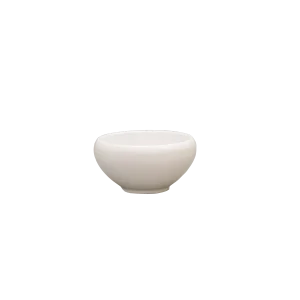
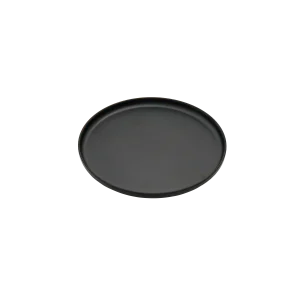
- Aesthetic Versatility: Dongyu can manufacture plates across a wide variety of styles to match specific brand identities. Options include traditional high-gloss white minimalist collections for hotel banquets, textured earthy matte finishes for farm-to-table concepts, and deep slate-black styles tailored for upscale Japanese and Korean fusion restaurants.
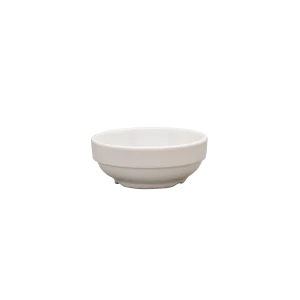
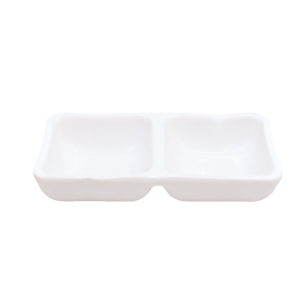
- Custom Geometric Molding: If a restaurant group requires a proprietary rim depth, integrated dipping sauce compartments, or a specific stackable nesting lip designed to save space in compact galley kitchens, Dongyu’s engineering team can design, prototype, and manufacture custom steel production molds completely in-house.
Conclusion
In the global hospitality and commercial catering sectors, operational efficiency is driven by the reliability of your equipment. A restaurant plate is more than a simple service item; it is a critical tool that must withstand constant handling, high-temperature chemical washes, and accidental drops day after day.
As we have explored, the durability of premium melamine restaurant plates is defined by meticulous manufacturing control. From the sourcing of pure, unadulterated A5 melamine resin to the precision of high-frequency preheating, and from the rigorous three-stage hydraulic compression matrix to expert edge-grinding, Dongyu Technology delivers an engineered solution built for heavy commercial use. By investing in dinnerware manufactured under these rigorous industrial standards, global buyers protect their brand presentation while optimizing long-term operational profitability.