Most distributors and brand owners I talk to already know they could launch their own dinnerware line. What stops them is the gap between “I have an idea” and “there’s a box of my branded plates on a retail shelf.”
White label melamine tableware closes that gap faster than people expect. The hard part, molding and material compliance, is already solved by the factory. This article maps eight concrete steps. Each one ends with a deliverable you hand to your supplier, so you can move an own-brand tableware program from sample to shelf without guessing.
I’ve watched plenty of launches stall, and almost none of them stalled on the product. They stalled on the steps in between: a vague brief, a sample nobody signed off, a certificate that arrived after the container sailed. Get the sequence right and a first white label melamine tableware program is far less scary than it looks on paper.
| Step | What you do | Key deliverable |
|---|---|---|
| 1 | Position your line | Buyer profile + use-scene note |
| 2 | Pick a partner | Confirmed A5 resin spec |
| 3 | Choose hero items | 3–5 SKU shortlist |
| 4 | Sample | Approved physical sample |
| 5 | Sign-off & bulk | Locked compliance file |
| 6 | MOQ & quote | Written quote (mold / unit / tooling) |
| 7 | Packaging | Approved dieline + box photo |
| 8 | Shelf & reorder | Reorder table + 30-day trigger |
1. Know Your Lane: Positioning Your Own Brand
The channel you sell through shapes everything. Start there.
Start with the end customer
Before you ask a factory for a quote, decide which lane you’re in. A supermarket building a store-brand range answers to different buyers than a boutique hotel sourcing retail dinnerware. A reseller shipping generic sets under several client logos is a third lane again.
The channel sets your price ceiling, your compliance paperwork, and how much customization actually pays off.
If you’re wondering how to start private label dinnerware, begin with the end customer, not the catalog. A hotel needs durability and stackability. A gift shop wants color and novelty.
Sketch one typical buyer and one use scene on a single page. That note does two things:
- It stops you ordering 3,000 bowls nobody wants.
- It tells the factory exactly what “good” means before the first mold is cut.
Don’t copy the competitor SKU for SKU
A common mistake is mirroring a rival’s range piece by piece. White label melamine tableware rewards focus, not breadth.
Pick the occasion you can win. A family dinner. A café breakfast. Build the line around it.
Buyers notice a tight, coherent range faster than a scattered one. A narrow start is also easier to reorder correctly later.
Deliverable: one-page buyer profile and one use-scene note.
2. Pick a White Label Partner, Not Just a Factory
A partner does more than pour resin
White label works only if your partner can do more than pour resin. You want a white label tableware manufacturer that runs its own compression-molding line, holds food-contact certificates, and has shipped to your target market before.
A cheap workshop that subcontracts molding will struggle to keep color and weight consistent across reorders. Consistency is what keeps a private label dinnerware supplier in business. For any white label melamine tableware program, a reliable partner matters more than a low quote.
Material decides everything else
Real A5 melamine is a thermoset resin. It stays stable up to about 120°C and passes FDA 21 CFR 177.1460 and EU 10/2011. Cheaper A1 blends soften and can leach under heat.
Before you commit, confirm the resin grade with the supplier. The difference shows up only after a dishwasher cycle or two, when a bargain batch starts to smell or warp.
Confirm pure A5 before you order
Three checks separate pure A5 from filler blends:
- Ask for the material declaration and the food-contact certificate.
- Run a hot-water test on the sample (A1 smells, A5 doesn’t).
- Compare the weight against a known pure-A5 reference.
Here is the practical test list: confirm pure A5 resin before you order.
3. Choose Your Hero Items
Three to five hero pieces, not forty
Don’t try to launch forty SKUs on day one. Pick three to five hero pieces that cover a real meal occasion.
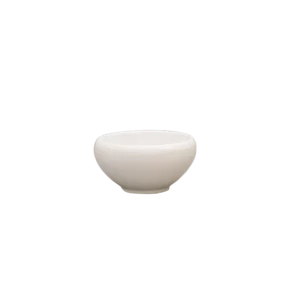
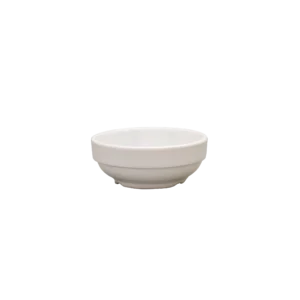
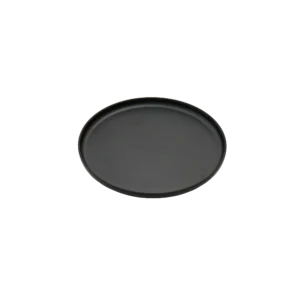
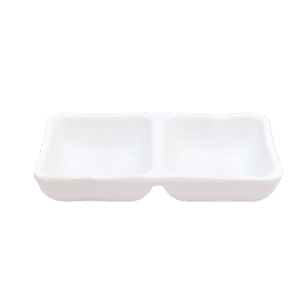
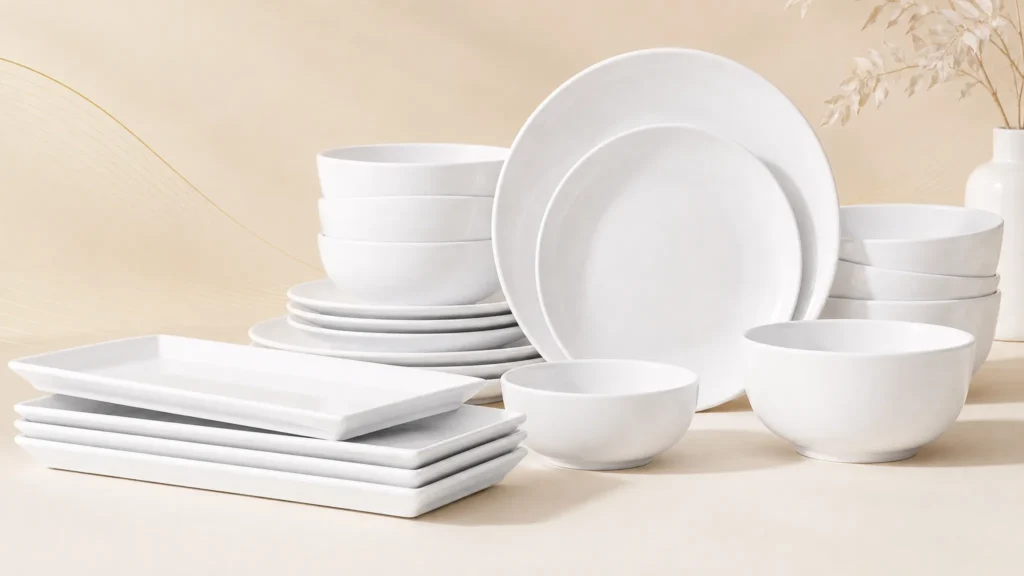
White label plates in 9 and 10.5 inch sizes move first. Private label bowls for cereal, rice, and soup follow. A branded dinnerware set starter of four plates and four bowls lets a new brand look complete the moment it hits the shelf.
Lead with what gets handled most
Watch the weight. Melamine beats ceramic because it doesn’t shatter. The items that benefit most are the ones handled by rushed staff and restless kids:
- divided kids’ plates
- outdoor sets
- cafeteria trays
Lead with those and your first reorder comes sooner. That’s the only real proof a new white label melamine tableware line is working.
Color and decoration come second
A solid-color body with a single decal is cheapest and fastest to reorder. A full-wrap print costs more and takes longer.
Most white label plates start with one or two body colors and a logo decal. They add patterns once the line has proven demand. Resist launching every finish at once. Each one is a separate batch and a separate inventory line to manage.
Deliverable: a short hero-SKU list with sizes, not a full catalog wish list.
4. Sampling: From Drawing to Physical Bowl
From sketch to physical sample
The sample stage is where white label melamine tableware ideas become objects. Send a drawing, a photo, or even a hand sketch. A capable factory returns a 3D render, then a physical sample within roughly 7 to 15 days.
You’re checking three things:
- the shape matches
- the color matches your Pantone
- the finish feels right in the hand
For custom brand plates, confirm the rim thickness. Thin rims chip at the edge after a few months of stacking.
Watch for factory discipline
This is also where factory discipline shows. A partner who walks you through the inspection process without being asked is worth more than one who quotes ten percent lower and goes quiet when you mention quality records.
Ask to see the mold maintenance log and the in-process weight checks. They tell you whether your second order will match your first.
A good walkthrough explains what a real factory inspection actually covers, from mold logs to final sampling: what a real factory inspection actually covers.
5. Sign-off and Bulk Production
Production timeline
Once the sample is approved and signed off, production begins. A typical run of plain shapes takes about 15 to 30 days after the mold is ready. Add decals or multi-color printing and it runs longer.
Lock the compliance file
The moment samples clear, lock the compliance file:
- FDA or LFGB certificates
- heavy-metal test reports
- a signed material declaration
Bulk importers live and die by this paperwork. From sample to bulk production, dinnerware is a short hop only when the certificates travel with the containers. A missing document at the port costs more than the entire mold.
Shipping white label melamine tableware to your warehouse is routine once the file is complete. A headache when it isn’t.
Decals add a second check
Decals and multi-color printing add both time and a second quality check. A printed logo that sits slightly off-center is visible on every unit. Ask for a print-position sample before the full run.
The compliance file doesn’t change. The approval step does. Skipping it is how misaligned logos reach the shelf.
Before your goods sail, study the FDA and LFGB rules bulk importers follow, so a customs hold never sinks the launch: the FDA and LFGB rules bulk importers follow.
6. MOQ and Quoting
The MOQ reality
Minimum order quantity is the number that decides whether your line exists at all. For melamine, private label melamine MOQ usually lands between 1,000 and 3,000 pieces per item. Smaller items like cups sometimes start near 500.
Color is the silent driver: every extra color is a separate production batch. A four-color program needs four times the floor space and capital, not a quarter of it.
Negotiate for your model
If you run a reseller dinnerware model and serve several small clients, negotiate a shared mold with client-specific decoration. Or launch one hero color and add shades once the line proves itself.
Get the quote in writing with three things separated:
- mold cost
- unit price at your volume
- tooling ownership
The unit economics of white label melamine tableware only make sense once you see those three numbers separated, not bundled into one mystery price.
Deliverable: a written quote splitting mold fee, unit price, and tooling ownership.
Don’t skip tooling ownership
Tooling ownership is the clause most first-timers skip. If you pay for the mold, the factory shouldn’t reuse your exact shape for another client without permission. You should be able to move the mold to another plant. Put it in writing.
The unit price of white label melamine tableware looks similar across suppliers. The mold terms are where they quietly differ. That difference decides who controls your design two years from now.
7. Packaging and Brand Identity
Retail wants a real box
Packaging is where white label becomes your brand. Plain bulk packs are fine for foodservice. Retail wants a printed color box, a barcode, and care instructions.
Private label dinnerware packaging is where most first-time brands underspend. Then they wonder why their shelves look generic next to established names. White label melamine tableware lives or dies on shelf presence, and the box is half of that presence.
Decide the box details
Decide logo placement, box size (it drives shipping cost), and whether the box opens to show the product. For a branded dinnerware set gift line, the unboxing is part of the product.
A good factory supplies dieline templates so your designer works to spec instead of guessing. Order a few finished boxes with the first run and photograph them under real shelf lighting before you commit to ten thousand.
Deliverable: approved dieline and a photographed sample box under shelf light.
8. Shelf, Stock, and Reorder
Set a reorder point
Landing stock is the start, not the finish. Set a reorder point at about 30 days of sell-through so production lead time never empties the shelf.
Store-brand melamine programs win on refill speed, not on a clever launch. Buyer trust comes from “it’s always there” rather than from a single splashy debut.
Track what actually moves
Track which SKU actually moves. In my experience the 10.5 inch plate and the soup bowl reorder first. The novelty item lags.
Trim slow movers on the second order and put the capital into your heroes. Keep the mold file so every reorder stays identical. Your white label melamine tableware line will look the same in year three as it did on day one.
Deliverable: a reorder table with lead time and a 30-day sell-through trigger.
A simple spreadsheet beats intuition here. Log three things:
- arrivals
- daily sales by SKU
- the reorder date
After two cycles you’ll see which hero actually earns its shelf space and which was a guess. White label melamine tableware programs that track this early avoid the classic trap of reordering the slow mover out of habit. That quietly ties up the capital that should fund the winners.
FAQ
1. What is private label melamine dinnerware?
Private label means a factory makes the product and you sell it under your own name. With melamine dinnerware, the factory handles molding, decoration, and compliance. You own the brand, the packaging, and the customer relationship.
How it differs from OEM and ODM
It differs from OEM, where you usually supply the design. It also differs from ODM, where the factory’s existing design is resold. White label melamine tableware sits closest to “take the finished, unbranded good and put your name on it.” Most suppliers let you customize far beyond a sticker.
2. How much does private label dinnerware cost?
Two cost layers matter. Ask for a quote that separates them so you can see what you’re really paying for.
Mold or tooling (one-time)
For a standard shape it runs roughly $1,200 to $3,500 per cavity. It’s often a one-time fee you own.
Unit price (drops with volume)
Plain 10 inch plates might sit around $0.40 to $0.90 each at a few thousand units. Thick, decorated, or small items cost more.
Packaging, certificates, and shipping
These add on top of mold and unit costs. Request them as separate line items in your quote.
3. Can I design my own melamine dinnerware line?
Yes. Shape, size, color, surface pattern, logo, and box are all fair game. Send a sketch or reference photo. The factory returns a render and a physical sample, usually within 7 to 15 days, before any bulk commitment.
Design limits to respect
The only real limits are physics. Very thin walls chip. Melamine isn’t microwave safe above about 70°C. Designs for white label melamine tableware should respect those facts rather than fight them.
4. What is the MOQ for private label melamine?
Plan on 1,000 to 3,000 pieces per item for most tableware. Small items like cups or condiment dishes sometimes sit near 500 to 1,000.
Color multiplies the requirement
Each added color is a separate batch, so a four-color line multiplies the floor requirement. If capital is tight, launch one hero color and expand once the line sells.
Why low-volume runs don’t work
Don’t expect a 200-piece run on a brand-new mold. The economics don’t work for either side.
Conclusion
Eight steps take white label melamine tableware from a notebook sketch to a shelf your customers recognize.
- Position the line.
- Pick a partner who molds and certifies.
- Choose a few hero items.
- Sample hard.
- Lock compliance.
- Quote with eyes open.
- Brand the box.
- Reorder on data.
The barrier was never the factory. It was deciding to start.
When you’re ready to spec the next round, browse our blank melamine dinnerware ready for your brand: browse our blank melamine dinnerware ready for your brand. Keep your mold file so every reorder stays identical.