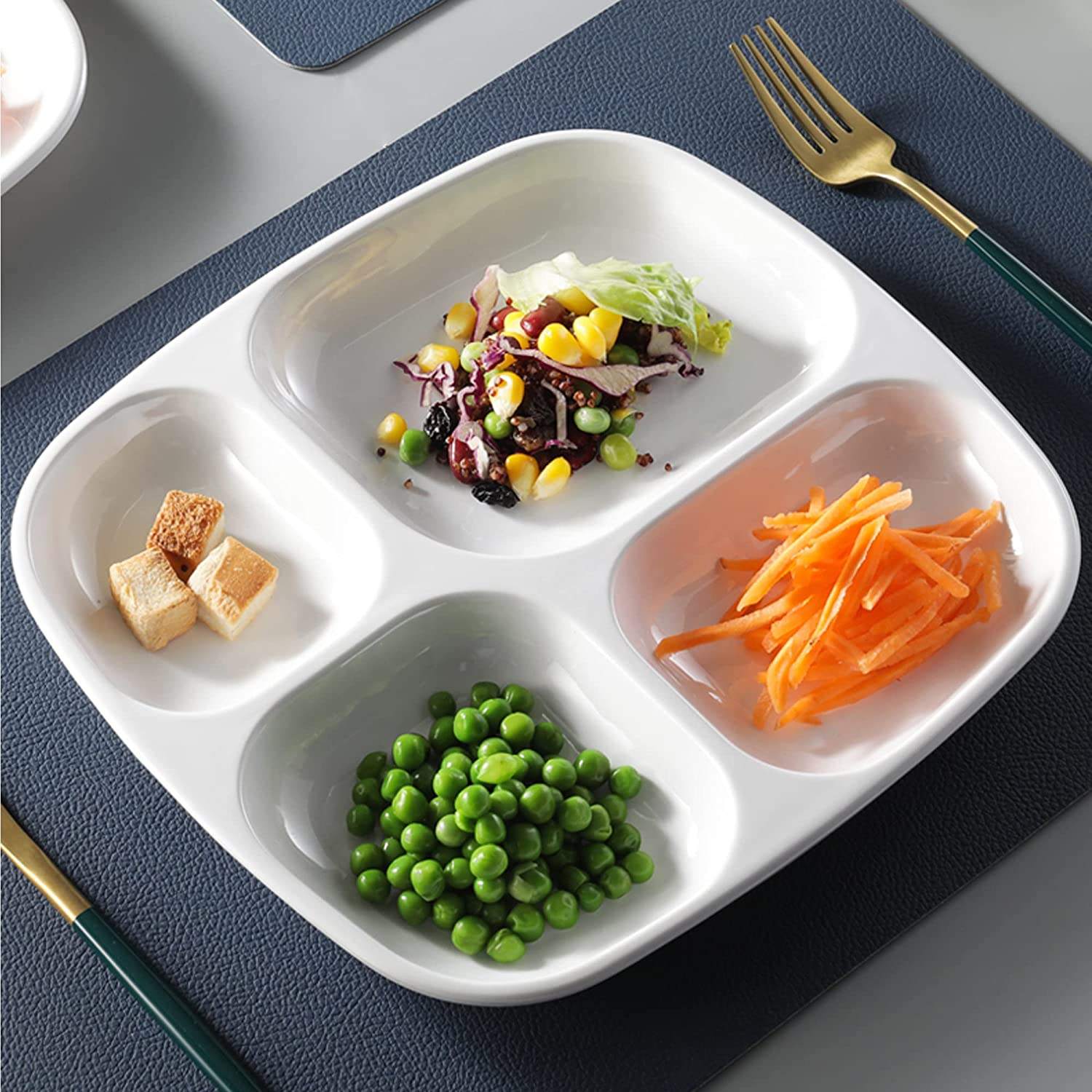
When people hear “compartment plates,” most picture a toddler’s lunch tray or the divided dish in a care home. That image is why many adults never consider them. Yet on commercial kitchen lines, inside meal-prep communities, and at campsites across Europe, divided plates have become a practical tool for a different crowd: adults who want portion control without a food scale, batch-cooked lunches that hold up through a fridge week, and outdoor meals that stay separated instead of turning into one mixed puddle.
This guide covers how adults actually use compartment plates, how to choose the right layout and material, and the one fact most product pages skip: what really happens when melamine meets a microwave.
Why Compartment Plates Aren’t Just for Kids
The Adult Case for Divided Plates
The “divided plate equals child’s plate” idea comes from marketing, not function. A compartment plate is a food separator plate, sometimes called partition plates or sectioned plates, with walls between its sections. Those walls do the same job whether the user is three or thirty-three.
In B2B buying, adult compartment plates show up for three distinct buyers:
- Corporate meal-prep services build calorie-consistent packs with them.
- Fitness and diabetes-management programs use them so visual portioning replaces weighing.
- Hospitality and outdoor brands adopt them for grab-and-go formats that don’t leak in transit.
None of those buyers care about cartoon prints. They care about consistent portions, leak-free separation, and durability that survives daily use.
If you source for any of those scenarios, the divided plates made for daycare and toddler settings are worth a look for how they solve the same separation problem at a smaller scale. Adult portions need a larger diameter, which the sizing section below covers.
Compartment Plates for Adult Meal Prep
Batch Cooking and Grab-and-Go Lunches
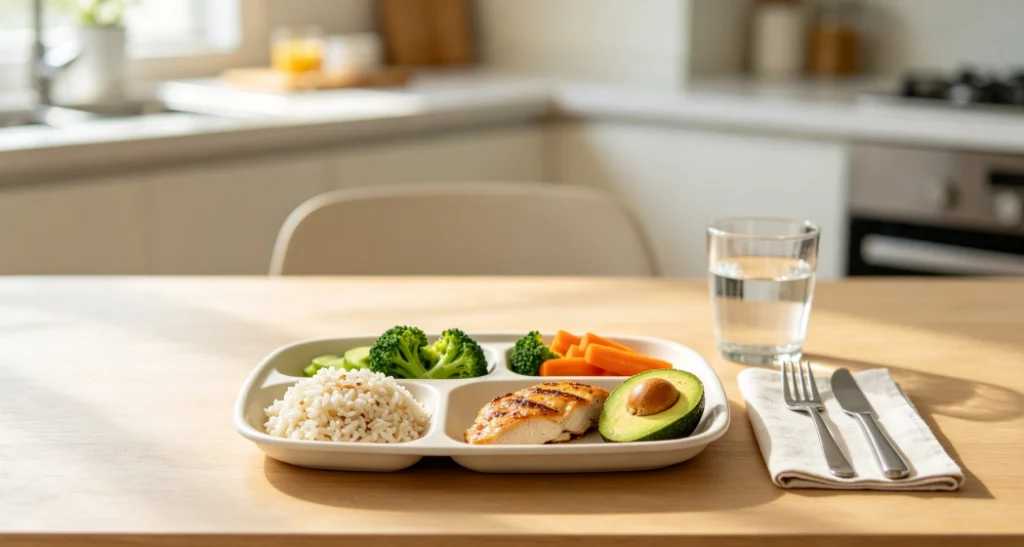
Meal prep lives or dies on separation. Cook chicken, roasted vegetables, and rice on Sunday, and the instinct is to container everything together. That works until the rice soaks up the dressing and the greens go limp by Wednesday.
Sectioned plates let you assemble five days of lunches in one session, each component in its own well, then cover and stack. At lunch, you reheat only what needs heat and keep the cold side cold. For a solo cook this is a small convenience. For a commercial meal-prep operator packaging hundreds of sets a week, it is a labor and food-quality decision with real margin impact.
The right meal prep plates have wells deep enough to hold a real portion, not the shallow scalloped edges on novelty kids’ items. For adult portions, look for a main section that holds roughly 300–400 ml and side wells around 100–150 ml. Depth, more than diameter, is what keeps a prep plate from spilling.
Keeping Components Separate Until You Eat
Sauces are the enemy of prep. A compartment plate’s walls exist so your yogurt doesn’t bleed into the granola and your curry doesn’t turn the rice to paste before you eat.
This matters more than it sounds for texture-sensitive eaters, and not only children. Plenty of adults avoid mixed dishes for the same reason, which is why “divided plates for picky eaters” shows up as a search term among grown-ups, not just parents. The functional benefit is identical; only the marketing audience differs. When food brands ask about portion formats, the “picky eater” plate and the “adult control” plate are often the same mold with different decoration.
Portion Control and Weight Management
The Visual Cue That Keeps You Honest
Are compartment plates good for weight loss? Indirectly, yes. Not because the plate burns calories, but because it removes the guesswork. A flat plate invites “just a little more.” A divided plate makes the portion visible before you serve it.
In clinical and diabetes-education settings, this is the whole point. Patients learn to fill sections rather than measure grams. The plate does the math visually. That is why portion control plates for adults are specified by dietitians and corporate wellness programs alike, and why care facilities have used them for decades. The format predates the fitness trend by a generation.
The 50/25/25 Plate Method Without a Scale
The method is simple: half the plate for vegetables, a quarter for lean protein, a quarter for starch. On a divided dinner plate with a 2:1:1 well ratio, you don’t need a kitchen scale or an app. The geometry enforces the ratio.
Food-service clients have cut plating inconsistency dramatically just by switching to a fixed-layout divided plate. When every plate leaving the line carries the same visual composition, customers get a predictable meal and the kitchen controls cost per serving without weighing each component. For a distributor building a private-label line, a standardized divided dinner plate format is also easier to spec, mold, and reorder than a mix of round and oval singles.
Outdoor Dining, Camping & Patio Meals
Why Divided Plates Beat Mixed Bowls Outdoors
Outdoors, a divided plate solves problems a bowl can’t. Wind flips lightweight bowls. Mixed bowls turn every bite into a blend of flavors. Compartment plates for camping keep the burger off the salad and the chips away from the dip, even when the table is a tailgate or a folding camp chair.
Bento style plates have become the format of choice for van-life and patio dining because they pack a whole meal into one stable, low-profile vessel. One plate, three sections, no stack of mismatched containers to wash at the campground. European buyers in particular, where camping and festival catering run deep in summer culture, have driven steady demand for divided outdoor formats that look presentable rather than picnic-cheap.
Shatterproof Advantage Over Ceramic
The second outdoor problem is breakage. Ceramic shatters on a stone patio. Tempered glass chips. Thin plastic scratches and holds odor. Melamine sits in the middle: light, shatterproof, and smooth enough to clean with a wipe.
If you outfit a campsite, a poolside bar, or a resort patio, picnic-ready melamine dinnerware, including divided formats, removes the replacement cost that ceramic racks up after one bad drop. In high-turnover venues, the swap from ceramic to melamine is often the difference between a breakage line item you can ignore and one that eats margin every weekend.
How to Choose the Right Compartment Plate
Size and Compartment Layout (2 vs 3 Sections)
For adults, start with diameter. A 9-inch (23 cm) divided plate suits a light lunch or a child-adjacent portion. A 10 to 10.5-inch (25–27 cm) plate is the adult standard for a full meal. Anything under 9 inches reads as a side or dessert plate, no matter how it’s divided.
Two sections work for protein-plus-starch simplicity. Three sections (large main, two small sides) map directly onto the 50/25/25 method and are the better default for portion-control programs. Avoid plates with more than three wells unless you serve tasting or appetizer formats. Too many sections shrink every portion to a bite, which defeats the adult-use case.
The table below is the quick reference we give buyers when they specify a line:
| Layout | Diameter | Best for | Notes |
|---|---|---|---|
| 2 sections | 9–10.5 in (23–27 cm) | Protein + starch, simple meals | Lighter prep with fewer components |
| 3 sections (2:1:1) | 10–10.5 in (25–27 cm) | Portion control, 50/25/25 method | Adult standard for full meals |
| 4+ sections | 9 in (23 cm) or less | Tasting / appetizer formats | Avoid for adult main meals |
Material Matters: Why Melamine Works
Melamine, technically a thermoset plastic made from melamine-formaldehyde resin, with food-grade A5 being the relevant standard, earns its place in commercial and outdoor settings for three reasons:
- It is light. Easier to ship, stack, and carry than ceramic.
- It doesn’t break. Survives drops that would shatter ceramic or chip glass.
- It survives industrial dishwashers. Holds up through thousands of wash cycles.
Ceramic is heavier and more fragile. Stainless can burn your hand and looks less like real tableware. Cheap polypropylene scratches and traps odors. Melamine fixes all three problems: it is light and shatterproof, cool to the touch and tableware-like, and scratch-resistant with a non-porous surface. For the best compartment plates for adults in a hospitality or outdoor program, melamine is the pragmatic default, with one caveat covered next.
For B2B buyers, material is a spec, not a vibe. Genuine A5 melamine is a thermoset: once molded, it won’t melt or warp under normal use the way thermoplastic polypropylene can. That structural stability is why it holds crisp compartment walls through thousands of wash cycles. When a supplier quotes “melamine,” ask which grade. A5 food-grade is the only one that belongs on a dinner plate.
Microwave and Dishwasher Reality Check
Here is the fact most listings bury: standard food-grade melamine is not microwave safe. The resin softens and can accelerate chemical migration above roughly 70°C (160°F). That is why you see “microwave safe” claims on some imported items and a flat refusal on others. The honest answer is that true microwave-safe compartment plates in real melamine don’t exist. The claim usually signals a different material or a risky formulation.
Dishwasher safe, by contrast, is genuine for quality A5 melamine, including commercial high-heat wash cycles around 60–82°C (140–180°F), provided you avoid the extreme dry-heat final phase. The practical rule is simple: reheat in glass or ceramic, then transfer to your divided plate. The plate handles everything after the heat is off.
If you need a heated compartment plate, read the material spec, not the marketing line. Ask the supplier for the FDA (21 CFR 177.1460) or EU (10/2011, tested under LFGB in Germany) food-contact test report rather than trusting the listing copy. A supplier who produces that document without hesitation is the one you want, microwave question aside.
Common Mistakes to Avoid
- Buying too small. A 7-inch divided plate is a kids’ item. Adult meals need 10 inches minimum for a satisfying portion.
- Trusting a “microwave safe” melamine label without a material spec. Ask for the food-contact test report before you order.
- Choosing by print instead of by well depth. Deep, functional wells beat a pretty pattern that holds two bites.
- Mixing up kids’ and adults’ formats in a B2B order. They look similar; the portion math is completely different.
- Skipping the dishwasher rating on a commercial order. Home-grade melamine cracks under restaurant wash temperatures.
- Over-specifying sections. More than three wells turns an adult meal into a tasting flight. Fine for appetizers, wrong for dinner.
Frequently Asked Questions
Are compartment plates only for kids?
No. A compartment plate is a food separator plate with walls between sections. The function is identical regardless of the user’s age. Adults use them for meal prep, portion control, and outdoor dining. The “kids only” image is a marketing leftover. The divided plates made for daycare settings solve the same separation problem at a smaller scale. Adult versions simply use a larger diameter and deeper wells.
Can compartment plates go in the microwave?
Standard food-grade melamine compartment plates should not go in the microwave. Above roughly 70°C the resin can soften and accelerate migration. Reheat in glass or ceramic, then transfer to the divided plate. If a listing claims “microwave safe” melamine, ask the supplier for the material spec and test report rather than trusting the copy. Genuine A5 melamine is not rated for microwave use.
What size should a compartment plate be for adults?
Aim for 10 to 10.5 inches (25–27 cm) in diameter for a full adult meal. A 9-inch plate works for a light lunch. Anything under 9 inches reads as a side or children’s plate. The main well should hold roughly 300–400 ml, with side wells around 100–150 ml. This sizing keeps an adult portion satisfying without shrinking the sections into decoration.
Are melamine compartment plates safe?
Yes, when they are genuine food-grade A5 melamine and used as intended: contact with cold and warm (not hot) food, no microwave. They are BPA-free and, for quality suppliers, tested to FDA and LFGB food-contact standards. The safety question is really about misuse (microwave heating), not the material itself. As a reference point, kid-friendly melamine bowls used in schools pass the same food-contact tests, which is a useful benchmark when you vet a supplier’s documentation.
Conclusion
Compartment plates for adults aren’t a novelty. They are a practical tool for anyone who wants consistent portions, separated components, and unbreakable service outdoors. The wins are concrete: less food wasted to soggy mixing, portions you can see without a scale, and zero replacement cost from drops.
The one rule to remember is the microwave limitation. Used correctly, a quality divided plate outlasts ceramic and beats plastic on every practical axis except heating. For B2B buyers, that constraint is also an opportunity. A standardized divided format is easy to mold, certify, and reorder as a private-label or OEM line.
If you specify tableware for a meal-prep program, a care facility, or an outdoor brand, browse our melamine compartment plate styles to find the layout and diameter that fits your service, and ask for the food-contact test report before you commit the order. The right plate is a spec decision, not a guess.