
Introduction
In the high-stakes environment of a commercial kitchen, a melamine serving bowl is more than just a vessel—it is an investment in operational efficiency. While many procurement managers focus solely on aesthetics, the true value lies in the technical specifications: wall thickness and resin purity. Choosing the wrong commercial melamine serving bowls can lead to premature cracking, heat warping, and a “cheap” guest experience. We analyze why a 3mm–5mm thickness is the industry gold standard and how to identify high-performance A5-grade melamine dinnerware.
Why Thickness Matters in Commercial Settings
Impact Resistance
- Thicker walls (3mm–5mm) provide the structural mass needed to absorb kinetic energy. While ceramic bowls often suffer from edge chipping, a 5mm melamine rim acts as a buffer, making it nearly impossible to chip during standard handling.
Thermal Insulation
- Melamine is a natural insulator. Increasing the wall thickness creates a more effective thermal barrier, keeping signature dishes like ramen or pho above 140°F (60°C) for up to 20% longer than thin-walled alternatives.
- Thicker bowls protect your staff; even when filled with boiling soup, the exterior of a 4mm bowl remains comfortable to touch, reducing the risk of burns during the pass-to-table transition.
Tactile Value
In modern hospitality, the “guest experience” is tactile. Weight is a powerful psychological cue; diners instinctively associate heavier dinnerware with higher culinary value and “premium” service.
- Tactile Mimicry: Thin melamine feels like disposable picnic-ware, which can devalue a $25 entrée. However, high-density, thick-walled A5 melamine mimics the specific gravity and “acoustic thud” of fine stoneware.
- The “Clatter” Reduction: Thicker bowls dampen the noise in a dining room. While thin plates create a sharp, metallic clatter when stacked or set down, heavy-duty melamine absorbs sound, contributing to a more controlled, high-end acoustic environment in your restaurant.
The Recommended Thickness Standards
Not all bowls are created equal. The thickness must scale with the volume of the vessel to prevent structural flexing.
| Bowl Type | Recommended Thickness | Application |
|---|---|---|
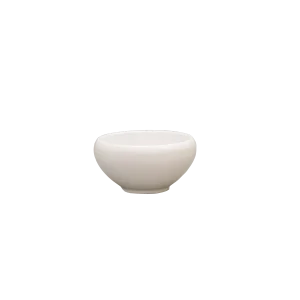
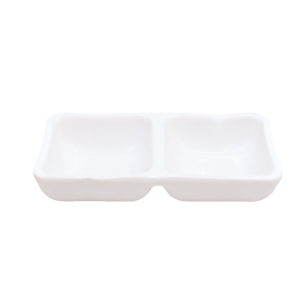
| Small Individual Bowls | 2.5mm – 3.5mm | Side dishes, dipping sauces, small salads. |
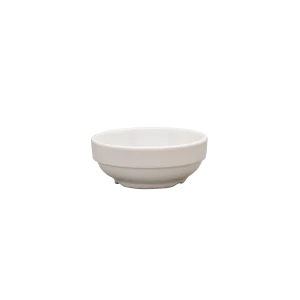
| Standard Entrée Bowls | 3.5mm – 4.5mm | Ramen, pasta, large salads, pho. |
| Large Serving Platters | 4.5mm – 6.0mm | Buffet displays, shared family-style platters. |
The “Heavy-Duty” Reinforced Rim: Premium commercial designs often utilize reinforced bases and rims that exceed 5mm. This targeted thickness protects high-contact points most susceptible to “clinking” and mechanical wear.
A5 Grade vs The Hidden Risks of A1/A3
Thickness is a hollow metric if the material itself is structurally compromised. In the world of industrial polymers, the “A” grading system determines whether a bowl is a long-term asset or a short-term liability. At Dongyu Technology, the production focus is exclusively on A5 Grade Melamine (100% Melamine Resin).
To the untrained eye, an A1 bowl and an A5 bowl look identical on a shelf. However, their molecular DNA tells a different story.
- A1 & A3 Grades (The “Urea” Mix): These are often marketed as “melamine,” but they are actually a hybrid. They contain a high percentage of urea-formaldehyde resin mixed with a small amount of melamine. Urea is significantly cheaper but chemically unstable.
- A5 Grade (The Gold Standard): This is 100% pure melamine resin. There are no cheap fillers. This purity allows for a complete “cross-linking” of molecules during the high-heat compression molding process, resulting in a product that is inert, dense, and incredibly tough.
Detailed Comparison: A5 vs A1/A3
| Feature | A5 Grade (100% Resin) | A1 / A3 Grade (Urea-Formaldehyde Mix) |
|---|---|---|
| Material Purity | 100% Melamine Resin | 30% – 70% Urea-Formaldehyde fillers |
| Heat Resistance | Stable up to 120°C (248°F) | Begins to degrade at 80°C (176°F) |
| Durability | Shatter-resistant | Brittle |
| Food Safety | FDA & EU 10/2011 Compliant | Not recommended for hot food |
| Surface Finish | Permanent High-Gloss; Ceramic feel | Fades quickly; Becomes “chalky” or yellow |
| Stain Resistance | High | Low |
Because A1 and A3 materials are inexpensive, they are commonly found in discount “dollar stores” or used for household items that don’t see heavy use, such as soap dishes, tray liners, or dry-snack plates.
- The Danger: If a restaurant accidentally uses A3 bowls for hot soup (like Ramen or Pho), the heat triggers a chemical breakdown. The material becomes porous, starts to “chalk” (a white powdery residue), and can eventually leach formaldehyde into the food. For commercial food service, A1/A3 is a significant health and liability risk.
A5 melamine is engineered specifically for the Hospitality & Food Service Industry.
- High-Volume Dining: It is the standard for hotels, buffets, and fast-casual chains because it can handle being dropped, stacked, and shoved into high-heat industrial dishwashers 20+ times a day.
- Complex Cuisines: Because A5 is non-porous, it won’t absorb the smell of fish or the stains of heavy curry sauces.
- Longevity: A 4mm-thick A5 bowl from Dongyu Technology is designed to last 3 to 5 years in a commercial setting, whereas an A3 bowl would likely crack or discolour within 3 to 6 months.
Professional-grade serving bowls must survive more than just a drop; they must survive a rigorous chemical environment. High-quality A5 production at Dongyu ensures strict compliance with global benchmarks:
- FDA Compliance : This ensures the resin is safe for repeated food contact. A thicker A5 wall provides a larger safety margin, maintaining chemical stability even after 1,000+ industrial wash cycles.
- EU Regulation (EN71): This standard monitors the migration of substances. Independent lab tests on A5 grade melamine consistently show migration levels well below the Specific Migration Limit (SML), even under extreme testing conditions (70°C for 2 hours).
Identifying Quality
In the global marketplace, a product’s spec sheet can be misleading. For a procurement manager or restaurant owner, knowing how to distinguish high-quality A5 melamine serving bowls from cheap A1/A3 imitations is a vital skill.
1. The Acoustic “Thud” Test
Just as a jeweler listens to the ring of a coin, a chef can hear the quality of a bowl. This test identifies the internal density and the presence of air pockets or cheap fillers.
- The Method: Hold the bowl loosely by the base and tap the rim with a metal spoon or your fingernail.
- The High-Quality Result: A thick-walled, A5-grade bowl produces a dull, solid “thud.” This low-frequency sound indicates a high-density molecular structure with no internal voids.
2. The Light Transmissivity Test
One of the easiest ways to spot a “stretched” or under-filled product is to check its opacity. High-quality melamine is dense enough to block light almost entirely.
- The Method: Hold the bowl up directly against a strong light source (like a smartphone flashlight or a bright LED kitchen light).
- The High-Quality Result: The bowl should appear completely opaque. Even at the thinnest points of the curve, light should not penetrate the material.
3. Tactile Inspection
Commercial-grade manufacturing requires precision-engineered molds that maintain uniform wall thickness. Cheap production lines often suffer from “material thinning” at the stress points.
- The Method: Run your thumb and forefinger along the bowl from the rim down to the base. Feel for “waves” or inconsistent thickness.
- The Dongyu Advantage: Quality manufacturers like Dongyu Technology use high-pressure compression molds. This ensures that a bowl labeled as 4mm remains exactly 4mm across its entire diameter, including the “turn” where the wall meets the base.
- The “Cheap” Warning Sign: Look for “sink marks” (small dimples in the surface) or “flash” (rough, sharp edges on the base). These are signs of a low-pressure molding process and inferior A1/A3 resin, which will lead to “stress cracking” within just a few months of use in a high-traffic environment.
4. The Weight-to-Volume Ratio
While thickness is a visual metric, weight is the physical proof.
- The Data: On average, a professional A5 melamine serving bowl will weigh 25% to 40% more than an A1/A3 bowl of the same dimensions. In a commercial setting, this weight translates to stability on the table and “perceived value” for the diner. If a large 10-inch serving bowl feels as light as a paper plate, it lacks the resin density needed to survive a professional kitchen.
Maintenance & Longevity of Thick-Walled Melamine
- Thermal Shock Resistance: Thicker bowls handle the transition from cold storage to hot food more effectively, reducing the risk of “crazing” (fine surface cracks).
- Dishwasher Performance: 3mm+ thickness prevents warping in high-temperature industrial dishwashers, which typically operate at temperatures up to 180°F – 200°F (82°C – 93°C).
- Chemical Care: While thickness adds physical strength, the surface remains susceptible to harsh chemicals. Avoid bleach. Use oxygen-based sanitizers to preserve the high-gloss finish of your A5 melamine.
Conclusion
Selecting the right melamine serving bowl is a strategic balance between weight-driven elegance and industrial-strength durability. While a 2mm bowl may save on initial costs, the frequent replacement cycle and “cheap” customer perception make it the more expensive choice in the long run. Prioritize A5-grade 100% melamine with a minimum wall thickness of 3.0mm for any high-traffic commercial environment.