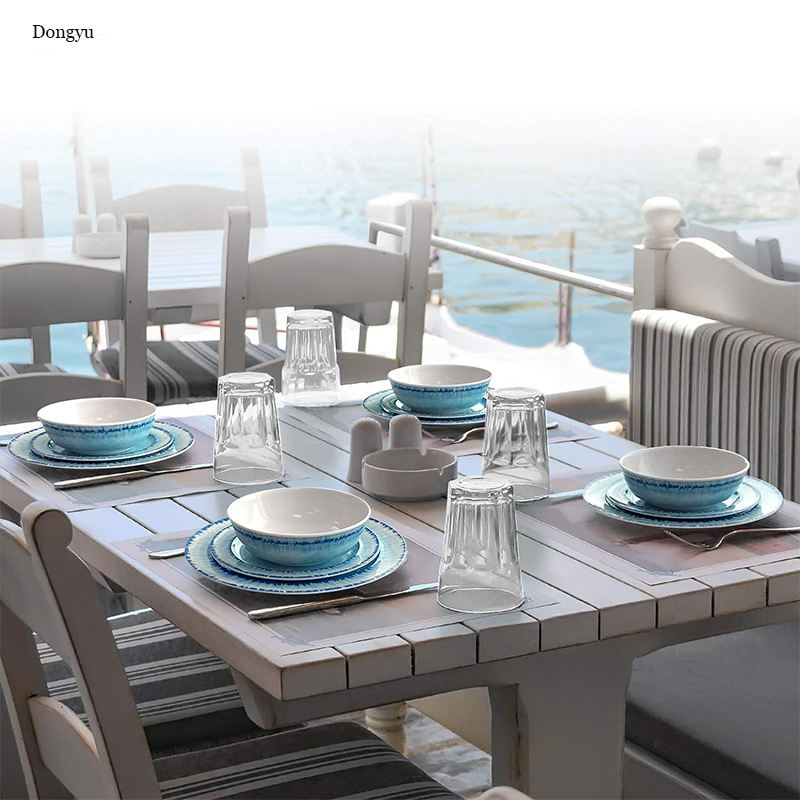
Blue and white tableware has outlasted every dinnerware trend since the 1700s. The willow scene, the chinoiserie florals, the clean geometric scrolls, all still turn up on hotel buffets and beach resorts because the combination simply works. A white ground makes food look better, and the blue gives the table a finished, considered feel without trying hard. Melamine finally let that pattern leave the display cabinet. A porcelain blue and white plate is lovely until a busser drops it on tile. The blue and white melamine plates version bounces and goes back out with the same crisp pattern.
This article walks through the motifs worth specifying, how to tell a print that survives service, the sizes that build a real set, and the rooms where the pattern earns its keep.
The Three Motifs and Where They Belong
Shoppers rarely ask for “a blue and white plate” in the abstract. They picture one of three looks, and each one signals a different kind of room. Some buyers type melamine blue and white plates instead, which is the same product with the words flipped. The motif you pick does more than decorate. It sets the tone before a guest reads the menu.
Blue Willow: The Heritage Scene
The bridge, the pagoda, the willow tree. This is the oldest of the three and the one heritage hotels and traditional tea rooms reach for, because it reads as established rather than trendy. A blue willow melamine plate tells a guest the room respects tradition, which is exactly the note a historic property wants to strike.
Vintage Florals: The Bistro Look
Chinoiserie flowers on an aged-paper ground give a softer, more romantic read. Vintage blue and white melamine plates suit bistros, garden venues, and gift-shop collections where the table should feel handpicked. The pattern carries a bistro personality that plain white cannot.
Geometric Lines: The Modern Read
Clean blue bands and grids skip the storytelling and go straight to modern. Coffee bars and minimal cafes lean here, because the pattern frames the food without competing with it. Geometric lines also photograph cleanly for social feeds, which matters to venues that post their plates.
| Motif | Best fit | The note it sends |
|---|---|---|
| Blue willow | Heritage hotels, tea rooms | Established, traditional |
| Vintage florals | Bistros, garden venues | Soft, handpicked |
| Geometric lines | Coffee bars, minimal cafes | Modern, tidy |
How to Read a Plate Before You Buy
The pattern’s lifespan depends on how it gets onto the plate, not on how it looks in a catalog photo. Three methods dominate, and the cheapest one deserves suspicion.
| Method | What it is | How long it lasts | Price |
|---|---|---|---|
| Decal applied on top | Printed film cured onto the surface | Good only when well cured, weak if rushed | Mid |
| Sublimation dyed in | Dye driven into the resin | Strong hold, nothing to peel | Mid to high |
| Molded texture | Pattern formed in the mold | Inherent to the piece, no print to fade | Varies |
A decal stuck on top lifts at the rim after enough washes. Sublimation skips the film entirely, so there is no layer to lift. When a factory sends a sample, run a fingernail across the rim. If the pattern feels raised and separate, that is the cheap version, and it will not survive a busy dish pit.
The Fingernail Test
Press your nail along the printed edge. Integrated and sublimated prints feel flush with the surface. A decal you can catch with a nail is the one that will fail first in a commercial wash.
The One Rule Heat Enforces
The honest limit is heat. Melamine is not microwave safe and not oven safe. The resin softens past about 120°C, or 248°F, and a microwave heats the plate unevenly while starting to break the material down. That is the trade for being nearly impossible to break, and it is why these plates suit plated cold and warm service rather than cooking.
Three care rules keep any blue and white pattern looking new:
- Keep it out of the microwave and the oven
- Skip the high-heat dry cycle when a low one will do
- Avoid steel wool and strong bleach, which attack the surface rather than the food
Tip: Wash a single sample fifty times before you commit to a bulk order. The print that survives that test is the one your guests see a year from now.
The Three Sizes That Build a Set
These plates follow the same sizing logic as any dinnerware, so the pattern does not change the math. Size is where a set either feels intentional or feels like a mismatch. Most menus get covered by three pieces, with one optional add-on.
| Size | Course | Covers per guest |
|---|---|---|
| 25 to 27 cm (10 to 11 in) | Main course, entree | One |
| 18 to 20 cm (7 to 8 in) | Salad, side, dessert | One |
| 12 to 16 cm bowl | Soup, rice, small sides | One |
| 15 cm (6 in) | Bread, pastry, appetizer | One, for shared service |
A full blue and white melamine dinnerware set usually pairs the 25 to 27 cm dinner plate with the 18 to 20 cm salad plate and a matching bowl. That trio covers most a la carte menus. If you run shared plates or family style, add the 15 cm size so bread and small bites have a home that matches the large plates. You can compare the full range across our melamine plates to see the diameters and depths we stock for each shape.
What to Set Next to Blue and White
Blue and white rarely sits alone on a real table, and the pieces around it change how the pattern reads. A few pairings keep the set looking deliberate.
White makes the quiet base. White melamine plates stack cleanly under the blue and white pieces in a mixed set, so the blue reads as an accent instead of the whole story. Wood tables and industrial interiors let the pattern feel settled rather than busy. Greenery and potted herbs pull the chinoiserie florals toward a garden mood.
Floral is the natural next step when a venue wants to refresh seasonally. Floral melamine plates carry more botanical weight, so a blue and white core with a floral drop-in lets a room read new at a fraction of the cost of new ceramic. The two patterns share the same shatter resistant body, which is what keeps the replacement bin empty through a weekend rush.
Spec Checks That Protect Your Order
Run this list before you approve a bulk order. It catches the gaps a product photo hides.
- Confirm the pattern is an integrated or sublimated print, not a stuck-on decal
- Check the diameter against your actual menu and portion size
- Ask for A5 grade melamine, the food contact grade, not A1 or A3 blends
- Verify BPA free status with the factory’s food contact test
- Confirm commercial dishwasher safety, and skip high-heat dry if you can
- Request a single sample and wash it fifty times before committing
- Match the bowl and small plate to the dinner plate so the set reads as one
A5 grade matters more than most buyers realize. Lower grade blends use urea formaldehyde resin that is not rated for food contact. A5 is the pure melamine that passes FDA and LFGB food contact rules. If a supplier will not name the grade, that is your answer before you sign anything.
FAQs
Which Blue and White Motif Suits a Modern Cafe Versus a Heritage Hotel?
Heritage hotels and traditional tea rooms suit blue willow, because the bridge-and-pagoda scene reads as established rather than trendy. Modern coffee bars and minimal cafes lean toward geometric blue lines for a cleaner read. Vintage florals land between the two and work in bistros and garden venues. Match the motif to the room you already run.
Can Blue and White Melamine Plates Go in the Microwave?
No. Melamine is not microwave safe and not oven safe. The resin softens past about 120°C, or 248°F, and a microwave heats the plate unevenly while starting to break the material down. That limit is the trade for being nearly impossible to break. Use these plates for plated cold and warm service, never for cooking or reheating.
How Do You Keep the Pattern From Fading in the Wash?
Buy integrated or sublimated prints, not a decal stuck on top, because the pattern sits inside the surface rather than on it. Then skip the high-heat dry cycle, avoid steel wool and strong bleach, and keep plates out of the microwave. We have run bulk blue and white orders through thousands of washes for resorts, and the integrated prints came back unchanged.
What Sizes Make a Complete Blue and White Set?
Start with a 25 to 27 cm dinner plate, an 18 to 20 cm salad or side plate, and a 12 to 16 cm bowl. That trio covers most a la carte menus. Add a 15 cm bread or appetizer plate when you run shared or family style service, so small bites have a matching home next to the large plates.
Is Blue and White Melamine Safe for Family Kitchens With Kids?
Yes, with the right grade. A5 melamine is rated for food contact, BPA free, and built for dishwashers, so it handles a busy home. The real limit is heat: keep it out of the microwave and oven. For a household with kids, the shatter resistant body means a dropped plate bounces instead of leaving shards on the floor.
Blue and white melamine plates come down to a simple trade. You get a pattern that has anchored tables for more than two centuries, without the breakage bill that real porcelain carries. Pick the motif and the diameters from your actual service, keep them out of the microwave, and they will look right long after a china set would have chipped out.
See samples, or request a quote for your operation.