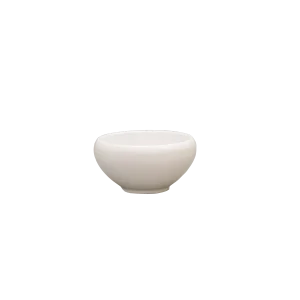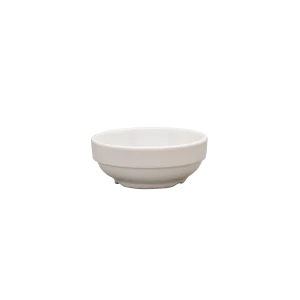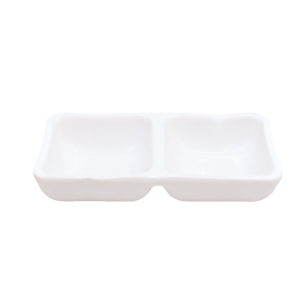
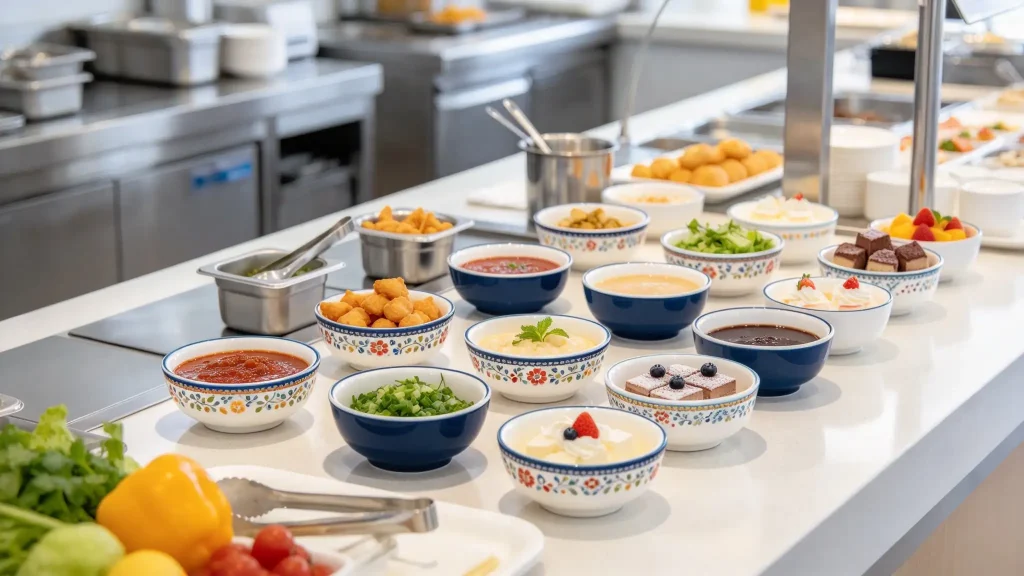
Most tabletop programs get spec’d from the top down. Dinner plates first, then soup bowls, then the serving pieces nobody argues about. The condiment dish lands on the last line of the quote, yet it is the first thing to break a service rhythm when the size is wrong. A soy sauce cup that tips, a dip bowl too deep to portion cleanly, a kids’ dish that looks empty next to an adult plate.
That is the gap small melamine bowls fill. This piece stays inside the small category on purpose: pieces under about four inches across and under ten ounces of capacity, built for commercial kitchens rather than home pantries. We will look at how the sizes break down, the stations where they pay for themselves, how they compare with ceramic, whether to buy open stock or a matched set, and the five checks worth making before the order goes out.
What Counts as a Small Melamine Bowl
“Small” is not one size in foodservice. It is a range, and the right pick tracks what sits in the bowl. Most buyers searching small melamine bowls start with the two lower tiers, and the table below covers the three sizes that earn their keep on a line.
| Diameter | Capacity | What it handles |
|---|---|---|
| 2.5 inches | about 60 ml (2 oz) | Soy sauce, a single condiment, a tasting portion |
| 3.5 inches | about 4.5 oz (130 ml) | Individual dip, sauce on the side, amuse-bouche |
| 4 inches | up to 10 oz (300 ml) | Portioned side, kids’ portion, small side dish |
The 2.5 inch dish is the workhorse at the condiment pass. It stays shallow on purpose: a thin pool of sauce, nothing more. Move up to the 3.5 inch tier and there is room for a proper dipping service or a stacked appetizer. The 4 inch tier crosses into side dish territory, which is why it sits right at the edge of what most buyers still call a “small” bowl.
Why Wall Shape Changes Volume
Exact volume shifts a little with wall profile. A straight sided piece holds more than a rounded one at the same diameter, so treat the table above as a planning start and confirm the stamped capacity on the supplier’s spec sheet. Operators who skip this step tend to over order the 4 inch tier and under order the 2.5 inch, then wonder why the condiment pass runs dry mid service. Browse the full small melamine bowl range to compare diameters and capacities side by side.
Where Small Bowls Earn Their Keep
The stations where small melamine bowls earn their keep differ by operation, but a few show up in almost every kitchen. A small bowl is cheap insurance against waste, breakage, and a messy pass.
The Condiment Pass
This is the row of sauces behind a hot line or a sushi bar. A 2.5 inch soy sauce dish keeps each condiment contained and lets a cook swap flavors fast. In high volume Asian service, soy sauce dishes and mini dipping bowls turn over constantly, so a material that shrugs off drops matters more than it would at a quiet brunch spot.
Appetizer and Tasting Service
Plating a two or three bite appetizer in a 3.5 inch bowl reads as intentional, not stingy. It also portions the kitchen’s cost per cover without a scale. The 3.5 inch size doubles as a component vessel in a composed plate, holding a smear or a gel without dominating the frame. Many chefs reach for melamine ramekins here because a matte or speckled finish photographs cleanly and the weight stays low on a loaded tray.
Portioned Sides
Fries, rice, slaw, a scoop of pasta: a 4 inch bowl caps the side at a known amount. That control protects margin and keeps plates consistent from the first cover to the last.
Table Dip Service
Tables that share dipping sauces need individual dishes, not one communal bowl. Small, stable pieces cut spills and let each guest take what they want.
Kids’ Portions
A smaller diameter means smaller hands manage it and smaller meals look right sized instead of half empty. This is why small melamine bowls show up on kids’ menus far more often than ceramic, and a kids’ menu built on a 3.5 inch bowl tends to draw fewer portion complaints than the same food mashed into an adult side dish.
Small Bowls vs Ceramic
Ceramic has a place, and melamine has a different one. The choice is not about which is “better” in the abstract. It is about what the bowl survives and what it costs to keep it on the line.
| Factor | Melamine | Ceramic |
|---|---|---|
| Shatter resistance | Survives drops and rack stacking | Chips and cracks on impact |
| Weight per piece | Lighter, easier on servers | Heavier, especially stoneware |
| Customization | Molded in house colors and logos | Limited to glaze options |
| Cost at volume | Lower replacement spend | Higher replacement spend |
Most operators weighing small melamine bowls against ceramic start from the breakage math. A ceramic ramekin dropped on a dish room floor is a write off. Multiply that across a bus station over a year and the replacement spend builds in a way a unit price tag hides. Melamine takes the hit and goes back on the shelf.
Note: Ceramic still wins on perceived prestige. Fine dining rooms lean on the weight and the ring of a real ceramic piece, and no molded alternative fully replaces that signal. For high turnover casual, banquet, healthcare, and kids’ service, the durability and the lower running cost usually settle the argument.
Open Stock or a Matching Set
Buying open stock and buying a melamine bowl set are not the same decision, and the set question deserves its own lens for commercial buyers. Most buyers researching small melamine bowls reach the set question within minutes, because case packs are how commercial tabletop actually ships.
When Open Stock Wins
Open stock suits operators who need fifty of one tier and none of another. A build your own approach lets a kitchen match the exact count to each station, and it lets a kitchen phase the buy, ordering the 2.5 inch tier first for the condiment pass and adding the 4 inch tier once the side program proves out. The catch is consistency: mixing molds from different runs can leave slight shade differences that a sharp guest notices.
When a Set Makes Sense
A matched bowl set melamine program answers that by shipping the tiers together, often in cases of six, twelve, or twenty four. For a new opening or a full rebrand, a set guarantees the colors line up and the diameters nest for storage. The trade off is surplus: you may receive more of a tier than one station burns through. Check how melamine bowl set sizes map to case counts before you commit to a pack.
Count Stations First
Neither path is right by default. The practical move is to count stations first. A sushi bar with eight seats needs eight soy sauce dishes per cover, not a generic dozen. A buffet with six appetizer stations needs six of the 3.5 inch tier per rotation. Order to the station count, then keep a case of spares for breakage rotation.
Five Checks Before You Order
A foodservice bowl lives a hard life: heat, detergents, stacking, drops. Specifying small melamine bowls for a new opening means running these five checks against every tier on the order.
Resin Purity
Pure melamine resin handles repeated thermal and mechanical stress better than a blend padded with fillers. Ask the supplier directly about the resin grade rather than assuming from the price alone.
Food-Grade Status
Confirm the piece meets the food contact rules that apply to your market. In the United States that means FDA expectations; in the EU it means the EU 10/2011 framework. Our note on melamine migration testing walks through how the limits are measured and what documentation to keep on file.
State “meets” in your own copy, not “guaranteed safe,” and keep the supplier’s documentation on file.
BPA Free
This one comes up constantly in buyer questions, and the honest answer is that foodservice melamine should be BPA free by specification. Put it in writing on the purchase order.
Dishwasher Rating
Most commercial pieces survive the regular 50 to 65°C wash cycle without issue. The real risk is the high temperature machine final rinse, which runs near 82°C (180°F) under the sanitation standard. Gentle placement and a confirmed rating keep the surface intact.
Non-Slip Base
A ring or foot that grips the tray matters more than it sounds, especially on a moving pass. It is a small detail that quietly cuts spills.
If color, logo, or case pack is part of the program, confirm those at the same time. Custom molded runs carry longer lead times than stock colors, and the reorder point should be set before the first case runs low.
When the spec sheet checks out, the next step is to feel the piece in hand. Request small bowl samples before committing to a full case pack, and run them through your own wash and drop test on the line.
FAQ
What Size Are Small Melamine Bowls?
Small melamine bowls run from about 60 ml (2 oz) at 2.5 inches up to roughly 10 oz (300 ml) at 4 inches. Most buyers treat under four inches and ten ounces as “small.” The tier tracks the job: a 2.5 inch dish for soy sauce, a 3.5 inch bowl for dips, a 4 inch piece for sides. Confirm the stamped capacity, since wall shape shifts the volume.
Are Small Melamine Bowls Microwave Safe?
No, standard melamine bowls are not microwave safe, and that answer holds however short the reheat looks. Microwave energy heats the resin itself, which can blister the surface and weaken the glaze. Only pieces explicitly marked and tested for microwave use qualify, and those are rare. Treat any small bowl without a microwave safe mark on the base as a firm no.
Can Restaurants Use Melamine Bowls for Hot Food?
Yes, restaurants can serve hot food in melamine bowls if the heat comes from the food, not a microwave. It handles the regular 50 to 65°C wash and service temperatures. The line to respect sits around 70°C for direct food contact; above that the resin softens and the surface ages faster. Plate hot sides from them, but never heat the bowl itself.
Why Pick Melamine over Ceramic for Small Dishes?
Melamine wins for small dishes on durability, weight, and running cost. A dropped ceramic ramekin is a write off; a dropped melamine piece goes back on the shelf. The lighter weight also eases the load on servers across a shift. At volume, the lower replacement spend matters more than the small unit price gap. Ceramic still leads on prestige feel, which is why fine dining rooms keep it.
How Many Small Bowls Come in a Typical Set?
Commercial small bowl sets usually ship in cases of six, twelve, or twenty four, not the four piece retail boxes. The count you need tracks your stations. A sushi bar with eight seats wants eight soy sauce dishes per cover; a buffet with six appetizer stations wants six of the 3.5 inch tier. Order to the station count, then keep a case of spares.