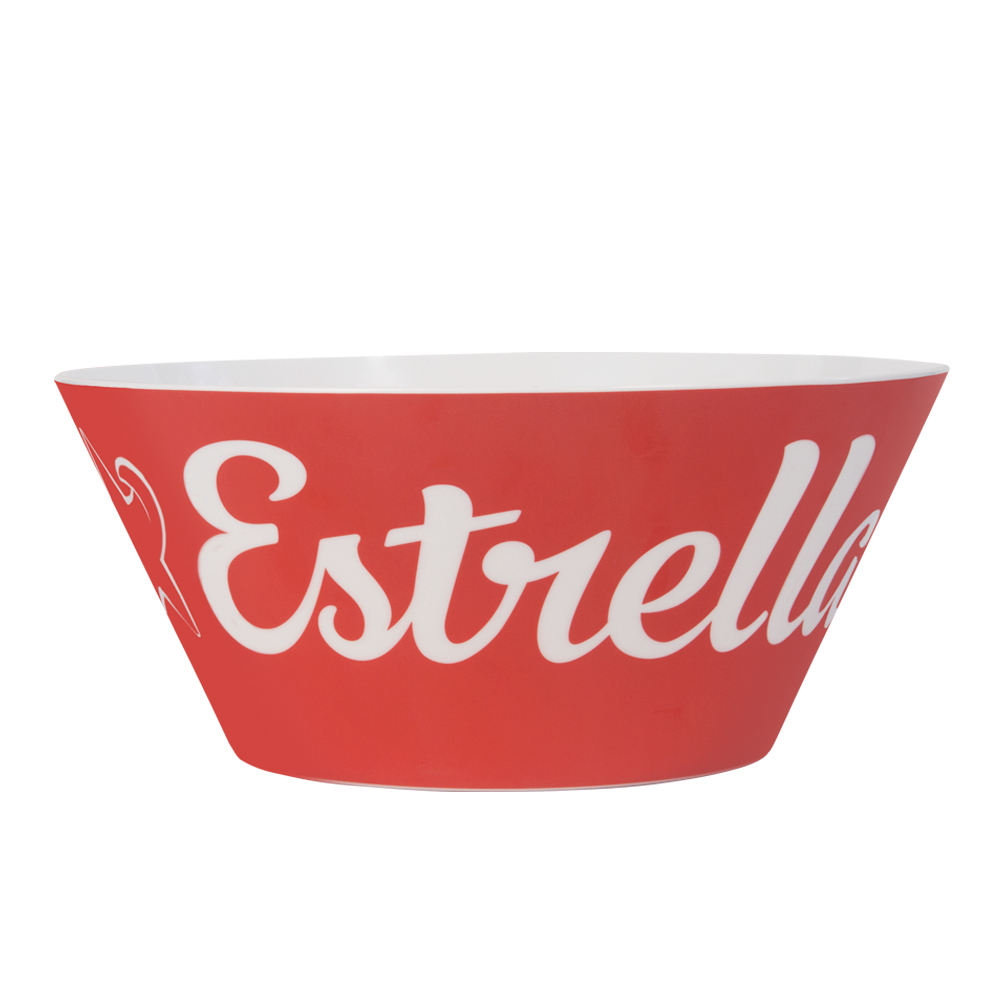
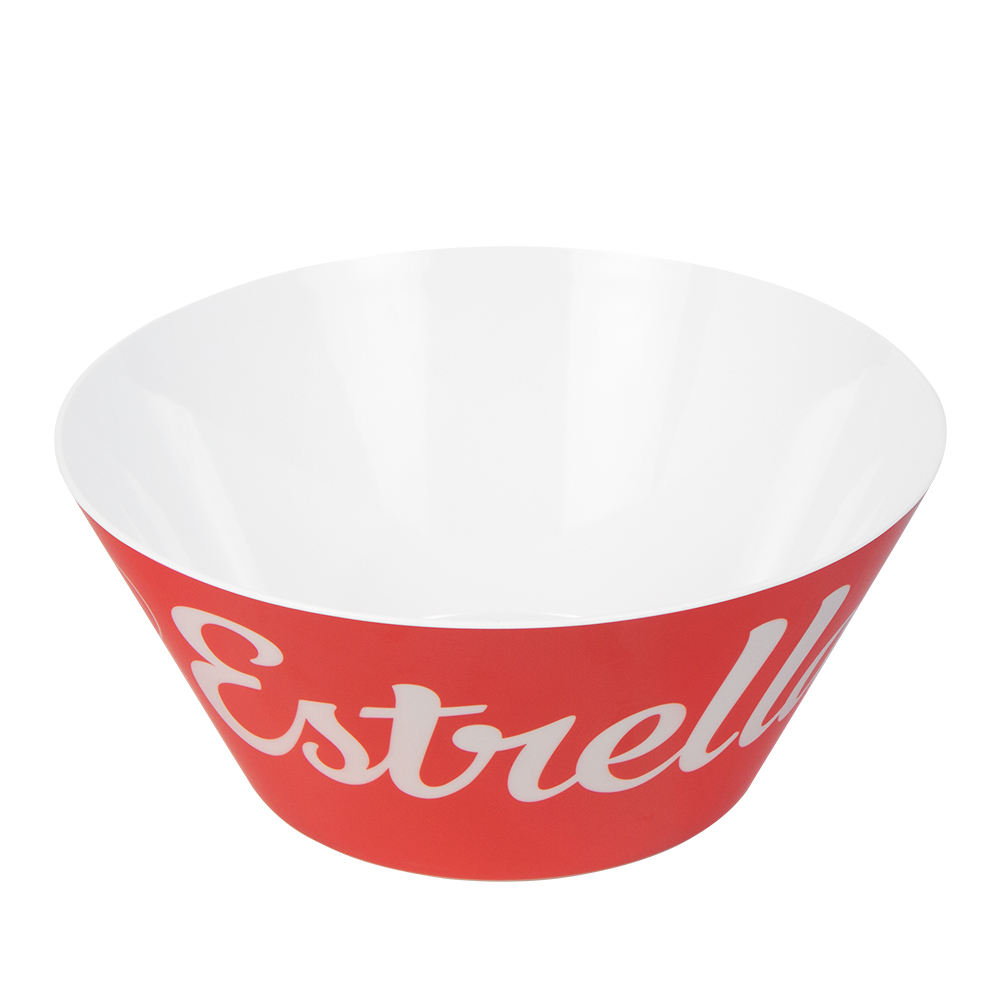
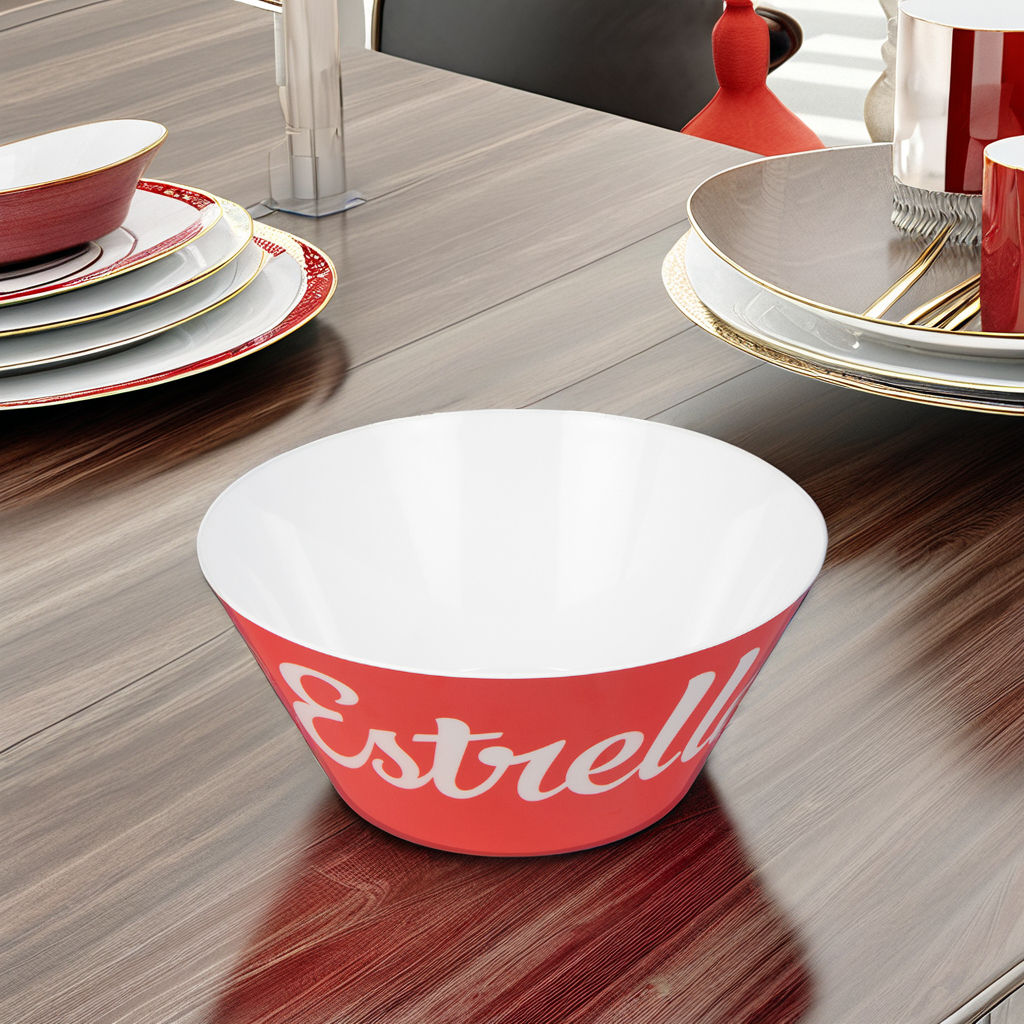
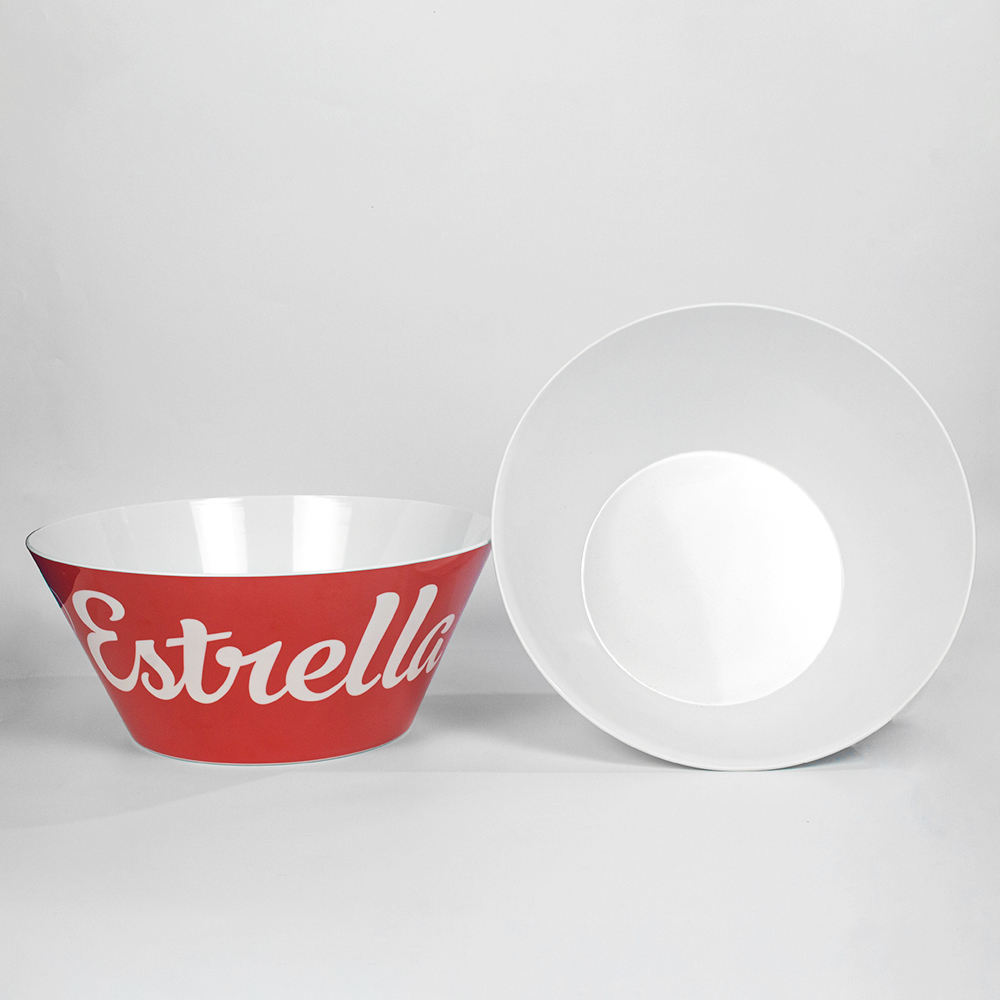
Most restaurant pasta bowls land between 24 and 28 cm across, hold 750 to 1,000 ml, and carry a rim of 15 to 25 mm. Those three numbers decide whether a portion looks deliberate, whether a server can carry the bowl one-handed, and how much sauce reaches the table with the pasta. Diameter on its own tells you none of that.
Melamine pasta bowls get chosen from photographs more often than from measurements, which is how kitchens end up with a cupboard of bowls that hold too little and stack badly. Below: the sizes in production, what each shape does in service, and how to pick a bowl for the dishes already on your menu.
Pasta Bowl Sizes at a Glance
The ranges below are the ones we ship most often, measured to a practical fill line rather than to the brim.
| Nominal diameter | Usable capacity | Working depth | Best for | Note |
|---|---|---|---|---|
| 20 cm (8 in) | 450-550 ml | 4.5-5.5 cm | Primi, side pasta, kids’ portions | Stacks tight, cheapest to replace |
| 24 cm (9.5 in) | 700-800 ml | 5.5-6.5 cm | Single main course pasta, composed salads | The busiest size in restaurant service |
| 26 cm (10.5 in) | 850-1,000 ml | 6-7 cm | Main course pasta, risotto, curry | Balances portion against rack space |
| 28 cm (11 in) | 1,000-1,200 ml | 6.5-7.5 cm | Sharing plates, baked pasta, large salads | Heavy in the rack, takes dishwasher room |
| 30 cm (12 in) | 1,200-1,500 ml | 7-8.5 cm | Noodle soups, sharing platters, buffet service | Depth-to-width ratio moves toward a soup bowl |
You can compare these against melamine pasta bowl diameters and rim widths in the bowl category.
Read Capacity, Not Diameter
Nominal diameter is the least useful number on a melamine bowl spec sheet. Factories work to a narrow set of diameters, so sizes cluster around 20, 24, 26, 28 and 30 cm. Capacity is where those sizes pull apart. A 26 cm bowl at 5 cm deep holds roughly 750 ml. The same diameter at 8 cm deep holds closer to 1,100 ml, and on the pass those two behave like different products even though the spec sheet calls them both 26 cm.
So when a supplier quotes only the diameter, ask two follow-up questions: what is the capacity, and is that figure measured to the brim or to a practical fill line. The gap between the two runs to about 15 percent, and it is often the difference between a bowl that holds the portion and one that spills it.
For main course pasta, most kitchens settle between 24 and 28 cm with 750 to 1,000 ml of usable capacity. Below that you are plating an appetizer. Above it you are into sharing plates and baked dishes.
How to Measure Usable Capacity Yourself
Fill the sample with water to the level a chef would actually plate to, tip it into a measuring jug, and write the number on the sample tag. We run that check on every new mould and keep the record, because it is the only figure that predicts how a bowl behaves once real food goes into it.
Why a Pasta Bowl Is Not a Big Plate
A bowl keeps sauce pooled around the pasta, so each forkful picks up roughly the same amount. A plate spreads the sauce outward within a minute, and the pasta at the centre dries and clumps. Restaurants that send carbonara out on flat china pay for it twice, first in sauce left on the plate and then in portions that creep upward because the plate looked empty.
The Rim Is a Handle First
A rim of 15 to 25 mm gives a server somewhere to put a thumb without touching food, and gives the guest a place to steady the bowl while cutting or twirling. Narrow rims photograph well. In service they mean thumbs in the sauce and a slower pass than anyone budgeted for.
What Portion Size Really Costs
Portion out 180 g of cooked penne and plate it two ways. On a 30 cm flat plate it looks thin, and the line adds a spoonful. In a 24 cm bowl with a 6 cm wall, the same portion reads as full. Across eighty covers a night, the difference shows up in the food cost report rather than in the dining room.
Rim Width, Depth and the Sauce Question
What Rim Width Does
Rim width is the flat band between the inner wall and the outer edge. On melamine it usually runs 12 to 30 mm, and that band does three jobs. A server grips it. It catches what would otherwise run over the edge. It frames the food, so a plated dish looks composed instead of heaped.
Wide rims cost interior space. A 30 cm bowl with a 30 mm rim has about the same usable floor as a 27 cm bowl with a 15 mm rim, and it takes more room in the rack. Pay for the rim when food gets twirled or tossed at the table, and take the narrower rim when the plate is composed in the kitchen and carried flat, since you get more visible food for the same shelf footprint. On melamine the rim is also the only sensible place for a logo, because anything printed in the well wears off under daily service.
How Depth Changes Eating Temperature
Shallow bowls at 4.5 to 5.5 cm cool a portion quickly and suit oil-based sauces that have little liquid to lose. Medium bowls at 6 to 7 cm are the workhorse range, with enough wall to hold a tomato or cream sauce without it climbing the side in transit. Deep bowls at 7.5 cm and beyond are for broth, baked pasta, and anything whose sauce behaves like soup.
Depth sets eating temperature as well. A shallow bowl sheds heat fast, which helps a plate of aglio e olio and hurts a noodle soup that arrives already losing the argument with the room.
Match the Bowl to the Sauce
One question decides it: how much free liquid is on the plate.
- Oil-based and dry-tossed dishes such as aglio e olio, pesto and cacio e pepe: almost no free liquid. Shallow bowl, wide mouth, 4.5 to 6 cm deep. The opening lets a server toss at the table and lets steam escape so the pasta stays firm.
- Tomato and cream sauces: a moderate amount that clings and still runs. Medium wall of 6 to 7 cm with a rim wide enough to carry. Most main course pasta belongs here.
- Broth, braises and baked pasta: real volume, or a topping that needs containing. 7.5 cm or deeper, a narrower mouth to slow heat loss, and a rim a thumb can grip when the bowl sits full to within a finger of the edge.

Menu Matching: What Goes in Which Bowl
Melamine pasta bowls cover most of a casual menu, though not every dish on it. Four menu groups want four different balances of diameter, depth and rim.
Italian Pasta Courses
Primi and mains should not share a bowl. A 20 to 22 cm bowl at around 500 ml handles a primo of penne arrabbiata or a small portion of gnocchi. Main course spaghetti belongs in 24 to 26 cm at 800 to 1,000 ml, deep enough that the sauce pools under the pasta rather than around it. Baked dishes need wall height more than width: lasagna al forno in a shallow 28 cm bowl slides apart the moment a server tilts it, while the same portion in a 26 cm bowl at 7 cm holds together to the table.
Ramen and Noodle Soups
Ramen asks for a ratio, not a diameter. A 30 cm bowl that is 6 cm deep is a pasta bowl. A 22 cm bowl at 10 cm deep is a soup bowl. Ramen wants the second shape, somewhere around 20 to 22 cm across with 8 to 10 cm of depth and 1,000 to 1,500 ml of volume, because the broth has to cover the noodles and stay hot while the guest works through it. If noodle soup is a permanent item, buy for it rather than stretching a pasta bowl into the job. Soup bowls built for deep, brothy portions hold temperature far better than any wide shallow shape.
Salads
Salads run the other way. Individual salad bowls are wide and comparatively shallow, 24 to 28 cm at 4.5 to 6 cm, because leaves need surface area to be seen and the dressing sits at the bottom where a toss picks it up. A 1,000 ml salad bowl reads as generous in a way a deep 1,000 ml bowl does not, since the food is spread out rather than buried. A Caesar or a composed salad as a main course can go to 28 cm. A side salad belongs at 20 cm.
Risotto, Curry and Rice Bowls
Both carry a loose sauce that spreads, both get eaten with a spoon, and both arrive hot enough for that to matter. A 24 to 26 cm bowl at 6 to 7 cm is the safe call: deep enough that sauce never reaches the rim in transit, wide enough that the rice and the protein stay visible. Rice bowls with a protein arranged on top want the wider rim, because the topping is placed by hand and needs a frame around it.
| Dish | Bowl to use | Capacity | What matters most |
|---|---|---|---|
| Spaghetti, linguine, bucatini | 24-26 cm, 6-7 cm deep | 800-1,000 ml | Wall height for twirling, rim for carrying |
| Short pasta, penne, fusilli | 24 cm, 6 cm deep | 700-900 ml | Sauce pools at the base, spoon friendly |
| Baked pasta, lasagna al forno | 26 cm, 7 cm deep | 900-1,100 ml | Depth over width, holds layers together |
| Ramen and noodle soups | 20-22 cm, 8-10 cm deep | 1,000-1,500 ml | Broth covers noodles, slow heat loss |
| Main course salads | 26-28 cm, 5-6 cm deep | 900-1,200 ml | Surface area, dressing stays at the base |
| Risotto, curry, rice bowls | 24-26 cm, 6-7 cm deep | 800-1,000 ml | Wide rim frames a hand-placed topping |
Heat, Durability and Service Reality
Melamine pasta bowls survive a commercial wash cycle that would chip ceramic within a month. Heat is the other half of the question: how hot the food is going in, and how long the bowl holds it.
How Hot Is Too Hot
Pasta leaves the pan at 80°C or above. Most A5 melamine makers put continuous food contact at around 70°C, and that gap matters over a service. Short exposure above the line does no harm, but repeated exposure shortens the life of the surface. Let a portion rest for a minute, or warm the bowl under a heat lamp rather than pouring near-boiling sauce into a cold one. For the full picture on how hot a melamine bowl can safely hold, including what happens inside a microwave and why that rule does not bend, the safety article on our site covers it in detail.
Wall Thickness and Heat Retention
A bowl with 3.5 to 4 mm of wall holds its temperature longer than one at 2.5 mm, which is why the heavy bowls on a hotel buffet still feel warm halfway through a sitting. The price is weight and stack height. If you want the trade-off set out with measurements, this piece on how wall thickness affects heat retention in service goes through it properly.
What Deep Bowls Cost in Rack Space
Deep bowls are not free. A 10 cm bowl stacks roughly 40 percent higher per unit than a 6 cm bowl, so a shelf holding 36 shallow bowls holds about 25 deep ones, and the dishwasher rack follows the same arithmetic. Deep bowls also cost more per piece. None of that argues against stocking them for ramen. It argues against stocking them for everything.
Ordering Melamine Pasta Bowls Wholesale
Shortlisting melamine pasta bowls is easy. Choosing them against a menu takes twenty minutes with samples on a table.
Four Checks Before the Order Goes In
- Measure the rim. Under 12 mm and servers stop using it; over 28 mm and you are paying for empty circumference.
- Press the wall with a thumb. A bowl that flexes at 2.5 mm will flex on the pass and craze sooner in the dishwasher.
- Stack ten of them. Nesting too tightly traps water and the bowls come out of the rack wet. Too loosely and the rims chip inside a month.
- Hold the sample to a light. Pure A5 melamine is dense and even. Filler shows up as cloudiness, and cloudy bowls stain.
What to Ask on Wholesale Orders
On the commercial side, melamine pasta bowls wholesale orders turn less on unit price than on repeatability. Ask what the minimum is per size and per colour, since a custom colour carries a higher minimum than stock white. Ask how the factory controls shade and capacity across production runs, and whether it keeps a retained sample you can compare a reorder against. Two years later, the bowl you reorder should match the one you approved. The mechanics of how MOQ and colour minimums work on A5 melamine orders are set out in our sourcing guide.
For quantity, work from covers rather than seats. Trade guidance for commercial service puts par stock at two to three bowls per cover, with roughly a third of the inventory in use, a third in the wash and a third resting. A room running two sittings needs the second sitting covered while the first is still in the rack.
Questions Buyers Ask About Pasta Bowls
What size is a standard pasta bowl?
Main course pasta in a restaurant runs 24 to 28 cm across with 750 to 1,000 ml of usable capacity. Appetizer and kids’ portions sit at 20 to 22 cm and about 500 ml, while sharing plates and baked pasta go to 28-30 cm. Judge by capacity, not diameter: two bowls listed at 26 cm can differ by more than 40 percent in volume.
Can you use pasta bowls for ramen?
You can, with limits. A wide shallow pasta bowl holds about 700 ml and leaves noodles sitting above the broth, so it cools fast and spills in transit. Ramen wants 1,000 to 1,500 ml, 8 to 10 cm of depth, and a 20 to 22 cm mouth. Buy a dedicated bowl if noodle soup is a permanent menu item.
How do I match a bowl to the sauce?
Start from the free liquid. Oil-based sauces have almost none and belong in a shallow wide bowl. Tomato and cream sauces need a 6 to 7 cm wall. Broth, braises and baked dishes need 7.5 cm or more. Then set the rim by how the bowl travels: wide when a server carries it, narrower when a guest collects it at a counter.
Are melamine pasta bowls safe for hot pasta?
Yes, inside the working range. A5 melamine handles food up to about 70°C in normal service, and pasta straight from the pan can run 10 to 15 degrees hotter. Let it rest for a minute, or warm the bowl instead. Never microwave melamine or put it in a convection oven, since both craze the surface.
How Is a Pasta Bowl Different From a Soup Bowl?
A pasta bowl has a wide mouth, a medium wall and a generous rim, so food can be tossed and twirled without going over the edge. A soup bowl is narrower and deeper with a tighter rim, which keeps liquid hot and lowers the centre of gravity. Soup in a pasta bowl cools before the guest finishes.
What to Send When You Ask for a Quote
Two or three sizes cover most casual menus. Pick them against the dishes, run samples through a real service, then order. To get pricing back on the first pass, send target diameter and capacity per size, preferred rim width, colour or printed logo, quantity per size, and your delivery window. We quote against that list and can put together a sample kit with two depths so you can run the capacity check yourself.
Request a pasta bowl sample kit with two depths and wholesale pricing