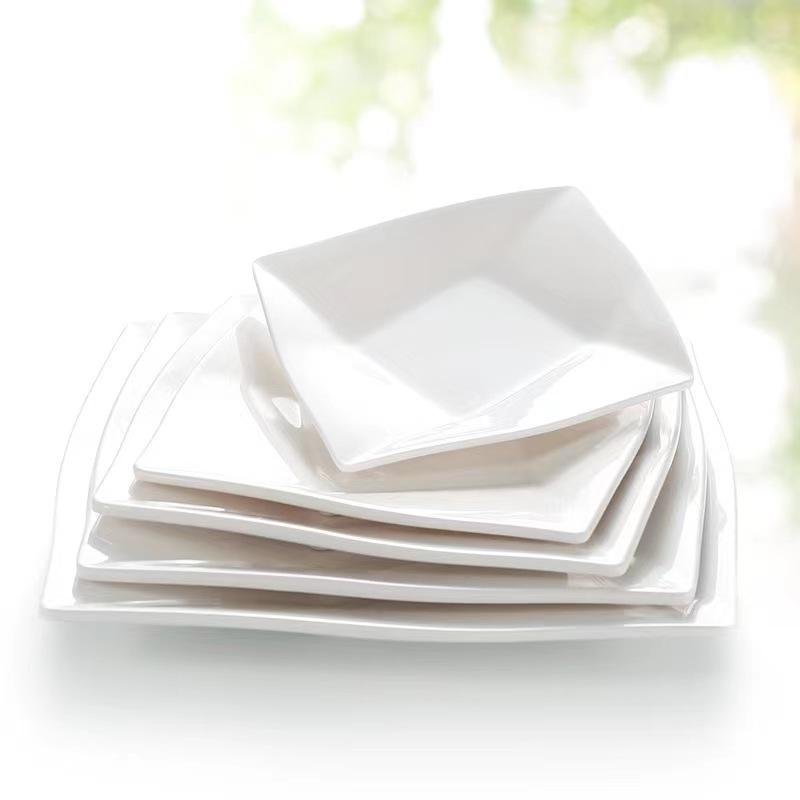
Modern commercial tableware is a major investment. For restaurant owners, hotel procurement managers, and hospitality wholesalers, dinnerware must withstand high-turnover handling, constant metal utensil contact, and thousands of industrial wash cycles without losing its premium look. When sourcing melamine square dinnerware, smart B2B buyers know that surface durability isn’t just an aesthetic choice—it directly impacts your bottom line by reducing replacement costs.
Many people choose square melamine plates because of their clean lines and contemporary presentation. However, the broad flat surfaces and defined edges that make square dinnerware visually appealing also make scratches, gloss loss, and abrasion easier to notice. A plate that looks elegant when new can quickly appear worn if its surface is not engineered for long-term durability.
This is especially important for commercial environments where dinnerware may be washed hundreds or even thousands of times throughout its service life. Investing in high-quality commercial melamine dinnerware can help restaurants and hospitality businesses reduce replacement frequency while maintaining a consistent dining presentation.
Why Scratch Resistance Matters More Than Buyers Expect
When purchasing dinnerware, buyers often compare color, shape, price, or design first. While these characteristics influence appearance, they have little effect on how well the dinnerware performs after months or years of regular use.
Surface durability directly affects both aesthetics and maintenance. A plate that resists scratches will generally retain its original finish longer, require less effort to clean, and continue presenting food professionally even after extensive use.
For restaurants, cafés, hotels, and catering companies, this translates into lower operating costs because dinnerware remains suitable for service longer before replacement becomes necessary.
Surface Damage Happens Every Day
Unlike accidental drops that may chip ceramic plates, surface wear develops gradually. Small scratches accumulate over hundreds of everyday interactions.
Common sources of abrasion include:
Metal Utensils
Knives and forks repeatedly slide across the plate during meals. Although quality melamine is highly durable, continuous contact can eventually create microscopic surface marks.
Plate Stacking
Restaurants often stack dozens of plates between meal services. Friction between plate surfaces and rims can slowly reduce gloss if the finish is not sufficiently dense.
Commercial Dishwashers
High-temperature wash cycles, strong detergents, and constant movement place continuous stress on tableware surfaces. High-quality dishwasher-safe melamine dinnerware is designed to tolerate these repeated cleaning cycles when manufacturer recommendations are followed.
Food Preparation
In commercial kitchens, serving plates may briefly function as preparation surfaces before food reaches the customer. Sliding utensils, serving spoons, and kitchen tools across the surface contributes to long-term wear.
Cleaning Practices
Using abrasive scouring pads or steel wool can damage the smooth outer layer much faster than soft sponges designed for non-abrasive cleaning.
Each of these actions may seem insignificant individually, but together they gradually affect the appearance of the dinnerware.
Surface Wear Affects More Than Appearance
Scratches are often viewed as a purely cosmetic issue, but they can influence everyday performance in several ways.
Reduced Visual Appeal
Modern restaurants invest significant effort in food presentation. A scratched plate reflects light unevenly, making even carefully prepared dishes appear less refined.
Square plates are particularly sensitive because their larger flat surfaces reveal imperfections more clearly than traditional round dinnerware.
Increased Stain Retention
As the surface becomes rougher, tiny grooves can hold pigments from foods such as curry, tomato sauces, coffee, soy sauce, or berries more easily than a smooth finish.
Although quality melamine remains relatively non-porous, maintaining a smooth surface helps simplify routine cleaning.
More Difficult Cleaning
Smooth surfaces allow food residue to wash away quickly. As scratches accumulate, cleaning may require additional effort to remove residue trapped within microscopic surface irregularities.
Shorter Replacement Cycles
For commercial operators, replacing scratched dinnerware represents both a direct purchasing cost and an operational expense. Selecting durable melamine tableware manufactured with high-quality materials can reduce replacement frequency and improve long-term value.
Why A5 Melamine Resin Creates a Harder Surface
Before discussing surface finishing technologies, it is important to understand the material itself. The durability of melamine square dinnerware begins with the resin used during manufacturing.
Not all melamine products are made from the same raw materials, and differences in resin quality have a direct impact on surface hardness, appearance retention, and long-term performance.
What Is Thermoset Melamine Resin
Melamine dinnerware is manufactured primarily from melamine-formaldehyde resin, a thermosetting plastic widely used for food-contact products because of its hardness, heat resistance, and dimensional stability.
Unlike thermoplastics that soften when reheated, thermosetting materials undergo a permanent chemical curing process during manufacturing. Once fully cured, the material forms a rigid three-dimensional molecular network that cannot be melted and reshaped.
According to the U.S. Food and Drug Administration (FDA), melamine-formaldehyde resin is commonly used in food-contact applications when manufactured in compliance with applicable safety regulations. Properly produced melamine tableware is intended for serving food but should not be used in microwave ovens because excessive heating can damage the material.
This cross-linked structure gives melamine several characteristics valued in commercial tableware:
- High surface hardness
- Excellent impact resistance compared with ceramic
- Good dimensional stability
- Smooth finished surfaces
- Strong resistance to everyday wear
These properties make melamine especially suitable for restaurants, schools, hospitals, outdoor dining, and hospitality environments where durability is essential.
Why 100% A5 Melamine Performs Better
When evaluating commercial melamine dinnerware, one of the most important indicators of quality is the grade of resin used during production.
High-quality manufacturers commonly specify 100% A5 melamine resin, which consists entirely of food-grade melamine-formaldehyde molding compound.
Compared with products containing filler materials such as urea-formaldehyde, A5 melamine generally offers several advantages:
- Better structural stability
- Higher surface hardness
- Improved scratch resistance
- More consistent color retention
- Better moisture resistance
- Greater durability under frequent washing
Because the finished material forms a dense, highly cross-linked structure after compression molding and curing, it provides a smoother surface that is less susceptible to everyday abrasion.
According to Dongyu Technology, its melamine tableware is manufactured using 100% A5 melamine resin rather than mixed materials. Combined with precision molding and quality control throughout production, this approach helps create restaurant melamine dinnerware suitable for demanding commercial environments while meeting international food-contact certification requirements.
Although no dinnerware material is completely scratch-proof, starting with high-purity raw materials creates the foundation for a surface that maintains its appearance through years of regular service.
For commercial buyers looking to buy bulk melamine tableware, understanding the material grade prevents costly sourcing mistakes. Here is how 100% A5 resin compares to lower-grade alternatives commonly found in the market:
| Performance Metric | 100% A5 Melamine Resin (Food-Grade) | A1 / A3 Mixed Urea-Formaldehyde |
|---|---|---|
| Surface Hardness | Exceptionally High (Scratch-Resistant) | Low (Easily scratched by metal forks) |
| Food Safety Compliance | 100% FDA, LFGB, & SGS Certified | Risks chemical migration under heat |
| Dishwasher Longevity | Sustains 1000+ commercial cycles | Dulls, chalks, and cracks prematurely |
| Stain & Odor Resistance | Non-porous surface blocks pigments | Porous; absorbs oils, curries, and sauces |
How Scratch-Resistant Melamine Surfaces Are Actually Engineered
Scratch resistance is often described as a product feature, but it is more accurately the result of a carefully controlled manufacturing process. A high-quality piece of melamine square dinnerware does not rely on a temporary surface coating to resist wear. Instead, its durability comes from the interaction of raw materials, molding pressure, curing conditions, and finishing techniques.
Step 1: High-Pressure Compression Molding Builds Surface Density
One of the most important stages in producing commercial melamine dinnerware is high-pressure compression molding.
During manufacturing, a measured amount of melamine molding compound is placed into a heated steel mold. Under precisely controlled heat and pressure, the material flows evenly throughout the mold cavity before permanently curing into its final shape.
This process serves several important purposes:
- Reduces internal air pockets
- Improves material density
- Produces consistent wall thickness
- Forms clean, well-defined edges
- Creates a smoother finished surface
A denser material structure is naturally more resistant to everyday abrasion because there are fewer microscopic voids that could weaken the surface.
For square melamine plates, compression molding is particularly important. Their wide, flat surfaces require even material distribution to prevent uneven gloss or localized weaknesses that may become visible after extended use.
Step 2: Controlled Heat Curing Strengthens the Resin Network
Compression molding alone is not enough to create a durable product.
After pressure forms the plate, the melamine resin undergoes a controlled curing process. During curing, melamine-formaldehyde molecules chemically cross-link into a rigid three-dimensional network.
Unlike thermoplastics that soften when reheated, this thermosetting reaction is permanent.
Proper curing provides several performance advantages:
- Higher surface hardness
- Better dimensional stability
- Improved impact resistance
- More consistent gloss
- Greater resistance to daily wear
Manufacturers carefully control curing temperature and curing time because both influence the finished product.
If curing is insufficient, the resin network may not fully develop, resulting in reduced hardness.
If excessive heat is applied, surface quality may also be affected.
Maintaining stable processing conditions helps ensure that every production batch delivers consistent performance.
This is particularly important for restaurant melamine dinnerware, where hundreds of identical plates are expected to maintain the same appearance after repeated commercial use.
Step 3: Creating a Dense, Non-Porous Surface
One characteristic that distinguishes high-quality food-grade melamine tableware is its dense, non-porous surface.
Unlike materials containing microscopic open pores, properly manufactured melamine forms a smooth exterior that helps prevent liquids and food pigments from penetrating the surface.
This provides several everyday advantages.
Easier Cleaning
Sauces, oils, and food residues remain on the outer surface rather than soaking into the material.
As a result, most residue can be removed using warm water, mild detergent, and a soft sponge.
Better Stain Resistance
Foods containing strong natural pigments—such as curry, tomato sauce, coffee, tea, soy sauce, or berries—are less likely to leave permanent discoloration when cleaned promptly.
Improved Hygiene
Smooth surfaces provide fewer locations where food residue can accumulate after washing.
Although proper cleaning remains essential, a dense surface simplifies routine maintenance.
Lower Friction During Washing
Microscopically smoother surfaces reduce unnecessary friction during everyday cleaning and stacking, helping preserve the original finish over time.
Step 4: Decorative Layers Are Protected Within the Surface
One common misconception is that decorative patterns are simply printed onto the surface after manufacturing. In reality, high-quality OEM melamine dinnerware typically integrates decorative papers or transfer films into the molding process itself.
During production:
- Precision Decal Alignment: Your custom brand artwork or pattern is precision-placed inside the heated steel mold.
- Co-Compression Ingestion: Pure A5 melamine powder surrounds the design layer.
- Thermoset Fusion: Under intense heat and hydraulic pressure, the artwork chemically fuses into the plate’s molecular structure.
- Glazing Protection Layer: A final transparent melamine top-coat acts as a bulletproof shield over the design.
Key Takeaway for Brands: Because your logo or custom texture is sealed beneath the surface glaze, it will never peel, fade, or scratch off, even when scrubbed with heavy-duty commercial kitchen cleaners. This is crucial for maintaining consistent brand identity across multi-location restaurant chains.
For businesses seeking customized OEM melamine dinnerware, embedded decoration also provides more consistent appearance across large production volumes.
Step 5: Final Surface Polishing Determines Everyday Performance
After molding and curing are complete, surface finishing plays an important role in both appearance and practical performance.
Polishing removes minor surface imperfections while producing the desired visual effect.
Different finishes serve different commercial applications.
High-Gloss Finish
Glossy finishes create strong light reflection and resemble glazed porcelain.
They are commonly used for:
- Hotels
- Banquet halls
- Fine dining
- Premium catering
- Buffet presentation
The reflective surface highlights food colors and creates an elegant presentation.
However, because gloss reflects light more directly, fine scratches may become more noticeable under bright lighting.
Matte Finish
Matte finishes diffuse reflected light, creating a softer and more contemporary appearance.
They are increasingly popular in:
- Modern cafés
- Casual restaurants
- Outdoor dining
- Lifestyle brands
- Contemporary home kitchens
A matte finish does not necessarily resist scratches better than gloss.
Instead, it makes tiny surface abrasions less visible because reduced reflection minimizes visual contrast.
This is one reason many restaurants choose matte melamine square dinnerware for everyday service.
Stone Texture
Stone-inspired finishes reproduce the subtle texture of natural ceramic or slate while maintaining the practical benefits of melamine.
These finishes are frequently selected for:
- Boutique restaurants
- Farm-to-table concepts
- Rustic dining environments
- Hospitality projects
The textured appearance also helps disguise minor signs of wear developed through regular use.
Wood Grain Finish
Wood-grain melamine combines the visual warmth of natural wood with the durability of melamine resin.
Unlike real wood, properly manufactured melamine:
- Does not require oil treatment
- Is easier to sanitize
- Resists moisture absorption
- Provides greater dimensional stability
This makes wood-grain finishes suitable for serving trays, appetizer plates, sushi presentation, and buffet service.
Why Square Dinnerware Requires Higher Surface Quality
Compared with traditional round plates, square designs place greater demands on manufacturing precision.
Larger Flat Surfaces Reveal Imperfections
Round plates naturally curve toward the rim, which can help disguise minor variations in gloss.
Square plates typically include larger uninterrupted flat areas where scratches become easier to notice.
This makes consistent polishing particularly important.
Defined Corners Experience More Contact
Square dinnerware often contacts adjacent plates at corners and edges during stacking.
Without careful design and precise molding, repeated contact may accelerate localized surface wear.
Many commercial products therefore incorporate reinforced rims that improve stacking stability while helping reduce direct surface friction.
Contemporary Food Presentation Demands Uniform Surfaces
Modern plating styles frequently leave more visible plate surface around the food.
As a result, scratches, gloss variation, or decorative inconsistencies become easier for customers to notice.
Restaurants investing in premium food presentation therefore benefit from selecting commercial melamine dinnerware manufactured with consistent surface finishing.
What Really Causes Surface Scratches
Even premium dishwasher-safe melamine dinnerware will experience normal wear over time.
Understanding the causes helps extend service life.
Metal Knife Abrasion
Repeated cutting directly on the plate gradually produces fine surface marks.
Using cutting boards during food preparation helps reduce unnecessary wear.
Plate Stacking
Dragging one plate across another while stacking creates friction.
Lifting plates instead of sliding them reduces abrasion.
Abrasive Cleaning Pads
Steel wool and aggressive scouring pads remove surface gloss much faster than soft cleaning sponges.
Manufacturers generally recommend mild detergents and non-abrasive cleaning materials.
Ceramic-to-Melamine Contact
Ceramic mugs and porcelain bowls are harder than melamine.
Repeated dragging across the plate surface may gradually leave visible marks.
Improper Dishwasher Loading
Commercial dishwashers are designed to clean efficiently, but improper loading can allow dishes to rub together throughout the wash cycle.
Following recommended rack spacing helps minimize unnecessary contact.
Conclusion
The durability of melamine square dinnerware depends on far more than a simple “scratch-resistant” label. Long-lasting performance is the result of a carefully engineered manufacturing process that combines high-quality raw materials, precision molding, controlled curing, and professional surface finishing.
Daily care also plays an important role. Using soft cleaning tools, following dishwasher recommendations, avoiding microwave heating, and storing plates properly all help maintain the original finish and extend the service life of the dinnerware.
For restaurants, hotels, catering companies, retailers, and households seeking durable melamine tableware, it is worth evaluating the entire manufacturing process rather than focusing solely on appearance or price. Products manufactured from 100% A5 melamine resin, supported by internationally recognized food-contact certifications and consistent production standards, offer better long-term value and a more professional dining presentation.